SK Chair Sees Memory Shortage Through 2030, Eyes Capacity Doubling and Stronger TSMC, Taiwan Ties

发布时间:2026-06-03 10:57
作者:AMEYA360
来源:TrendForce
阅读量:871

SK Chair Sees Memory Shortage Through 2030, Eyes Capacity Doubling and Stronger TSMC, Taiwan Ties

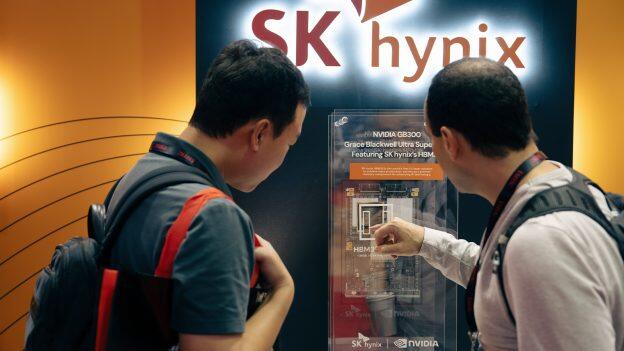
  As next-gen HBM solutions has become a key focus at COMPUTEX amid surging AI demand, SK Group Chairman Chey Tae-won made a brief visit to the SK hynix booth on June 2 and spoke with the media. According to TechNews, Chey expects supply-demand tightness in the memory market to persist through 2030.

  Notably, he also said SK will make full efforts to expand production under tight supply conditions, targeting a doubling of total wafer capacity over the next five years, the report adds.

  Marking his first appearance at COMPUTEX, Chey noted that Taiwan has a highly complete AI supply chain and a strong partner ecosystem. As SK Group continues to expand its AI business, he stressed the need to deepen collaboration with more Taiwanese companies. Beyond TSMC, he said meetings with firms such as Foxconn and Asus are also part of this visit to better understand ongoing cooperation and explore ways to further strengthen partnerships, according to the report.

  SK hynix and TSMC have a long-standing partnership, particularly in logic die integration as custom HBM solutions become an emerging industry trend. As previously reported by The Chosun Daily, SK hynix is expected to adopt a 10nm-class 6th-generation (1c) DRAM process for the core die in its HBM4E, paired with a logic die built on TSMC’s 3nm node. For HBM4 supplied to NVIDIA this year, the company is said to be using a 10nm-class 5th-generation (1b) DRAM core die alongside a logic die based on TSMC’s 12nm process.

  Jensen Huang’s SK hynix Booth Visit Marks Another COMPUTEX Highlight

  It is also wort noting that NVIDIA CEO Jensen Huang also visited the SK hynix booth at COMPUTEX 2026 on June 2, meeting SK Group Chairman Chey Tae-won for the second consecutive day, following a dinner meeting the previous evening. According to Chosun Biz, after his keynote the day before—where he directly identified SK hynix as a supplier of next-generation HBM4—Huang toured the exhibition floor and reviewed the company’s latest memory products.

  During the visit, Huang joined Chey at the SK hynix booth to examine the showcased portfolio, including HBM4E wafers and chipset samples, which entered sampling at the end of last month, the report says. It also marked the first public unveiling of an HBM4E physical mock-up, according to Chosun Biz.


(备注:文章来源于网络,信息仅供参考,不代表本网站观点,如有侵权请联系删除!)

在线留言询价

相关阅读
SK hynix Reportedly Builds Silicon Valley HBM Team to Boost Customer Co-Design With U.S. Big Tech
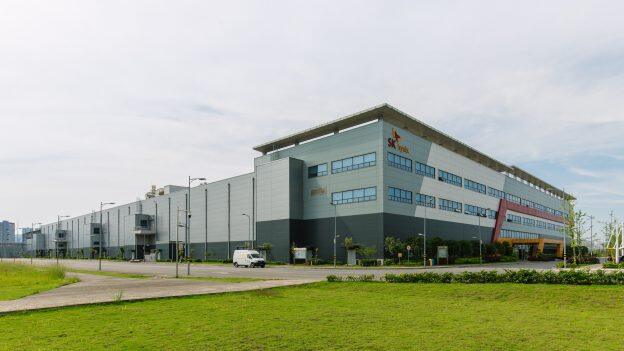
  SK hynix is reportedly strengthening its HBM co-design capabilities in Silicon Valley as it deepens collaboration with global Big Tech customers. According to NewsPim, sources say SK hynix America operates an HBM Architect Design Team in San Jose, California, working directly with major U.S. customers on base-die design for HBM and 3D-stacked DRAM. The team develops next-generation HBM architectures around customer requirements, going beyond local technical support to collaborate throughout product development.  Notably, NewsPim adds that SK hynix is expanding the team, offering annual salaries of US$150,000–US$260,000. The company is seeking experience in DRAM and HBM architecture, full-custom and digital co-design, power delivery network (PDN) analysis, and logic foundry design, with experience in 1x-nanometer DRAM and foundry nodes of 3nm or below preferred. Developing advanced, customer-tailored HBM architectures for future products is among the team’s core responsibilities, the report notes.  The San Jose location also supports this strategy. As NewsPim notes, NVIDIA and AMD are headquartered in nearby Santa Clara, while Broadcom has operations in San Jose. Positioning HBM engineers near these major AI chip design hubs allows SK hynix to work directly with customers on next-generation products and quickly relay their requirements to development teams in South Korea.  SK hynix is already deepening such collaboration with NVIDIA. Chosun Ilbo notes that the two companies are jointly developing next-generation memory for AI factories, expanding their partnership beyond supplying existing HBM toward developing advanced memory aligned with NVIDIA’s next-generation roadmap.  Customer Co-Design Reshapes HBM Competition  Customer co-design is expected to become even more important with HBM4 and future generations. As NewsPim notes, increasingly diverse AI accelerator architectures are driving different requirements for HBM capacity, bandwidth, and power, making early co-optimization of AI chips and memory increasingly important.  This is also reshaping HBM competition. Memory suppliers that participate early in customers’ next-generation AI chip development can incorporate specific requirements into their designs, while co-developed HBM may raise barriers for rivals seeking to enter the same supply chain later. As the report points out, such collaboration is becoming increasingly important for securing next-generation HBM orders.  The trend extends beyond SK hynix. Seoul Economic Daily notes that Samsung is recruiting base-die designers as customer-specific optimization for AI accelerator vendors becomes increasingly important with HBM4. The company is also hiring application engineers to evaluate HBM on AI accelerator systems and support key customer qualifications, with the aim of shortening the certification process.
2026-08-20 11:44 阅读量:491
SK hynix’s Chongqing Sale Plan Signals a Global Production Reset, Not a China Exit—Or Full Ownership of Every Site
  Coinciding with SK hynix’s KRW 54.3 trillion investment in the Yongin Y2 and Cheongju M17 fabs, Bloomberg reports that the memory giant is considering bringing in external investors or selling a stake in its Chongqing semiconductor packaging plant, valued at around KRW 4 trillion ($3 billion). The move has fueled speculation that SK hynix could be reshaping its China operations alongside its massive domestic investment.  SK hynix, however, has yet to confirm any deal. According to Newsis, the company said on Aug. 10, in response to a Korea Exchange inquiry, that it is “reviewing various measures to strengthen the competitiveness of its packaging business,” but “nothing has been finalized.”  As noted by S Journal, it would therefore be premature to view the move as a China exit. SK hynix continues to produce DRAM in Wuxi, while Dalian—acquired through Intel’s NAND and SSD business—remains a key NAND flash front-end hub. China is still expected to account for around 30–35% of SK hynix’s DRAM capacity and 35–40% of its NAND capacity in 2026, according to TrendForce.  Chongqing Plant: From $1B Investment to $3B Valuation  S Journal further explains that SK hynix’s Chongqing plant, which began mass production in July 2014, is a major back-end processing hub in China. As suggested by the report, the plant was built as SK hynix expanded its China production network to meet the growing global NAND flash market.  According to Chinese tech outlet TechPlus, cited by Sohu, SK hynix’s Chongqing facility employs around 3,000 people, with reported investment of more than $1 billion but less than $1.5 billion. At the roughly $3 billion valuation now under discussion, SK hynix could be looking at a sale price roughly two to three times its reported investment, underscoring the potentially substantial value uplift of the asset.  As reported by Bloomberg, Chinese investment funds and local semiconductor companies are among the potential buyers, while SK hynix is also weighing a partial stake sale that would allow it to retain a minority interest. However, Green Economy News notes that the talks are still at an early stage, with no deal or sale structure finalized.  SK hynix Weighs Reshaping Its China Packaging Footprint  More broadly, the potential move could reflect SK hynix’s efforts to reduce geopolitical exposure in China while shifting more of its AI memory supply chain toward Korea and the U.S., where customer access is stronger, Green Economy News reports. An industry source cited by the outlet said the company’s China strategy remains fluid, but the broader trend toward Korean front-end production and U.S.-based advanced packaging is likely to gain momentum.  As noted by Green Economy News, the shift is already visible in SK hynix’s packaging buildout across Korea and the U.S. The company is investing $3.87 billion (KRW 5.2 trillion) in West Lafayette, Indiana, to build an advanced packaging plant for AI memory, including HBM, with mass production targeted for 2H28. In Korea, it is also building the P&T7 advanced packaging plant at its Cheongju campus, slated to begin operations in 2028.  SK hynix Rewires Its Production Map  On Aug. 7, SK hynix’s board approved KRW 54.3 trillion in investment through 2031 for the Y2 fab at the Yongin semiconductor cluster and the M17 fab in Cheongju. The move underscores a broader shift: while reassessing the ownership structure of its existing Chinese back-end assets, SK hynix is committing more than KRW 50 trillion to next-generation capacity in Korea, as highlighted by S Journal.  More broadly, the strategy suggests SK hynix is rethinking where to own, where to invest, and what role each production site should play in its future technology roadmap, rather than simply maintaining full ownership of every facility, according to S Journal. As suggested by the report, in Korea, the company is expanding next-generation DRAM, HBM, and NAND capacity centered on Yongin and Cheongju, while strengthening the integration of front-end production and advanced packaging in Cheongju. Meanwhile, in the U.S., it is building advanced packaging and R&D capabilities for next-generation HBM.
2026-08-11 14:20 阅读量:567
SK Group Chairman Says Abnormal Memory Prices Should Fall; AI Chip Demand Seen Up 60–100% Next Year
  The recent surge in memory prices has drawn comments from SK Group Chairman Chey Tae-won, who also chairs SK hynix, one of the biggest beneficiaries of the boom. According to ETNews, Chey, who also serves as chairman of the Korea Chamber of Commerce and Industry (KCCI), said current memory prices are abnormally high and warned that if prices remain elevated, PC and mobile device prices will continue to rise, with those higher costs ultimately weighing on consumer demand.  As noted by Maeil Business Newspaper, Chey said demand for AI semiconductors is expected to increase by 60% to 100% in 2027 from 2026, while the broader memory semiconductor market is also projected to grow by at least 50% to 60% over the same period. However, he noted that few companies are meaningfully expanding supply, meaning the supply-demand gap is likely to widen further. This suggests that while the AI investment boom is driving memory prices higher, it could ultimately place greater pressure on downstream industries.  He argued that rising prices are not a healthy sign for the market, adding that prices should fall because current levels are abnormal. He also warned that PC and mobile manufacturers cannot continue passing higher memory costs on to consumers. This suggests that while the AI investment boom is driving memory prices higher, it could ultimately place greater pressure on downstream industries.  Chey also argued that memory companies should not restrict supply to keep prices elevated. As noted by Maeil Business Newspaper, he said limiting production to maintain high prices is not a sustainable strategy, adding that expanding supply to grow the overall market—even at the expense of slightly lower margins—would generate greater long-term benefits. He further warned that persistently high prices could attract new competitors and prompt governments to intervene.  However, Chey acknowledged that expanding supply will not be easy. According to Maeil Business Newspaper, increasing production of advanced AI memory requires significant investment and time to build manufacturing capacity, while shortages of equipment and skilled personnel remain key constraints. Although the industry is working to maximize output, he said demand is growing much faster, raising concerns that memory prices may continue to rise rather than fall. As ETNews notes, Chey said the top priority is to expand memory production capacity wherever possible, including in Yongin, the Honam region, and the U.S.  Chey’s comments align with SK hynix CEO Kwak Noh-jung’s assessment of the industry’s supply-demand outlook. According to Reuters, Kwak said the global memory industry is heading for its worst-ever supply shortage in 2027, with memory demand expected to outpace production capacity well into the next decade despite aggressive capacity expansion.  Chey on AI Infrastructure and Long-Term Growth  Beyond the memory market, Chey also predicted that even if the current supply shortage is partially eased, AI-related bottlenecks will shift to other parts of the infrastructure stack. According to ETNews, Chey said electrical equipment for energy infrastructure is already in short supply, and as AI adoption accelerates, shortages could eventually extend to power cables and even the raw materials needed to manufacture data center cables.  Looking further ahead, Chey said the ongoing wave of AI infrastructure investment is expected to eventually lower the cost of generating AI tokens, as noted by ETNews. Once the industry enters a token economy in which AI is converted into productivity for real-world work and services, he believes a self-sustaining AI ecosystem will emerge.
2026-07-21 10:29 阅读量:481
SK Group Chairman Joins ADR Listing Event; Samsung Reportedly Seeks Big Tech Foundry Orders at Sun Valley
  SK Group Chairman Chey Tae-won is attending SK hynix’s American Depositary Receipt (ADR) listing ceremony on Nasdaq in New York on the morning of July 10 local time. According to ETNews, in addition to meeting with global investors, Chey is expected to hold discussions with major customers on expanding AI memory cooperation. The report also says he may meet with executives from leading tech companies, including NVIDIA and Tesla, during his U.S. visit.  As the report notes, Chey’s attendance at the event is seen as an effort to showcase SK hynix’s AI memory competitiveness and long-term growth potential to global investors. The report adds that the ADR listing was intended to help the company achieve a valuation in global capital markets that better reflects its role as a key enabler of AI infrastructure expansion.  The ADR offering is valued at approximately KRW 43 trillion and involves the issuance of up to 17.79 million new shares, representing about 2.5% of the company’s total outstanding shares. The report says the proceeds will be used to finance construction of the first fab at the Yongin semiconductor cluster, the Cheongju P&T7 advanced packaging fab, and the purchase of manufacturing equipment, including extreme ultraviolet (EUV) scanners.  Samsung Courts Big Tech at Sun Valley  Samsung executives are also in the U.S., where Samsung Electronics Chairman Jay Y. Lee has attended the Sun Valley Conference alongside Han Jin-man, President and Head of the Foundry Business. According to ZDNet, the move reflects Samsung’s push to secure AI semiconductor orders from major technology companies. Lee is accompanied this year by Han Jin-man, who was appointed head of Samsung’s foundry business late last year. The report says Han is expected to support discussions on securing foundry orders from major tech companies during the conference.  Against this backdrop, attention has turned to potential foundry customers. According to The Korea Herald, one of the most closely watched meetings is with Apple executives, including CEO Tim Cook, incoming CEO John Turnus, and Senior Vice President of Services Eddy Cue. The report says Samsung Foundry, which secured an order for iPhone image sensor chips last August, is aiming to join Apple’s application processor (AP) supply chain, currently served by TSMC.  Beyond Apple, The Korea Herald also notes that Amazon CEO Andy Jassy and OpenAI CEO Sam Altman are attending the conference. Both companies are developing in-house AI chips to compete with NVIDIA, already source High Bandwidth Memory (HBM) from Samsung Electronics, and are viewed as potential Samsung Foundry customers.
2026-07-10 10:56 阅读量:653
  • 一周热料
  • 紧缺物料秒杀
型号 品牌 询价
MC33074DR2G onsemi
CDZVT2R20B ROHM Semiconductor
RB751G-40T2R ROHM Semiconductor
BD71847AMWV-E2 ROHM Semiconductor
TL431ACLPR Texas Instruments
型号 品牌 抢购
STM32F429IGT6 STMicroelectronics
IPZ40N04S5L4R8ATMA1 Infineon Technologies
BP3621 ROHM Semiconductor
BU33JA2MNVX-CTL ROHM Semiconductor
TPS63050YFFR Texas Instruments
ESR03EZPJ151 ROHM Semiconductor
热门标签
ROHM
Aavid
Averlogic
开发板
SUSUMU
NXP
PCB
传感器
半导体
相关百科
关于我们
AMEYA360微信服务号 AMEYA360微信服务号
AMEYA360商城(www.ameya360.com)上线于2011年,现 有超过3500家优质供应商,收录600万种产品型号数据,100 多万种元器件库存可供选购,产品覆盖MCU+存储器+电源芯 片+IGBT+MOS管+运放+射频蓝牙+传感器+电阻电容电感+ 连接器等多个领域,平台主营业务涵盖电子元器件现货销售、 BOM配单及提供产品配套资料等,为广大客户提供一站式购 销服务。

请输入下方图片中的验证码:

验证码