Renesas Introduces Highly Integrated LCD Video Processor that Enables Next-Generation ASIL B Automotive Display Systems
  Renesas Electronics Corporation (TSE:6723), a premier supplier of advanced semiconductor solutions, today introduced the RAA278830 Video Diagnostics Bridge IC, a highly integrated dual Low-Voltage Differential Signal (LVDS) LCD video processor. The new IC integrates many of the features necessary to design ISO 26262-compliant ASIL B automotive display systems such as heads-up-displays (HUD), digital instrument clusters, camera monitor systems (CMS), and electronic mirrors.  As automotive safety systems are increasingly dependent on display systems, it has become more critical that clear, uncorrupted images be presented to the driver. Missing frames, frozen images, and even incorrect warning icons can seriously compromise driver safety. The RAA278830 addresses these concerns with Functional Safety features built into the device specifically to avoid any corruption of images through monitoring of the signal integrity as well as the video content itself. The internal diagnostics and measurement engines can detect frozen video, incorrect colors, broken or corrupt video images, as well as flashing, flickering, and video images that could obstruct the driver’s view of the road (in the case of HUD systems).  Renesas’ Automotive Video Signal Processing Expertise  Renesas has a long and successful track record of providing video signal processing solutions for the automotive market. In addition to standard analog video decoders, Renesas offers the award-winning Automotive HD-Link (AHL) family of products that enables high-resolution images to be transported over low-cost cables and connectors. The RAA278830 adds to Renesas’ leading line of integrated LCD controllers that have been implemented worldwide.  Key Features of the RAA278830  Dual Open-LDI Input/Output  ISO 26262 Functional Safety ASIL B rating  CRCs, parity, BIST, and redundancy safety mechanisms implemented throughout the entire data path  Video Diagnostic Capabilities  Input/Output monitoring of video timing, signal integrity, and content  Flickering, flashing, occlusion, and glare detection  Spread Spectrum for lower system level EMI profile  Image enhancement engine for superior image quality  Dual host interface: I2C & SPI (configurable)  SPI-Flash based OSD as well as an embedded font based OSD  SPI boot capability (boot from SPI Flash, no MCU needed)  Supports multi-bank for fail-safe OTA updates  Space-efficient 72SCQFN, 10mm x 10mm  AEC-Q100 Grade 2 qualified  “Our automotive customers have consistently asked us to add functional safety features to our industry-leading video processing technology,” said Jason Kim, Vice President and General Manager of the Configurable Mixed-Signal Division at Renesas. “The RAA278830 delivers all of the features needed to create safe, easy-to-implement and economical LCD display for all types of passenger vehicles.”
Key word:
Release time:2025-04-01 14:36 reading:720 Continue reading>>
ROHM Develops a New Compact Thermal Printhead for A4-Sized Mobile Printers
  ROHM has developed a new thermal printhead - KA2008-B07N70A - compatible with a 2-cell Li-ion battery (7.2V). Designed to deliver high print quality with low power consumption and optimized for A4 size printers (210mm width). Height has been reduced by approximately 16% from the conventional 14mm to a best-in-class* 11.67mm – contributing to a more compact printer design. Moreover, optimizing the heating element structure while improving the driver IC and wiring layout enables the support for 7.2V operation – reducing the applied energy required for printing by approximately 66% compared to conventional 12V drive (at 50 mm/s print speed). Adjustments to the individual wiring of the resistive elements ensure uniform heat generation, stabilizing print quality and enabling sharp and high-resolution 203dpi printing – even at speeds up to 100 mm/s.  In recent years, the thermal printer market has been expanding in response to increasing demand to print qualified invoices and customs labels fueled by the growth of overseas e-commerce, as well as prescriptions and drug information sheets in hospitals and pharmacies. The demand for mobile printers has surged, particularly in the logistics and business sectors, where portability and ease of maintenance are highly valued. Among these trends, the adoption of A4-sized thermal printers has been growing in Asian markets, particularly in China – driving the need for 8-inch thermal printheads.  A4-sized mobile printers face challenges such as high power consumption due to their wider print width, requiring larger battery capacities compared to smaller printers such as receipt printers. Moreover, the need for multiple driver ICs to control the heating elements in A4-sized printers often results in variations in heat generation due to the differences in wiring lengths between elements, which affect print quality, such as color development and uniformity.  The KA2008-B07N70A addresses these challenges through an optimized design that enhances mechanical strength and durability by mitigating the effects of expansion and contraction caused by temperature changes. This meets the stringent durability requirements of A4-sized printers (the primary target market) while supporting both thermal and transfer printing methods – offering versatile printing for a wide range of applications.  While thermal printheads are typically used in combination with connectors and a heat sink, the KA2008-B07N70A can also be supplied as a standalone board, providing greater design flexibility for printer manufacturers. For inquiries regarding the product as part of a set, please contact AMEYA360 or visit the contact page on ROHM’s website.  Going forward, ROHM plans to develop a 300dpi resolution thermal printhead for mobile A4-sized printers by spring 2025. The company also intends to expand its considerable lineup with products that deliver high-speed printing with superior efficiency.  Key Specifications  For more information on printheads for mobile printers, please refer to the following URL on ROHM’s website: https://www.rohm.com/products/printheads/mobile-printers  Sales Information        Pricing: $14.50/unit (excluding tax)  Availability: Now (OEM quantities)  Application Examples        • A4-sized mobile printers  • Industrial control label printers  • Tattoo stencil printers, etc.  Terminology        dpi (dots per inch)  A unit of print resolution and density, indicating the number of dots that can be placed within a one-inch length (2.54 cm).  Thermal Printing Method  A printing technique in which heat is directly applied to thermal paper, causing a reaction that produces color. Primarily used for receipts and labels, this method eliminates the need for ink or toner, ensuring easy maintenance and operation.  Thermal Transfer Printing Method  A printing method in which heat melts ink coated on a ribbon, transferring it onto paper. Ideal for high-precision printing, it is commonly used for documents and labels requiring long-term preservation.
Key word:
Release time:2025-03-31 15:36 reading:487 Continue reading>>
ROHM Apollo Yukuhashi Plant received the Japan Greenery Research and Development Center Chairperson's Award at National Award for Greenery Factory
  ROHM Apollo Co., Ltd. (Headquarters: Fukuoka Prefecture, hereafter ROHM Apollo) Yukuhashi Plant received “the Japan Greenery Research and Development Center Chairperson's Award“ in the 2024 Factory Greening Award Program (commonly called the National Green Factory Award) sponsored by the Ministry of Economy, Trade and Industry, and at the award ceremony held on January 22, Yukuhashi Plant was awarded the certificate of commendation.  Toshiyuki Hashimoto, General Manager, LSI Engineering Department, ROHM Apollo Yukuhashi Plant(left)  Masatoshi Kaku, Chairperson, Japan Greenery Research and Development Center(right)  The Awards Program has been organized annually since 1982, sponsored by the Ministry of Economy, Trade and Industry and operated by the Japan Greenery Research and Development Center, with the aim of further promoting factory greening. The Awards program recognizes factories, organizations, and individuals for their outstanding achievements in promoting factory greening and improving the environment inside and outside their factories.  Yukuhashi Plant has been focusing on the creation of a “greenery factory” that takes the ecosystem into consideration and was recognized for the maintenance of cherry blossom trees along the road on the plant premises and the completion of a vast green space and a multipurpose ground on the site in 2023. This is the first time that a plant which is based on Yukuhashi City has received this award.  In ROHM Group, The ROHM Head Office and Plant received the “Japan Greenery Research and Development Center Chairperson's Award” in 2021 and “Kinki Bureau of Economy, Trade and Industry Director General's Award” in 2022.  ROHM Group formulated “Environmental Vision 2050” in April 2021. Based on its three themes - “Climate change," "Resource recycling," and "Coexistence with nature", we aim to achieve Net Zero greenhouse gas emissions by 2050 and conduct business activities in harmony with the natural cycle to protect biodiversity. Based on our company mission of "contribute to the advancement and progress of culture" and our Environmental Vision, we will continue to work to conserve the environment and biodiversity toward the realization of a sustainable society while promoting sound cooperation with society by contributing to the local environment and appropriately disclosing environmental information.
Key word:
Release time:2025-03-24 11:32 reading:508 Continue reading>>
ROHM selected for CDP’s A List for Climate Change and Water Security
  ROHM Co., Ltd. has been recognized for leadership in corporate sustainability by CDP (Carbon Disclosure Project), an international environmental non-profit organization, securing a place on its prestigious ‘2024 A List’ for tackling both climate change and water security.  This is the first time to be included in the Climate Change A list, the highest rating, for ROHM, as well as the fourth consecutive year to secure a position on the Water Security A list.  CDP is an international environmental non-profit organization that operates a global environmental disclosure system for companies and municipalities. It conducts environmental information surveys and publishes data regarding Climate Change and Water Security. The survey is fully aligned with the TCFD, and its scores are widely used for decision-making regarding investments and purchasing in a sustainable and resilient net-zero economy. In 2024, more than 700 signatory financial institutions requested disclosure of data on environmental impacts, risks, and opportunities through the CDP platform, with a record number of nearly 24,800 companies responding. The survey employs an eight-tier evaluation scale with levels ranging from Leadership level (A, A-) to Management level (B, B-), Recognition level (C, C-), and Disclosure level (D, D-), based on criteria such as comprehensiveness of disclosure, identification and management of environmental risks, and ambitious target setting.        Environmental Management at ROHM  In the Environmental Vision 2050, ROHM has committed to achieving virtually zero greenhouse gas emissions and maximizing resource recycling to eliminate waste from all its business activities.  ・Water Resource Management  ROHM has set a target to increase the proportion of water recovery and reuse by at least 5.5% by FY2030 (compared to FY2019), and is making efforts to reuse water resources and reduce factory wastewater by globally managing water withdrawal, wastewater, and water usage. In addition to addressing risks such as flooding, ROHM has implemented a business continuity management system, which predicts potential risks, and made production continuity plans for each site. ROHM is also taking ongoing measures, such as constructing new production buildings based on flood countermeasures.  In 2024, ROHM received an independent verification of its water withdrawal and wastewater volume data in order to disclose information to society with higher transparency and reliability.  ・Climate Change Measures  ROHM has set a target to reduce greenhouse gas emissions (Scope 1 and 2) by at least 50.5% byFY2030 (compared to FY2018), and is working globally to introduce environmentally-friendly equipment and reduce usage through energy conversion. In 2024, ROHM has expanded independent verification to achieve a 100% verification rate for its internally calculated greenhouse gas emissions (Scope 1 and 2). Additionally, ROHM has introduced an Internal Carbon Pricing (ICP) system to promote decarbonized management.  Furthermore, ROHM has announced a plan to source 100% of the electricity used in all domestic and international business activities from renewable energy by FY2050. Several sites, including major overseas production plants, are already operating with 100% renewable energy. As of FY2023, ROHM has achieved a 43% adoption rate and plans to increase this to 65% by FY2030.  Encouraged by the evaluation results, ROHM will continue promoting CSR activities and addressing social issues to achieve a sustainable society and become a company that meets the expectations of its stakeholders.
Key word:
Release time:2025-03-21 13:52 reading:573 Continue reading>>
How Will BIWIN BGA SSD Break Through in the Intelligent Upgrade Path of Edge Devices?
  In the wave of edge intelligence upgrades, as products are continuously evolving toward miniaturization and high integration, the device systems are confronted with dual challenges of physical space compression and surging computing power. Over the past years, BIWIN has invested significant effort in advancing research and development in storage technologies and advanced packaging and testing processes, providing it with competitive advantages in delivering tailored, miniaturized, and highly integrated storage solutions, including a diverse product portfolio, patented proprietary technologies, and a robust manufacturing and supply chain system.  Notably, the BIWIN-launched EP410 BGA SSD, with its innovative architectural design, exemplifies a breakthrough solution for edge devices upgrades by offering three key capabilities: a compact and lightweight design, outstanding performance, and high reliability. While offering form factors as compact as those of embedded chips to meet the rigorous dimension requirements of portable devices, these SSDs are able to deliver superior performance and flexible capacity options compared to UFS/eMMC standards.  Ultra-Thin, Compact Design to Maximize System Spatial Efficiency  The increasing inference frequencies across smartphones and PCs have made the large capacity a fundamental configuration. Meanwhile, in order to deliver optimized user experience and robust operation under complicated environments, the terminal manufacturers are striving to achieve maximized hardware efficiency and capacity utilization within constrained system dimensions.  Aligned with the trends in product iteration, BGA SSD EP410 is equipped with advanced packaging processes such as 16-layer die stacking and 40μm ultra-thin die, realizing the compact form factor measuring only 16×20×1.4mm—merely 1/14 the volume of conventional M.2 2280 SSDs (80×22×3.5mm). Surprisingly, it’s able to deliver uncompromising capacity up to 2TB, supporting the smooth image recognition and natural language processing in edge devices and free of capacity limitations. The adopted packaging processes not only reduces board footprint, providing more design flexibility for terminal manufacturers, but also enhances electrical performance to accommodate greater data throughput, enabling device manufacturers to develop more streamlined, competitively advantageous products.  Uncompromised Performance, Establishing a Robust Foundation for Edge Intelligence Inference  In terms of performance, BIWIN has harnessed its integrated R&D and packaging and testing business model, along with the optimization and tuning of firmware algorithm, to satisfy the critical demands for error correction, data security and integrity in storage products across various application scenarios.  The BIWIN EP410 BGA SSD is compatible with PCIe 4.0 interface and NVMe protocol, with its sequential read/write speed reaching 7350MB/s and 6600MB/s respectively, far surpassing the theoretical bandwidth capability of UFS 4.0. Incorporated with self-developed flash memory management algorithm and dynamic bandwidth allocation technology, BIWIN BGA SSD has demonstrated excellent bandwidth stability, qualifying for edge intelligence devices’ access to high-speed data and transfers of high-load requirements with low latency, as well as the responsive handling of sophisticated intelligent tasks. From the application perspective, BIWIN BGA SSD has been included in the list of Google approved suppliers; on the compatibility front, it offers a cross-platform advantage, compatible with a variety of mainstream SoC solutions, which simplifies the design and introduction processes for clients.  Intelligent Thermal Control and Reliability Design, Ensuring the Stable Operation of Critical Applications  With the characteristics of chip miniaturization and high integration becoming more pronounced, the increases in power consumption and thermal output have presented challenges for devices’ operational stability and lifespan. Considering this, BIWIN EP410 BGA SSD has further strengthened its reliability design, verification, analysis and management processes. In order to ensure efficient heat dissipation, the product is engineered with DRAM-less architecture with intelligent thermal throttling, as well as in-house LDPC, dynamic and static wear leveling, bad block management and multi-environmental adaptability, contributing to significantly improving the data integrity and security, ensuring long-term stable operations and preventing disconnection during critical usage scenarios including gaming, productivity applications, and content creation.  Having been subjected to BIWIN’s thorough testing procedures, including electrical performance, SI, application, compatibility, and reliability testings, the products have been validated with their MTBF exceeding 1,500,000 hours and operating temperature ranging from 0℃ to 70℃, enabling the flagship intelligent terminals, for example the 2-in-1 laptops, UAVs, automotive IVI, to catch the wave of edge intelligence upgrades.  Conclusion  From the successful mass production of its first PCIe BGA SSD in 2018 to the latest generation EP410 BGA SSD featuring the PCIe Gen4 x4 interface, BIWIN’s continuously evolving products demonstrate its deep expertise in miniaturization and high-integration technologies, while also highlighting its visionary foresight in the ecosystem of edge intelligence. As AI and storage technologies progress toward deeper ecological integration, BIWIN will further leverage its early-mover advantages in mobile terminal storage chips and extend this advantage into the edge intelligence era. Whether in hardware design, software optimization, or ecosystem construction, BIWIN remains committed to advancing industry progress and delivering increasingly intelligent, efficient, and reliable storage solutions to users.
Key word:
Release time:2025-03-20 14:01 reading:884 Continue reading>>
SIMCom Powers Smart Terminals with 5G + Wi-Fi 7 for Commercial Applications
  As AI-driven smart devices evolve, reliable connectivity remains essential for advanced applications. During MWC25 and EW25, SIMCom introduced its 5G + Wi-Fi 7 wireless communication solution, engineered for smart router applications. This solution delivers solid performance, fast speeds, and dependable wireless communication, and it is already being used in commercial products to help manufacturers optimize both cost and time-to-market.  5G + Wi-Fi 7: Unlocking the Full Potential of Smart Terminals  Based on the Qualcomm® Snapdragon™ X62 5G Modem-RF System, a key component of the world's first 3GPP Release 16 modem-RF family. Designed with an upgradable architecture, this technology enables rapid commercialization of 5G Release 16, extending 5G connectivity to various applications, including mobile broadband, fixed wireless, industrial IoT, and private 5G networks. By integrating Wi-Fi 7, this solution enhances the wireless experience for smart devices, providing higher capacity, lower latency, and greater efficiency.  Showcasing Real-World Applications  During MWC25 and EW25 , SIMCom partnered with LUXSHARE ICT to demonstrate the real-world capabilities of 5G + Wi-Fi 7. A key highlight was the 5G CPE BE17000 Wi-Fi 7 Mesh Router, featuring SIMCom's SIM8262E-M2 module. By inserting a 5G SIM card, this router utilizes advanced 5G connectivity, allowing users to share ultra-fast networks with multiple Wi-Fi devices. The Wi-Fi 7 Mesh technology further enhances:  ● Network coverage and capacity  ● Ultra-HD streaming without buffering  ● Lightning-fast file downloads  ● Seamless video conferencing and online collaboration  This deployment underscores SIMCom's commitment to delivering high-speed, uninterrupted connectivity for AI-driven applications, addressing the increasing demand for reliable smart networking solutions.  ( 5G CPE BE17000 WiFi 7 Mesh Router with LUXSHARE ICT )  Global 5G Adaptability for Diverse Market Needs  One of the key advantages of SIMCom’s 5G + Wi-Fi 7 solution is its ability to support both NSA and SA network architectures, ensuring robust cellular performance and high data transmission rates. The Snapdragon X62 5G Modem-RF System enables full compatibility with global 5G frequency bands, covering high, mid, and low spectrum ranges. This allows SIMCom to offer customized regional solutions, catering to the specific connectivity requirements of different global markets.  Driving the Future of Smart Connectivity  With the integration of 5G and Wi-Fi 7, SIMCom is revolutionizing AI-powered smart terminals, enabling faster, more intelligent, and always-connected experiences. As AI-driven applications continue to expand, high-speed, stable, and adaptive connectivity will play a pivotal role in unlocking new possibilities across industries.  By leading the way in advanced 5G and Wi-Fi solutions, SIMCom empowers device manufacturers, businesses, and end users to fully embrace the next generation of smart, connected experiences.  About LUXSHARE ICT:  Established on May 24, 2004, Luxshare Precision successfully listed on the ChiNext Board of Shenzhen Stock Exchange on September 15, 2010 (stock code: 002475). The Company is committed to providing integrated intelligent solutions, parts, modules and systems for enterprise communication products (high-speed interconnect, optical module, heat dissipation module, base station antenna, base station filter), consumer electronic products (TWS wireless headphones, smart wear, wireless charging module, 5G router, VR headsets, smart speaker), and automobile systems (automobile wiring harness, connector, intelligent cabin, intelligent driving) and central gateway, etc  About SIMCom:  SIMCom Wireless Solutions Limited is a global leading IoT wireless modules and solutions supplier. Since established in 2002, SIMCom has been fully committed to providing a variety of wireless modules and terminal level solutions worldwide, such as 5G,4G, LTE-A, LTE-M(CAT-M1), NB-IoT, 3G, 2G, and GPS/GLONASS/BEIDOU satellite positioning technology.  SIMCom insists on providing high-quality modules and industry solutions. With 23 years of professional technical innovation and service experiences, it continuously meets the needs of customers in all industries of the Internet of Things. While deepening the vertical industry, we continue to define advantageous products and build core competitiveness. With the Group's continuous investment in research and development, technology and production, we will continue to innovate and enrich our technology roadmap, and promote the development of the industry in the next few years.
Key word:
Release time:2025-03-20 13:58 reading:537 Continue reading>>
SGP.32 remote provisioning firmware being added to all SIMCom L<span style='color:red'>TE</span> Cat 1 bis IoT modules
  SIMCom, a leading provider ofcellular wireless modules and solutions for IoT and M2M applications, has announced that all its range of Cat 1 bis IoT modules are now being prepared with the firmware necessary to support SGP.32 functionality, facilitating simple remote provisioning of IoT modules. Developed by the GSMA, the SGP.32 standard enables connectivity with IoT devices without the need for physical SIM cards or other user interfaces.  Comments Mads Fischer, European Sales Director. SIMCom: “ SGP.32 allows IoT devices that have no displays, buttons or SIM cards to be deployed and updated. Cat 1 bis has been rolled out globally, so by implementing SGP.32 firmware in our Cat 1 bis modules, we are enabling IoT network designers to easily and seamlessly operate their systems remotely and securely using an eSIM only.”  SIMCom's key LTE Cat 1 bis modules that have integrated SGP.32 firmware include the A7672 series, SIM7672 series, and A7683E. These modules offer strong connectivity, global certification compliance, and enhanced power efficiency, making them ideal for various IoT applications.  Based on the ASR1603 platform, the A7672 series supports LTE-FDD, LTE-TDD, GSM, GPRS, and EDGE communication modes. With a comprehensive certification portfolio—including RoHS, REACH, CE-RED, RCM, FCC, Anatel, and Deutsche Telekom—this series ensures compliance with global regulations, facilitating smooth deployment across international markets.  Powered by the QCX216 chipset, the SIM7672 series supports LTE-FDD and LTE-TDD communication. It boasts a wide range of certifications, including CE-RED, RoHS, REACH, FCC, TELEC, JATE, GCF, PTCRB, IC, KC, CCC, AT&T, and T-Mobile, ensuring reliability in diverse regions. A key feature of the SIM7672 series is its support for 3GPP Rel-14 Power Saving Mode (PSM), which allows power consumption to drop as low as 3µA in PSM mode, making it an excellent choice for battery-sensitive applications. The A7683E module is designed for LTE-FDD applications and carries certifications such as RoHS, REACH, CE-RED, and Anatel. All three modules offering a 10Mbps(maximum)downlink rate and 5Mbps uplink rate.  Available in theLCC+LGA form factor,A7672 series and SIM7672 series are compatible with SIMComNB/Cat Mand/or2G modules,enabling a smooth migration to LTE Cat 1 products,enabling end-product scalability and upgradability. Modules alsosupport both multiple built-in network protocols and the drivers for main operation systems (USB driver for Windows, Linux and Android).The inclusion of industrial standard interfaces such as UART, USB, I2C and GPIO suit the modules for IoT applications such as telematics, POS, surveillance devices, industrial routers, and remote diagnostics etc.  SIMCom's A7672 series, SIM7672 series, and A7683E modules, powered by SGP.32 firmware, provide a cost-effective and scalable solution for large-scale IoT deployments, particularly in metering and tracking, by enabling remote SIM provisioning that eliminates the need for physical SIM insertion—thereby reducing costs and simplifying deployment in remote locations. With global certifications and ultra-low power consumption, these modules deliver reliable, energy-efficient performance and long-term deployment stability, making them the ideal choice for massive IoT applications due to their flexibility and efficiency.
Key word:
Release time:2025-03-18 16:38 reading:566 Continue reading>>
ROHM selected as a Constituent of the Dow Jones Sustainability Asia Pacific Index for the First Time
ROHM Offers the Industry’s Smallest* Terahertz Wave Oscillation and Detection Devices
  ROHM has begun offering samples of the industry’s smallest* terahertz (THz) wave oscillation and detection devices utilizing semiconductor elements known as Resonant Tunneling Diodes (RTDs). Terahertz waves are anticipated to be applied to non-destructive testing, imaging, and sensing in the medical and healthcare sectors, as well as potentially future ultra-fast communication technologies. Providing these devices contributes to the advancement of terahertz wave applications.  ROHM has developed a 0.5mm × 0.5mm RTD chip for terahertz wave generation and detection, capable of oscillating and detecting terahertz waves at a frequency of 320GHz (typ.) with an output power ranging from 10 to 20µW. ROHM will begin offering samples of this RTD element mounted in a PLCC package (4.0mm × 4.3mm) commonly used for LEDs. With an extremely compact size, typically than one-thousandth that of conventional oscillators, this innovation enables easy development of terahertz wave applications, even in space-constrained environments.  By positioning the antenna surfaces of the oscillation and detection devices facing each other 10mm apart, a dynamic range of 40dB (typ.) can be achieved. Both oscillator and detector maintain a drive power consumption of 10mW (typ.), while their ability to oscillate and detect terahertz waves at room temperature eliminates the need for cooling equipment required with some conventional methods. These compact, power-saving devices are almost unaffected by the operating environment, enabling use in a wide range of applications.  ROHM offers samples of terahertz wave oscillation and detection devices at a sample price of $990.0/unit (excluding tax), which is less than one-tenth the price of conventional devices. ROHM also provides evaluation kits that include an evaluation board and other components, allowing users to easily integrate the devices into a research and development environment. For more information, please contact a sales representative or visit the contact page on ROHM’s website. The sale of sample products and evaluation kits requires the prior signing of a non-disclosure agreement (NDA) with ROHM.  Professor Safumi Suzuki, Laboratory for Future Interdisciplinary Research of Science and Technology, Institute of Integrated Research, Institute of Science Tokyo      “Terahertz waves are expected to be applied to various fields such as imaging, sensing, and wireless communications due to their excellent characteristics and high degree of safety. However, research and development for commercialization has traditionally required large-scale equipment and substantial costs.  In this context, the RTD terahertz wave device - developed through years of collaborative research with ROHM - is an ultra-small 4.0mm × 4.3mm device that challenges conventional norms while featuring astonishingly low power consumption and implementation costs. With the launch of device samples, we anticipate that many private companies and research institutions will begin exploring terahertz wave research.  We hope that the use of terahertz waves in various fields will lead to the creation of new applications with functions that were previously difficult to achieve. Going forward, we will continue to contribute to society through the development of terahertz wave devices in partnership with ROHM.”  Ken Nakahara, General Manager of Center, ROHM Research & Development Center, ROHM Co., Ltd.      “The terahertz (THz) R&D team and I are very excited and proud to have reached the point where we can bring this technology to market. We have dedicated ourselves to THz devices for about 15 years; the journey has not been easy. We gathered the forces of industry, academia, and government along the way, and have successfully established the position that ROHM holds today.  The team understands that this announcement is just a small step toward the commercialization of THz technology, but at the same time, it is a giant leap for us. We believe that this small beginning will grow big and contribute to the well-being of our society.”  Background and Development Summary        Occupying the frequency region between radio waves and light, terahertz waves exhibit a variety of distinctive characteristics, including excellent permeability similar to radio waves, straight-line propagation akin to laser beams, and unique absorption properties for materials such as polymers. As such, they are expected to be utilized for non-destructive testing, imaging of humans and materials without the use of dangerous radiation, high-speed communication as an alternative to conventional wireless transmission, and high-resolution radar sensing. However, conventional methods often require large equipment sizes and high implementation costs often ranging from tens of thousands to hundreds of thousands of dollars, making it challenging for private companies to actively pursue research or commercialize in the field of practical terahertz applications.  Since the late 2000s, ROHM has engaged in joint research with numerous universities and research institutes, such as the Institute of Science Tokyo and Osaka University. The key aim: developing terahertz wave oscillation and detection devices using RTD technology. ROHM is also involved in several consortia, including national projects (government R&D initiatives) sponsored by the Ministry of Internal Affairs and Communications (MIC), the National Institute of Information and Communications Technology (NICT), and the Japan Science and Technology Agency (JST), as well as the XG Mobile Promotion Forum and the Terahertz System Application Promotion Council. ROHM will continue to focus on device development while contributing to the early industrialization and social integration of terahertz technology.  Professor Safumi Suzuki Profile        Doctor of Engineering, Professor at the Laboratory for Future Interdisciplinary Research of Science and Technology, Institute of Integrated Research, Institute of Science Tokyo. His research targets the development of terahertz wave devices using resonant tunneling diodes (RTDs).  • Career  March 2009 : Completed a doctoral program at the Interdisciplinary Graduate School of Science and Engineering, Tokyo Institute of Technology  April 2009 : Assistant Professor, Interdisciplinary Graduate School of Science and Engineering, Tokyo Institute of Technology  April 2014 : Associate Professor, Faculty of Engineering, Tokyo Institute of Technology  August 2024 : Professor, Laboratory for Future Interdisciplinary Research of Science and Technology, Institute of Innovative Research, Tokyo Institute of Technology  October 2024 : Professor, Laboratory for Future Interdisciplinary Research of Science and Technology, Institute of Integrated Research, Institute of Science Tokyo  Terminology         Resonant Tunneling Diode (RTD)  A terahertz wave light source that uses semiconductor elements to provide advantages such as small size, low power consumption, and the ability to oscillate at room temperature. Following extensive research and development with various universities and research institutions, ROHM has successfully achieved in-house production of RTD devices capable of efficient terahertz wave oscillation and detection.  PLCC  Short for Plastic Leaded Chip Carrier, a type of IC package used for semiconductor integrated circuits.  Conventional THz Generation Methods  Conventional methods for generating terahertz waves include the ‘frequency multiplication’ method, which converts the frequency of an electrical signal into an integer multiple for output, and the “photomixing” method that produces terahertz waves from the difference frequency created when two laser beams of different wavelengths are mixed in a photomixer. Both approaches necessitate large or medium sized costly equipment to generate terahertz waves.  Dynamic Range  A performance metric for analog devices indicating the difference or ratio between the maximum and minimum values of a signal that can be handled. Like for other radio frequency applications, for terahertz waves dynamic range usually expressed in decibels (dB).
Key word:
Release time:2025-03-14 09:40 reading:582 Continue reading>>
ROHM’s EcoGaN™ has been Adopted for AI Server Power Supplies by Murata Power Solutions
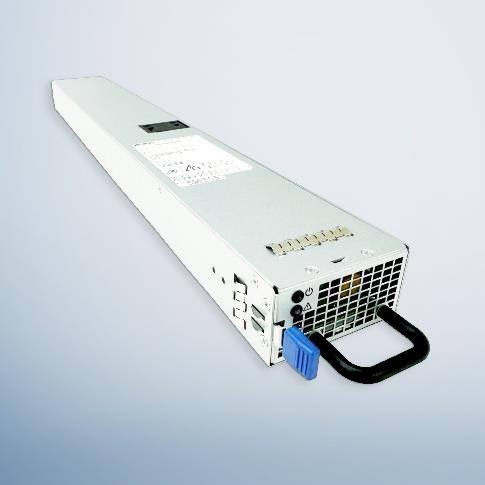
  ROHM has announced that the EcoGaN™ series of 650V GaN HEMTs in the TOLL package has been adopted for AI server power supplies by Murata Power Solutions, a subsidiary of the Murata Manufacturing Group and a leading supplier of electronic components, batteries and power supplies in Japan. Integrating ROHM’s GaN HEMTs, which combine low loss operation with high-speed switching performance, in Murata Power Solutions’ 5.5kW AI server power supply unit achieves greater efficiency and miniaturization. Mass production of this power supply unit is set to begin in 2025.  Rapid advancements in IoT-related fields such as AI and AR (Augmented Reality) have led to a surge in global data traffic in recent years. Notably, the power consumption for a single AI-generated response is estimated to be several times higher than that of a standard Internet search, highlighting the need for more efficient AI power supplies. Meanwhile, GaN devices, known for low ON resistance and high-speed switching performance, are gaining attention for their ability to enhance power supply efficiency while reducing the size of peripheral components such as inductors used in power circuits.  Dr. Joe Liu, Technical Fellow, Murata Power Solutions  “We are pleased to have successfully designed AI server power supply units featuring higher efficiency and power density by incorporating ROHM’s GaN HEMTs. The high-speed switching capability, low parasitic capacitance, and zero reverse recovery characteristics of GaN HEMTs help minimize switching losses. This allows for higher operating frequencies in switching converters, reducing the size of magnetic components. ROHM’s GaN HEMTs deliver competitive performance and exceptional reliability, yielding excellent results in the development of Murata Power Solutions’ 5.5kW AI server power supply units. Going forward, we will continue our collaboration with ROHM, a leader in power semiconductors, to improve the efficiency of power supplies and address the social issue of increasing power demand.”  Yuhei Yamaguchi, General Manager, Power Stage Product Development Div., LSI Business Unit, ROHM Co., Ltd.  “We are delighted that ROHM's EcoGaN™ products have been integrated into AI server power supply units from Murata Power Solutions, a global leader in power supplies. The GaN HEMTs used in this application provide industry-leading switching performance in a high heat dissipation TOLL package, enhancing power density and efficiency in Murata Power Solutions’ power supply units. We look forward to strengthening our partnership with Murata Manufacturing, a company that shares the similar vision of contributing to society through electronics - promoting the miniaturization and efficiency of power supplies to enrich people’s lives.”  Murata Power Solutions’ Power Supply Units for AI Servers  Murata Power Solutions’ series of “1U Front End” AC-DC power supplies includes the D1U T-W-3200-12-HB4C (12V output) and D1U T-W-3200-54-HB4C (54V output) 3.2kW power supplies in the high power density short version M-CRPS package, as well as the 5.5kW D1U67T-W-5500-50-HB4C designed for AI servers. These front-end power supplies deliver high conversion efficiency that meets the stringent requirements of 80+ Titanium and Open Compute products while supporting N+m redundant operation for system reliability, making them ideal for powering the latest GPU servers. In addition to providing reliable, efficient power for servers, workstations, and storage/communication systems, the low profile 1U design of these units helps to minimize system footprint.  ROHM's EcoGaN™  ROHM’s brand name for GaN devices that contribute to energy conservation and miniaturization by maximizing GaN characteristics to achieve lower application power consumption, smaller peripheral components, and simpler designs requiring fewer parts.  • EcoGaN™ is a trademark or registered trademark of ROHM Co., Ltd.  Related ROHM Web Pages        • 650V TOLL Package GaN HEMTs (Feb. 2025 News Release)  https://www.rohm.com/news-detail?news-title=2025-02-27_news_gan&defaultGroupId=false  • ROHM GaN Power Device Page (EcoGaN™)  https://www.rohm.com/products/gan-power-devices/  About Murata Manufacturing  Murata Manufacturing is a global leader in the development, production, and sales of ceramic-based electronic components. By leveraging proprietary expertise in material development, process innovation, product design, and production technology, supported by software, analysis, and evaluation, Murata Manufacturing creates innovative products that drive the advancement of an electronic society.  For more information, please visit Murata Manufacturing's website: https://corporate.murata.com/en-global/
Key word:
Release time:2025-03-13 11:46 reading:681 Continue reading>>

Turn to

/ 93

  • Week of hot material
  • Material in short supply seckilling
model brand Quote
CDZVT2R20B ROHM Semiconductor
MC33074DR2G onsemi
RB751G-40T2R ROHM Semiconductor
TL431ACLPR Texas Instruments
BD71847AMWV-E2 ROHM Semiconductor
model brand To snap up
IPZ40N04S5L4R8ATMA1 Infineon Technologies
BU33JA2MNVX-CTL ROHM Semiconductor
STM32F429IGT6 STMicroelectronics
BP3621 ROHM Semiconductor
TPS63050YFFR Texas Instruments
ESR03EZPJ151 ROHM Semiconductor
Hot labels
ROHM
IC
Averlogic
Intel
Samsung
IoT
AI
Sensor
Chip

About us

Qr code of ameya360 official account

Identify TWO-DIMENSIONAL code, you can pay attention to

AMEYA360 mall (www.ameya360.com) was launched in 2011. Now there are more than 3,500 high-quality suppliers, including 6 million product model data, and more than 1 million component stocks for purchase. Products cover MCU+ memory + power chip +IGBT+MOS tube + op amp + RF Bluetooth + sensor + resistor capacitance inductor + connector and other fields. main business of platform covers spot sales of electronic components, BOM distribution and product supporting materials, providing one-stop purchasing and sales services for our customers.

Please enter the verification code in the image below:

verification code