AMD Keeps Chipping Away At Intel’s Dominance

发布时间:2018-05-30 00:00
作者:Ameya360
来源:Motley Fool
阅读量:1921

Advanced Micro Devices (NASDAQ:AMD) recently crushed Wall Street expectations thanks to the growing demand for its new chips. The Santa Clara, California-based company's revenue shot up 40% year-over-year, driven by the popularity of its Ryzen CPUs (central processing units) and Radeon GPUs (graphics processing units).

AMD's computing and graphics revenue almost doubled year-over-year thanks to the Ryzen and Radeon product lines. Meanwhile, sales of the company's EPYC server processors nearly doubled quarter over quarter, as more OEMs (original equipment manufacturers) decided to offer AMD's chips in place of Intel's (NASDAQ:INTC) for data centers and cloud computing.

AMD, however, believes that it isn't done growing yet. Management is confident that the sales momentum of Ryzen and EPYC processors won't be dying down any time soon, and it has valid reasons to believe so. This could spell trouble for Intel's businesses.
AMD Keeps Chipping Away At Intel’s Dominance

IMAGE SOURCE: GETTY IMAGES

AMD's CPU clout is increasing

Various reports suggest that AMD's CPU market share has been steadily climbing over the past few months. The chipmaker reportedly controlled 12% of the CPU market at the end of 2017, up from 9.9% at the end of 2016. Now, a 2.1 percentage point increase in the market share wouldn't be a big deal for Intel at this point, but Chipzilla investors shouldn't forget that AMD's Ryzen processor line-up wasn't out in full force in the market last year.

The first wave of Ryzen chips for desktop PCs went out in March 2017, followed by the launch of the enterprise-centric Ryzen PRO  and the laptop-focused Ryzen Mobile toward the end of the year. The latest market share numbers aren't available just yet, but it wouldn't be surprising to see AMD shaving Intel's lead further in this space as Ryzen adoption is taking off.

AMD claims that 60% of its client processor revenue was delivered by Ryzen last quarter, up from the low-40% range in the final quarter of 2017. So, the launch of the entire Ryzen line-up just in time before the holiday season last year has been a boon for AMD. To keep up Ryzen's terrific momentum, AMD unveiled its second-generation Ryzen processors last month at extremely attractive prices.

For instance, the flagship Ryzen 7 2700X has a retail price of $329, which is substantially lower than last year's flagship 1800X and 1700X chips that were priced at $499 and $399, respectively. With a 17% performance boost over last year's flagship, AMD has built an impressive value proposition.

More importantly, AMD's latest flagship is cheaper than Intel's i7-8700K that carries a price of around $350, and is equipped with six cores instead of AMD's eight. A higher core count is indicative of a superior performance, so AMD is potentially undercutting Intel once again. Additionally, the launch of a new Ryzen generation means that the previous generation's offerings are getting a steep price cut.

For instance, the Ryzen 7 1800X can now be had for just $319. Not surprisingly, AMD is optimistic that 25 new Ryzen-based systems will hit the market this quarter, and the number could go up to 60 by the end of 2018.

So, Intel will be forced to lower prices to keep AMD at bay, like it had done last year before the inaugural Ryzen chips came into the market. This sounds like bad news for Chipzilla's client computing group, which saw a 4-percentage-point drop in operating margin in the recently reported first quarter, while revenue increased just 3%. The opposite movement of the revenue and the operating margin means that Intel could be feeling the heat from AMD's aggressive pricing tactics.

Additionally, Intel's processor shipment volumes were flat year over year, while AMD management claims that Ryzen shipments grew in the double digits during the first quarter of 2018. This provides a clear indication that Intel is losing ground to AMD in the CPU market, a trend that could continue because of the latter's strategy of undercutting its bigger rival.

EPYC is on a roll 

Chipzilla reportedly controlled 99% of the server chip market that was worth $17.2 billion back in 2016, but AMD has started making inroads over here ever since its EPYC server processors hit the market last year. In fact, there are more than 40 EPYC-based systems now available in the market.

Not surprisingly, AMD is confident that it will be able to eke out a mid-single-digit share of the server chip market by the end of the year, potentially stalling Intel's growth. For instance, if server chip market is worth $20 billion in 2020 and Intel's market share over here drops to 95%, its server chip revenue will be $19 billion.

This means that Intel's server chip revenue would rise just 10% over a period of three years. AMD, meanwhile, could generate nearly a billion dollars in annual server chip sales, provided it hits its market share target this year. This will be a big win for AMD as it was almost non-existent in servers just a couple of years ago.

But AMD can exceed its server market share targets once the second-gen EPYC processors come into volume production in early 2018. The new processors are expected to be based on the 7-nanometer (nm) node as compared to the current generation's 14nm process node.

Chips based on a smaller process node are typically less expensive to make and are more efficient in terms of power consumption and performance. So, AMD is possibly looking to deliver a massive gain over the previous EPYC generation, which will allow it to eat further into Intel's server dominance as Chipzilla's move to the more superior 10nm process has been delayed to 2019.

Should Intel investors start worrying already?

Well, not right away. Intel is still the big fish in both the CPU and server processor markets by a fair distance. It has got huge financial muscle, superior margins, and a solid client base. AMD, on the other hand, is trying to make inroads into areas where Intel is already dominant.

But AMD could keep chipping away at Intel's lead thanks to its well-priced products and the potential technology lead that it could gain thanks to the latter's 10nm delay. Now, Intel can respond by turning up its product development moves or lower the prices of its chips to quell AMD's rise. But it needs to take quick steps as its smaller rival is making impressive progress within a short time of its products hitting the market, else Intel's growth in these markets will hit a speed bump in the long run.

(备注:文章来源于网络,信息仅供参考,不代表本网站观点,如有侵权请联系删除!)

在线留言询价

相关阅读
AMD Unveils Next-Gen CPU Roadmap: Florence Targets 2028 with Rumored Sub-2nm Node, Ravenna in 2030
  As NVIDIA expands its AI infrastructure roadmap with Rosa, a data center CPU designed for agentic AI workloads beyond Vera, AMD is stepping up its CPU roadmap as well. At Advancing AI 2026 on July 23, AMD revealed that its next-generation Zen 7-based EPYC server CPUs, codenamed “Florence,” are on track for 2028, followed by “Ravenna” in 2030.  A key highlight of Florence is its transition to a next-generation process. As noted by Phoronix, CEO Lisa Su confirmed that the EPYC “Florence” will be built on a next-generation node and feature ACE AI compute extensions. Wccftech suggests that the chip could bring AMD’s EPYC lineup into the sub-2nm era, potentially using technologies such as TSMC’s A16 or A14.  By comparison, NVIDIA’s Feynman GPU and Rosa CPU, also expected around 2028, are reportedly targeting TSMC’s A16 process, according to Commercial Times.  Ahead of Florence, AMD’s Venice CPU is being manufactured in Taiwan using TSMC’s 2nm process, with plans to later expand production to TSMC’s Arizona fab, Commercial Times reports.  Beyond the CPU itself, EPYC Florence will serve as the host processor for AMD’s next-generation AI rack-scale platform, codenamed “Ferrara.” The new EPYC family will also become AMD’s first to support next-generation memory standards, including MRDIMM and LPDDR, potentially paving the way for future DDR6 adoption, according to Wccftech.  Following Florence, AMD’s “Ravenna” CPUs, based on the Zen 8 architecture, are slated for 2030 as the company continues to push for greater share in the server CPU market.  Instinct GPU Roadmap Moves Forward  Beyond its CPU roadmap, AMD also outlined its next-generation Instinct GPU plans. The company said the Instinct MI500 series is set to launch in 2027, featuring upgraded compute, memory and interconnect technologies, followed by the MI600 series in 2028.  Wccftech explains that MI500 series is expected to introduce the CDNA 6 architecture, next-generation HBM4E memory, advanced GPU scale-up capabilities and a flexible design ready for both copper and optical interconnects. The lineup, according to the report, is positioned to take on NVIDIA’s Rubin Ultra GPUs, which are expected to power Kyber rack-scale systems.  Looking further ahead, AMD is developing its CDNA-Next architecture for the MI600 series, scheduled for 2028 and aimed at competing with NVIDIA’s next-generation Feynman accelerators, Wccftech adds.  Behind AMD’s next-generation GPU roadmap, memory supply will play a critical role. According to Digital Daily, Samsung currently supplies HBM4 for AMD’s MI455 Instinct GPUs and serves as the dedicated supplier of DDR5 solutions for the 6th-generation EPYC CPUs deployed in the Helios platform.
2026-07-27 11:19 阅读量:605
AMD Closes In on NVIDIA, Securing Major Deals with Oracle and IBM
  As Jiwei reported, AMD, although trailing NVIDIA in AI, has recently clinched significant deals, earning the trust of two major clients, Oracle and IBM. Oracle plans to integrate AMD’s Instinct MI300X AI chips into their cloud services, complemented by HPC GPUs. Additionally, as per insights from Ming-Chi Kuo, TF International Securities analyst, IBM is set to leverage AMD’s Xilinx FPGA solutions to handle artificial intelligence workloads.  Oracle’s extensive cloud computing infrastructure faces challenges due to a shortage of NVIDIA GPUs. Nonetheless, Oracle maintains an optimistic outlook. They aim to expand the deployment of the H100 chip by 2024 while considering AMD’s Instinct MI300X as a viable alternative. Oracle has decided to postpone the application of their in-house chips, a project with a multi-year timeline. Instead, they are shifting their focus to AMD’s high-performance AI chip, the MI300X, well-regarded for its impressive capabilities.  Reports indicate that Oracle intends to introduce these processor chips into their infrastructure in early 2024.  Similarly, IBM is exploring chip options beyond NVIDIA. Their new AI inference platform relies on NeuReality’s NR1 chip, manufactured on TSMC’s 7nm process. AMD plays a pivotal role in NeuReality’s AI solution by providing the essential FPGA chips. Foxconn is gearing up for AI server production using this technology in the Q4 2023.  Guo also pointed out that, although Nvidia remains the dominant AI chip manufacturer in 2024, AMD strengthens partnerships with platform service providers/CSPs like Microsoft and Amazon while acquiring companies like Nod.ai. This positions AMD to potentially narrow the AI gap with Nvidia starting in 2025. This collaboration also affirms that AMD remains unaffected by the updated U.S. ban on shipping AI chips to China.
2023-10-24 16:33 阅读量:4093
ASRock Mini PCs Based on AMD Ryzen 7000U-Series
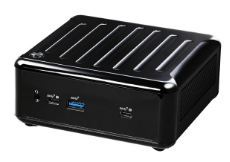
  ASRock Industrial has launched the 4X4 BOX 7000/D5 Series Mini PCs powered by AMD Ryzen 7000U-Series APUs with up to 8 Zen 3+ cores.  Featuring maximum dual DDR5 4800MHz memory up to 64GB, the 4X4 BOX 7000/D5 Series bring about performance enhancement through unleashing higher standards of power, speed, and energy efficiency. Now poised with enriched IOs and expansions, the Series also provide quad-display outputs of up to 8K outstanding graphics with one HDMI 2.1, three DisplayPort 1.4a, and five USB ports, including two USB4 for versatile connectivity. Moreover, dual storages with one SATA 3.0, one M.2 Key M, plus dual LAN ports up to 2.5 Gigabit, Wi-Fi 6E, and Bluetooth 5.2 are supported for reliable communications.  The unleashed features make this Series the leading choice for a wide range of top-notch applications such as gaming, entertainment, content creation, office productivity, business, and AIoT use cases.  AMD Ryzen 7000 U-Series APUs and the first DDR5 support  Powered by AMD Ryzen 7 7735Uand Ryzen 5 7535U, ASRock Industrial presents the 4X4 BOX 7000/D5 Series selections: 4X4 BOX-7735U/D5 and 4X4 BOX-7535U/D5. Featuring up to 8 Zen 3+ cores and next-generation AMD Radeon Graphics, the Series guarantee optimal power, speed, and performance upgrades.  The 4X4 BOX 7000/D5 Series showcase the very first dual-channel DDR5 4800MHz SO-DIMM memory up to 64GB with new features that unleash effortless multitasking abilities for higher performance, lower power consumption, and more robust data integrity for future computing.  Quad-display up to 8K, USB4, and dual LAN up to 2.5G  The 4X4 BOX 7000/D5 Series support dual Realtek LAN ports up to 2.5 Gigabit and one 1 Gigabit with DASH function for remote management, plus Intel? Wi-Fi 6E support of 6GHz band and Bluetooth 5.2 to enable smooth real-time communications. For connections, the Series are equipped with two USB4 (Type C), one USB 3.2 Gen 2 (Type A), and two USB 2.0.  With quad-display outputs up to 8K and integrated AMD Radeon Graphics, the Series support one HDMI 2.1 holding up to 7680×4320@60Hz and three DisplayPort 1.4a (two from Type C) holding 4096×2160@60Hz for you to enjoy uncompromised graphics. In addition, the expansion of dual storages support one SATA 3.0 and one M.2 Key M (2242/2260/2280) with PCIe Gen4 x4. There is also TPM 2.0 onboard for enhanced security support of Windows 11 upgrade, plus VESA mounting to easily mount your Mini PC and save space.  The Series unleash incredible speed and power in the compact size of 110.0 x 117.5 x 47.85mm with fanned barebone, making them exceptionally easy to be carried around.  Unleashed new potentials  The new 4X4 BOX 7000/D5 Series powered by AMD Ryzen 7000U-Series APUs are here to unleash the advanced potentials in power and speed that you have been waiting for. Featuring next-generation DDR5 4800MHz memory, USB4 in conjunction with up to 8K quad-display, dual LANs up to 2.5G, Wi-Fi 6E, and dual storages support.  This time, the compact Mini PCs provide greater energy efficiency for reduced environmental impact and operation costs, higher power, and faster speed in high-end gaming, content creation, office productivity, business, and AIoT applications.
2023-02-09 15:40 阅读量:5183
AMD Discusses Future of High-performance and Adaptive Computing at CES 2023
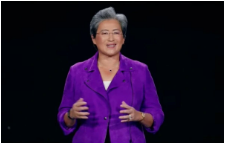
  AMD Chair and CEO Dr. Lisa Su detailed the significant role high-performance and adaptive computing plays in creating solutions to the world’s most important challenges during her live keynote at CES 2023.  “It is an honor to kick off CES 2023 and highlight all the ways AMD is pushing the envelope in high-performance and adaptive computing to help solve the world’s most important challenges,” said Dr. Su. “Together with our partners, we highlighted how AMD technology is advancing what is possible in AI, hybrid work, gaming, healthcare, aerospace and sustainable computing. We also launched multiple new mobile, gaming and AI chips that will make 2023 an exciting year for AMD and the industry.”  AMD Product Innovation at CES 2023  AMD announced new mobile and desktop processors to serve every type of user, from casual gamers and content creators to professionals and hybrid workers, along with new graphics solutions to bring the power of high-performance gaming to mobile.  The AMD Ryzen 7000X3D Series processors with AMD 3D V-Cache technology, the fastest gaming processors in the world2.  AMD Radeon RX 7000 Series Graphics for Laptops based on the AMD RDNA 3 architecture offering exceptional energy efficiency and performance to power 1080p gaming at ultra settings and advanced content creation applications on next-generation premium laptops.  Dr. Su also shared the company’s latest advances to enable pervasive AI, including previewing new products to broaden its AI product portfolio from edge to cloud.  AMD adaptable computing and AI technology powers the world’s most important medical solutions, enabling faster diagnoses and drug discoveries and better patient care. At CES, AMD announced the AMD Vitis Medical Imaging libraries to bring premium medical imaging products to market faster by reducing development times. These software libraries accelerate premium medical imaging on AMD Versal SoC devices with AI Engines to deliver healthcare providers and their patients high-quality, low-latency imaging.  Finally, AMD adaptive computing solutions help satellites and spacecraft compute data and leverage pervasive AI to derive insights. During the keynote, Dr. Su shared how AMD FPGAs and adaptive SoCs are helping to shape the future of space exploration, powering recent space missions from Mars Curiosity and Perseverance to the recently launched Artemis moon mission.
2023-01-11 13:50 阅读量:4032
  • 一周热料
  • 紧缺物料秒杀
型号 品牌 询价
BD71847AMWV-E2 ROHM Semiconductor
TL431ACLPR Texas Instruments
CDZVT2R20B ROHM Semiconductor
MC33074DR2G onsemi
RB751G-40T2R ROHM Semiconductor
型号 品牌 抢购
BU33JA2MNVX-CTL ROHM Semiconductor
TPS63050YFFR Texas Instruments
ESR03EZPJ151 ROHM Semiconductor
STM32F429IGT6 STMicroelectronics
BP3621 ROHM Semiconductor
IPZ40N04S5L4R8ATMA1 Infineon Technologies
热门标签
ROHM
Aavid
Averlogic
开发板
SUSUMU
NXP
PCB
传感器
半导体
相关百科
关于我们
AMEYA360微信服务号 AMEYA360微信服务号
AMEYA360商城(www.ameya360.com)上线于2011年,现 有超过3500家优质供应商,收录600万种产品型号数据,100 多万种元器件库存可供选购,产品覆盖MCU+存储器+电源芯 片+IGBT+MOS管+运放+射频蓝牙+传感器+电阻电容电感+ 连接器等多个领域,平台主营业务涵盖电子元器件现货销售、 BOM配单及提供产品配套资料等,为广大客户提供一站式购 销服务。

请输入下方图片中的验证码:

验证码