Proudly Made in India: Fibocom & Kaynes Technology Join Forces to Drive IoT Innovation, Policy Compliance, and Local Growth
  Fibocom,a leading global provider of wireless communication modules and AI solutions,today announced a strategic manufacturing partnership with Kaynes Technology, oneof India’s foremost electronics and semiconductor manufacturing pioneers. Thiscollaboration underscores Fibocom’s commitment to India’s national initiatives,including Make in India and Atmanirbhar Bharat,while addressing the growing demand for locally produced IoT components.  Equipped withhigh-speed SMT lines, automated testing systems, and precision assemblyequipment, the state-of-the-art facility in Karnataka, Hyderabad, and Gujaratstrengthens Fibocom’s integration into India’s dynamic manufacturing ecosystem.This initiative represents more than capacity expansion — it reflects Fibocom’svision to embrace India, grow with India, and empower the world through India.  Strategic PolicyAlignment and Market Commitment  Fibocom’sinvestment in local manufacturing is fully aligned with India’s industrial developmentagenda, supporting technological self-reliance, accelerating time-to-market forIndian OEMs, and delivering long-term value to both domestic and globalcustomers.  Partnering with India’s ManufacturingLeader  With decades ofexpertise in precision manufacturing, supply chain integration, and world-classquality systems, Kaynes Technology provides the foundation for this strategicpartnership. Together, Fibocom and Kaynes Technology are advancing India as aglobal force for next-generation connectivity solutions.  “Kaynes Technologyis proud to join forces with Fibocom to deliver critical IoT componentsmanufactured in India,” said Raghu Panicker, CEO, Kaynes Technology.“This collaboration enables local industries to innovate faster, scale smarter,and compete more effectively on the global stage.”  Trusted & Proudly Made in India  Fibocom’s locallyproduced modules are designed to global standards while proudly bearing the'Made in India' mark. This not only enhances trust among Indian OEMs andgovernment stakeholders but also reinforces India’s growing reputation as areliable center for IoT innovation and exports.  “Thispartnership is a statement of intent — Fibocom is here not just to sell, but tobuild, invest, and grow with India,” said Ragin Kallanmar Thodikai, Country SalesManager, India, Fibocom. “We are proud to contribute to afuture where intelligent connectivity is Madein India and trusted worldwide.“
Key word:
Release time:2025-09-02 15:36 reading:779 Continue reading>>
ROHM at electronica India 2025: Power and Analog Devices Contributing to the Evolution of Industrial and E-Mobility applications
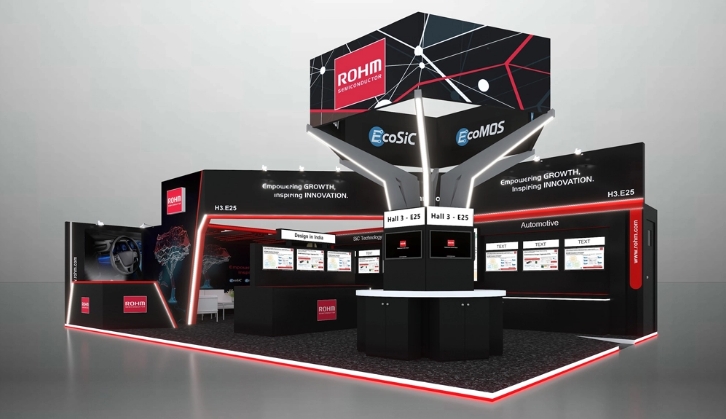
  From September 17th to 19th, ROHM will exhibit at electronica India 2025, South Asia's leading trade fair for electronic components, systems, applications, and solutions, taking place at the Bangalore International Exhibition Centre (BIEC). At booth H3-E25, ROHM will showcase its latest SiC and GaN technologies, featuring reference designs and evaluation systems that address today’s power and thermal challenges in both industrial equipment and automotive drive systems. Additionally, we will also showcase analog solutions such as power ICs for industrial equipment and automotive LED drivers.  "electronica India 2025 will be the right place to explore real-world applications powered by ROHM’s advanced power semiconductors. With our local design expertise and close cooperation with key players in the Indian market, we are uniquely positioned to support the country’s shift toward more sustainable and efficient electronics," says Makoto Terada, Managing Director, ROHM Semiconductor India.  Highlights of ROHM’s presence at electronica India 2025 include:  For Industrial Applications  ・Locally co-developed reference designs, as part of ROHM’s 'Made in India' initiative, emphasizing faster prototyping and region-specific design optimization, which will be unveiled for the first time.  ・A full lineup of GaN reference designs ranging from 45W to 5.5kW, including compact AC adapters, Totem Pole PFC designs, and server power supplies.  ・ROHM’s 2kV SiC MOSFETs, adopted in SEMITRANS® 20 modules by Semikron Danfoss, powering SMA Solar Technology’s Sunny Central FLEX for utility-scale PV and battery systems.  * SEMITRANS® is a trademark or registered trademark of Semikron Danfoss Elektronik GmbH  For Automotive and E-Mobility  ・TRCDRIVE pack™, a molded SiC module designed for the traction inverter of EVs.  ・New 2-in-1, 4-in-1 and 6-in-1 molded SiC modules for compact and cost-optimized drive solutions.  ・TO-247 discrete SiC MOSFETs shown through practical 3-phase inverter boards for affordable traction systems.  More Information  For additional highlights of ROHM at electronica India 2025, please visit:  www.rohm.com/electronica-india  ROHM’s Power Eco Family: Reliable Solutions Across a Wide range of Applications  ROHM will also feature its Power Eco Family, a branding concept that unites its key power device lines: Each product line will be represented through live demonstrations, adoption cases, and hands-on evaluation tools available at the booth.
Key word:
Release time:2025-09-01 15:11 reading:665 Continue reading>>
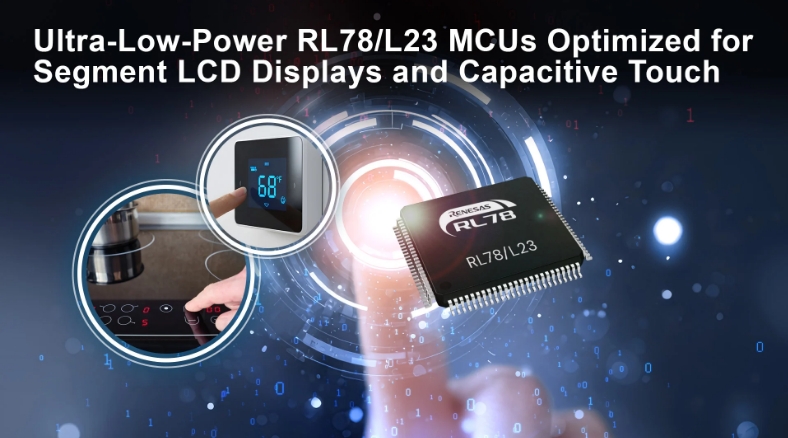
Renesas Introduces Ultra-Low-Power RL78/L23 MCUs for Next-Generation Smart Home Appliances
  Renesas Electronics Corporation (TSE:6723), a premier supplier of advanced semiconductor solutions, today introduced the new 16-bit RL78/L23 microcontroller (MCU) group, expanding its low-power RL78 family. Running at 32MHz, the RL78/L23 MCUs combine industry-leading low-power performance with essential features such as dual-bank flash memory, segment LCD control, and capacitive touch functionality to support smart home appliances, consumer electronics, IoT and metering systems. These compact, cost-effective devices address the performance and power requirements of modern display-based human-machine interface (HMI) applications.  Ultra-Low Power Operation with Optimized LCD Performance  The RL78/L23 is optimized for ultra-low power consumption and ideal for battery-powered applications that spend the majority of time in standby. They offer an active current of just 109μA/MHz and a standby current as low as 0.365μA, along with a fast 1μs wake-up time to help minimize CPU activity. The LCD controller’s new reference mode, VL4, reduces LCD operating current by approximately 30 percent when compared to the existing RL78/L1X group. The MCUs come with SMS (SNOOZE Mode Sequencer), which enables dynamic LCD segment display without CPU intervention. By offloading tasks to the SMS, the devices minimize CPU wake-ups and contribute to system-level power savings. These innovations significantly extend battery life, simplify design and reduce replacement costs, while minimizing environmental impact.  The RL78/L23 offers a wide operating voltage range of 1.6V to 5.5V, which supports direct operation from 5V power supplies commonly used in home appliances and industrial systems. This capability reduces the need for external voltage regulators. The MCUs also integrate key components such as capacitive touch sensing, a temperature sensor, and internal oscillator, reducing BOM cost and PCB size.  Feature-Rich Peripherals for HMI Systems  Designed to meet the dynamic requirements of the HMI market, RL78/L23 integrates a suite of advanced features in a compact, cost-effective package. Its built-in segment LCD controller and capacitive touch realize sleek, responsive user interfaces for products such as induction cooktops and HVAC systems. The IH timer (Timer KB40) enables precise multi-channel heat control, which is essential in smart kitchen appliances such as rice cookers and IH cooktops. The devices include dual-bank flash memory for seamless firmware updates via FOTA (Firmware Over-the-Air), allowing continuous system operation in applications like metering, where downtime must be minimized. The dual-bank architecture allows one memory bank to run the user program, while the other receives updates. This approach keeps the system functional throughout the process for improved reliability.  “The Renesas RL78 Family of 16-bit microcontrollers has been one of the most successful products since its launch more than 10 years ago, particularly in home appliances,” said Daryl Khoo, Vice President of Embedded Processing at Renesas. “I’m pleased to announce the RL78/L23, a new generation of RL78 microcontrollers with rich features, ideally suited for smart home appliances and cost-sensitive IoT solutions. With these devices, we aim to provide a better user experience with our intuitive development environment so that customers can get to production faster with confidence, based on market-proven Renesas technologies.”  Key Features of the RL78/L23  16-bit RL78 microcontroller running at 32MHz  Built-in segment LCD controller and capacitive touch  Up to 512KB of dual-bank flash memory for seamless FOTA  Up to 32KB of SRAM and 8KB of data flash  SMS for ultra-low power operation  IH Timer (KB40) supporting up to 3-channel induction heating control  Wide operating voltage range from 1.6V to 5.5V  Operating temperature range of -40°C to +105°C  Multiple serial interfaces including UART, I2C, CSI  IEC60730-compliant self-test library  44-100-pin LFQFP, LQFP and HWQFN packages  Intuitive Development Environment for Faster Time-to-Market  The RL78/L23 comes with an easy-to-use development environment. Developers can leverage robust support tools such as Smart Configurator and QE for Capacitive Touch to streamline system design. Renesas offers the RL78/L23 Fast Prototyping Board which is compatible with Arduino IDE, and a capacitive touch evaluation system for in-depth testing and validation.  Winning Combinations  Renesas offers Induction Heating Rice Cooker Solution which combines the new RL78/L23 devices with numerous compatible devices from its portfolio to offer a wide array of Winning Combinations. Winning Combinations are technically vetted system architectures from mutually compatible devices that work together seamlessly to bring an optimized, low-risk design for faster time to market. Renesas offers more than 400 Winning Combinations with a wide range of products from the Renesas portfolio to enable customers to speed up the design process and bring their products to market more quickly. They can be found at renesas.com/win.  Availability  The RL78/L23 MCUs are available today, along with the Fast Prototyping Board (FPB-RL78L23) and the capacitive touch evaluation system (RSSK-RL78L23). 
Key word:
Release time:2025-08-27 15:18 reading:939 Continue reading>>
Renesas Expands MCU/MPU Portfolio to Meet New Processing Needs of Edge AI
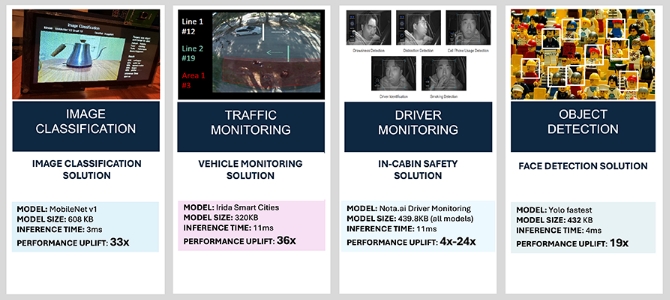
  Artificial intelligence at the IoT edge is redefining how connected devices capture, process, and analyze data to render actionable outcomes in a variety of consumer and industrial applications. Unlike AI cloud servers, where power, data latency, and security management are prime design considerations, AIoT moves intelligence closer to the data source to enable real-time, in-situ decision-making with enhanced privacy and lower energy use.  Despite its promise, AI at the IoT edge carries significant engineering challenges. Traditional AI models are computationally intensive. They require large amounts of memory and power, which resource-constrained IoT devices, often battery-operated with limited processing capacity, cannot easily support. Instead, designers need highly optimized, lightweight neural network models that run efficiently on microcontrollers, microprocessors, and other low-power hardware without sacrificing performance or accuracy.  Managing AIoT Processing with TinyML Models  Because it is inherently decentralized, AIoT reduces dependency on cloud servers while instantly acting upon real-time analytics and boosting security by keeping data local. This makes the process of outfitting factory equipment with predictive maintenance easier by embedding machine learning (ML) models within local sensors to detect anomalies or faults without waiting for cloud analysis. Smart home devices with AI-enhanced voice interfaces can perform instant keyword recognition and natural language understanding without sending sensitive audio data over the network.  Similar to a trend underway in AI data centers, AIoT at the edge is also evolving to handle the proliferation of inference modeling. If data is the fuel for intelligent, real-time decision making, then AI inference is the engine that processes pre-trained ML models directly on edge devices.  Data center AI inference modeling has a unique set of computational requirements best served by powerful parallel processors that can train large language models (LLMs) models that may have billions of parameters. On the other end of the spectrum, edge AIoT technologies like TinyML minimize memory requirements and computing overhead, making real-time analytics feasible for battery-powered IoT endpoints. Moreover, TinyML inference modeling enables multi-modal applications, combining voice, vision, and sensor data for advanced use cases like environmental monitoring and autonomous navigation.  Real-time data processing is another function complicated by the memory limitations, modest energy budgets, and thermal constraints of edge AIoT. Many consumer and industrial applications, such as smart home voice recognition and autonomous sensors, demand ultra-low latency responses. Cloud-based AI struggles to meet these requirements due to network delays, making on-device inference essential. Engineers must also ensure data security and privacy by embedding strong encryption and root-of-trust mechanisms directly at the endpoint.  Tools like TinyML are critical for overcoming these barriers and enabling compact machine learning models that operate efficiently on IoT hardware while extending battery life.  Renesas Optimizes New MCUs and MPUs for Edge AIoT  To better serve edge AIoT applications, Renesas recently expanded its processor portfolio, introducing new high-performance, low-power MCUs and MPUs with integrated neural processing units (NPUs) purpose-built for AI computing.  The 32-bit Renesas RA8P1 MCU is designed for voice and vision edge AI applications and features dual Arm® cores, the 1GHz Cortex®-M85 and 250MHz Cortex-M33, and an Arm Ethos™-U55 NPU that delivers up to 256GOPS of AI performance. For security, the new MCU supports the Arm TrustZone® secure execution environment, hardware root-of-trust, secure boot, and advanced cryptographic engines, ensuring safe deployment in critical edge applications.  Renesas also introduced the 64-bit RZ/G3E MPU for high-performance edge AIoT and human machine interfaces, combining a quad-core Arm Cortex-A55 CPU, Cortex-M33, and advanced graphics. The RZ/G3E embeds an Arm Ethos-U55 NPU to offload the main CPU by delivering up to 512GOPS of AI performance for image classification, voice recognition, and anomaly detection.  Arm NPUs Right-Size Power and Performance for AIoT Applications  The Arm Ethos-U55 NPU supports popular neural network models like ResNet, DS-CNN, and MobileNet with up to 35x faster inference compared to CPU-only processing. Unlike GPUs that burn tens to hundreds of watts on high-throughput, parallel computing, the Ethos-U55 delivers hardware-accelerated inference at milliwatt-level power, making it ideal for IoT edge devices.  The Arm NPU supports compressed and quantized neural networks, reducing memory and compute overhead to allow for real-time, localized AI processing. In contrast, GPUs excel at training large models but are impractical for edge deployments due to size, cost, and energy use.  Integrated RUHMI Framework and e² studio Streamline AI Edge Development  The new MCU and MPU are both supported by the Renesas e² studio integrated development environment and incorporate Renesas' RUHMI Framework to accelerate edge AIoT design. RUHMI (Robust Unified Heterogeneous Model Integration) is an end-to-end toolset and Renesas' first comprehensive MCU/MPU framework for simplifying AI workloads on resource-constrained devices. RUHMI supports leading ML formats like TensorFlow™ Lite, PyTorch®, and ONNX, enabling developers to import and optimize pre-trained models for high-performance, low-power edge AI deployments.  The RUHMI framework is enhanced by Renesas' e² studio, which provides intuitive tools, sample applications, and debugging features. When used together, they help developers more easily handle pre-processing of image and audio data, execute inference on the NPU, and post-process results within a unified environment.  Edge AIoT Relies on Processors with Low Power and High Compute Density  Grand View Research reports that the global edge AI market recorded sales of more than $20 billion in 2024, on its way to nearly $66.5 billion by 2030, driven by demand for real-time data processing and analysis at the network edge.  Increasingly, MCUs and MPUs are the preferred choice for edge AIoT vision and voice applications due to low power consumption, localized processing, and cost efficiency. Unlike GPUs, which require cloud connectivity and high power, MCUs and MPUs can process data directly at the endpoint, enabling real-time inference and decision-making without network delays. By keeping sensitive data on-device, these processors also enhance security and privacy, eliminating the need for constant cloud communication.  This combination of speed, energy efficiency, and data security makes MCUs and MPUs ideal for wearables, smart homes, and industrial edge AI systems.  Future Efforts Will Prioritize HD Vision, Security, and a Robust IoT Supply Chain  As we right-size support for our processor ecosystem using highly efficient TinyML models, Renesas is also developing MPUs for Vision Transformer (ViT) networks. This form of deep learning applies Transformer models originally designed for natural language processing to computer vision, but unlike power-hungry GPUs, ViTs process high-resolution images and videos without the need for cooling fans.  Renesas is also creating zero-touch security solutions such as post-quantum cryptography (PQC), which secures against attacks from both classic and quantum computers to better defend against a widening range of cyber threats.  As we foster AI-accelerated hardware, software, and tool chain development, Renesas remains committed to supporting legacy (non-AI) products and the open-source software environment that powers much of today's IoT systems. By collaborating with our partner ecosystem to keep abreast of the rapidly changing IoT landscape, we can better help our customers design sustainable, smart, secure, and connected systems safely and reliably.
Key word:
Release time:2025-08-25 14:59 reading:1069 Continue reading>>
ROHM Releases a New Compact PFC + Flyback Control Reference Design for Power
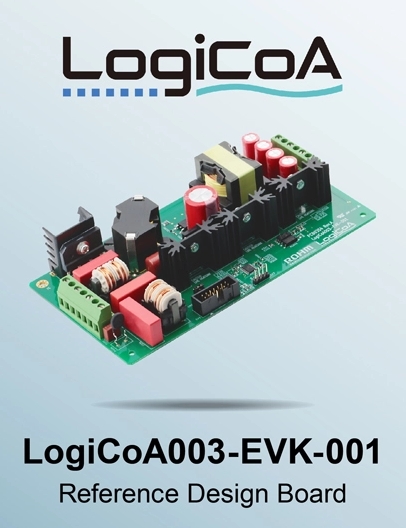
  ROHM’s new reference design (REF67004) is capable of controlling two commonly used power converter types in consumer and industrial power supply applications by using a single MCU :critical conduction mode PFC (Power Factor Correction) and quasi-resonant flyback. This is part of ROHM’s LogiCoA™ Power Supply Solution, that leverages analog-digital hybrid control technology. It combines an analog-controlled power stage circuit featuring ROHM’s superior silicon MOSFETs and gate driver ICs with a digitally managed power supply circuit built around the low-power LogiCoA™ MCU.  Analog-controlled power supplies are widely used in small- to medium-power industrial applications, such as industrial robots and semiconductor manufacturing equipment. However, growing demands for higher reliability and more precise control have made it increasingly difficult for analog-only configurations to meet market expectations. On the other hand, while fully digital power supplies offer fine control and greater flexibility, their adoption in the small to medium power range has been limited due to the high cost and power consumption of digital controllers.  To overcome these challenges, ROHM has developed the LogiCoA™ Power Supply Solution, a hybrid approach that integrates the advantages of both analog and digital control. Combined with ROHM’s high-performance, the low power LogiCoA™ MCUs enable easy control of various power topologies. As the first step, ROHM has released the REF66009 evaluation reference design, allowing users to explore the LogiCoA™ Power Supply Solution using a non-isolated buck converter circuit. This was followed by the launch of the REF67004, a reference design incorporating both PFC and flyback converters – topologies commonly used in consumer and industrial equipment.  The newly introduced REF67004 is a reference design that boosts AC input using a Critical Conduction Mode PFC converter, followed by a Quasi-Resonant Flyback converter to deliver a regulated DC 24V output. Features include a calibration function that compensates for variations in the external component characteristics, enabling the LogiCoA™ MCU to perform high-precision voltage configuration and overcurrent protection. This allows for reduced design margins, making it possible to select more compact (low power) power devices and inductors, ultimately helping to minimize PCB area and lower overall system costs.  The REF67004 also includes a logging function that allows the LogiCoA™ MCU to store operational data, such as input/output voltage, current, temperature, pre-shutdown system status, and cumulative operating time, in its built-in non-volatile memory. This data can be analyzed to easily identify the root cause of power supply failures. On top, various power control parameters and operational history can be easily configured and retrieved from a PC via UART (with a signal conversion device) using sample programs, including the RMOS (Real-time Micro Operating System) power control OS, available on ROHM's website. Practical evaluation is possible through the use of the reference design board LogiCoA003-EVK-001. Going forward, ROHM will continue to provide a variety of power supply reference designs to support and accelerate customer power supply development.  LogiCoA™ Brand  LogiCoA™ is a brand that embodies a design philosophy of fusing digital elements to maximize the performance of analog circuits. By combining the advantages of analog circuitry with those of digital control, it is possible to maximize the potential of circuit topologies, contributing to more efficient power utilization. As LogiCoA™ is a design concept that can be applied not only to the power supply field, but also to power solutions as a whole, ROHM is considering its application in future products and solutions.  ・LogiCoA™ is a trademark or registered trademark of ROHM Co., Ltd.  LogiCoA™ Power Supply Solution Page  The basic architecture and key features of the LogiCoA™ Power Supply Solution are available on ROHM’s website.  https://www.rohm.com/support/logicoa  LogiCoA™ Power Supply Solution Reference Design Lineup  In addition to sample software, a variety of tools necessary for evaluation, such as circuit diagrams, PCB layouts, parts lists, and support documents are available on ROHM’s website, while actual device evaluation is also possible using the reference design board. Going forward, ROHM will continue to expand its lineup of reference designs to support a wide range of power topologies.  ● Reference Design Part No.  • PFC + Flyback Converter: REF67004  • Buck Converter: REF66009  LogiCoA™ MCU  Lineup  Key features include a built-in 3ch analog comparator that can be synchronized with timers, along with a D/A converter that enables digital control of various parameters to support different power supply topologies.  LogiCoA™ MCU Development Support System  Built on a ROHM’s proprietary 16bit RISC CPU core, LogiCoA™ MCUs are fully supported by a dedicated integrated development environment and emulator tools.  For more information on the LogiCoA™ development support system and a product overviews, please visit ROHM’s LogiCoA™ MCU development system support page (link below).  https://www.rohm.com/lapis-tech/product/micon/logicoa-software  Online Sales Information  Reference design boards, reference board and LogiCoA™ MCUs are available for purchase through online distributors such as AMEYA360.  • Reference Design Board P/N:  LogiCoA003-EVK-001*, LogiCoA001-EVK-001  • Reference Board P/N:  RB-D62Q2035TD20, RB-D62Q2045GD24  • LogiCoA™ MCU P/N:  ML62Q2035-NNNTDZWATZ, ML62Q2045-NNNGDZW5BY  Pricing : $677/unit (samples for LogiCoA003- EVK-001, excluding tax)  Application Examples  • Industrial robots • Semiconductor manufacturing equipment • Gaming devices  The LogiCoA™ Power Supply Solution is also suitable for integration into general industrial equipment and consumer devices with power requirements ranging from approximately 50W to 1kW.  Terminology  Critical Conduction Mode PFC (Power Factor Correction) Converter  A configuration used in AC-DC converters within switching power supplies, Critical Conduction Mode PFC offers a high-power factor (indicating efficient utilization of supplied power) while generating less noise compared to Continuous Conduction Mode PFC. A power factor of ‘1’ signifies that all supplied power is being effectively used without waste.  Quasi-Resonant Flyback Converter  A DC-DC converter topology commonly used in isolated power supply designs, these converters leverage a quasi-resonant control technique to minimize switching losses and noise. Ideal for applications up to 100W, it offers advantages in terms of reduced component count and cost. While other forward-type topologies exist, advancements in the components used in these designs have led to smaller, more efficient isolated power supply solutions.  Analog Control Power Supply  A power supply configuration built with analog components, commonly used for applications up to 1kW due to its simplicity and low power consumption. However, implementing advanced features such as customizable parameter settings and data logging is challenging with analog control alone, often requiring fully digital solutions that tend to increase both cost and power consumption.  Digital Control Power Supply  A power supply is managed using digital technology. High-speed CPUs and DSPs are used to precisely monitor and control key parameters such as voltage and current, improving power supply efficiency and reliability. Digital control also enables advanced functions, such as operation log data acquisition, that are difficult to implement with analog control alone. However, CPUs and DSPs tend to be expensive and consume significant power, posing challenges in terms of cost effectiveness and energy efficiency.  • CPU (Central Processing Unit): The core processor responsible for executing programs and performing data processing.  • DSP (Digital Signal Processor): A processor that converts analog signals into digital form and performs operations such as filtering and amplification.  Topology  Refers to the circuit configuration. Power topology defines how electrical energy is transformed and managed within a circuit. The specific configuration depends on factors such as input and output voltage levels, power requirements, and whether electrical isolation is necessary.
Key word:
Release time:2025-08-25 14:24 reading:631 Continue reading>>
New Renesas USB-C Power Solution with Innovative Three-Level Topology Improves Performance and Reduces System Size
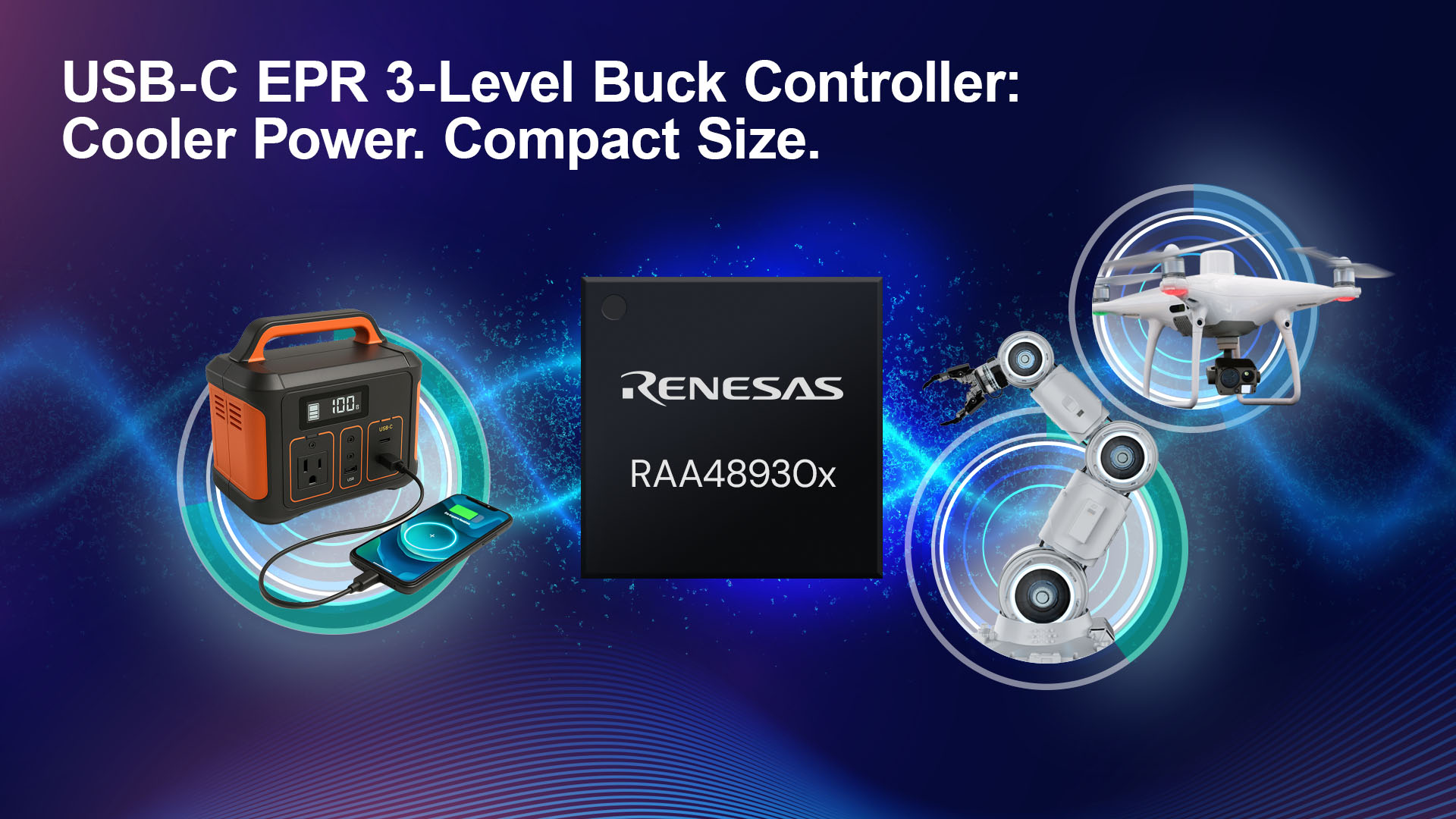
  Renesas Electronics Corporation (TSE:6723), a premier supplier of advanced semiconductor solutions, today introduced the RAA489300/RAA489301 high-performance buck controller designed with a three-level buck topology used for battery charging and voltage regulation in USB-C systems such as multiple-port USB-PD chargers, portable power stations, PC docking station, robots, drones, and other applications that need a high efficiency DC/DC controller.  The three-level buck converter topology enabled by the new IC delivers exceptional efficiency and significantly reduces the required inductance for regulating the output voltage. Its innovative design minimizes power loss and reduces system size, making it ideal for compact, high-performance applications.  The three-level topology consists of two additional switches and a flying capacitor compared to a conventional two-level buck converter. The flying capacitor reduces voltage stress on the switches, allowing designers to use lower voltage FETs with better figures of merit. The result is reduced conduction and switching losses. This topology also enables the use of a smaller inductor with peak-to-peak ripple of only about 25 percent of that of a two-level converter, enabling reduced inductor core and direct current resistance losses.  Renesas is a worldwide leader in USB-PD solutions, offering a comprehensive range of products, including turnkey solutions for various applications. Renesas helps customers shorten their time-to-market with an extensive development environment and pre-certified USB-IF reference designs. Renesas USB-PD solutions offer superior quality and safety, along with high efficiency and power density.  “This three-level buck topology solution is a prime example of Renesas’ worldwide leadership in battery charging,” said Gaurang Shah, Vice President of the Power Division at Renesas. “The innovative technology includes patent-pending breakthroughs that offer our customers clear advantages over competing USB-C power offerings.”  The 3-Level DC-DC RAA489300/RAA489301 battery charger and voltage regulator offers superior thermal performance, which reduces cooling requirements and results in cost and space savings. This innovative approach addresses the growing demand for compact and efficient power management systems.  Key Features of the RAA489300/RAA489301 battery charger and voltage regulator  Wide range of input and output voltages for use in voltage battery packs and with various PD adapters  Integrated safety features with built-in protection mechanisms against overcharging, overheating, and voltage anomalies  Scalability for easily adapting to various power levels and application requirements  Optimized switching architecture divides the voltage across power switches, improving efficiency  Minimizes power consumption, contributing to greener, more sustainable designs  Lower thermal stress improves system reliability and extends product lifespan  Winning Combinations  Renesas offers the RTK-251-SinkCharger-240W and the 240W Dual-Port Daughter Card Winning Combinations that minimize the effort required for customers to design USB-C battery charging into their products. Winning Combinations are technically vetted system architectures from mutually compatible devices that work together seamlessly to bring an optimized, low-risk design for faster time to market. Renesas offers more than 400 Winning Combinations with a wide range of products from the Renesas portfolio to enable customers to speed up the design process and bring their products to market more quickly.   Device Availability  The RAA489300/RAA489301 is available today in a 4×4 mm 32-lead TQFN package. Comprehensive design support and tools, including the RTK-251-SinkCharger-240W Kit and the RTKA489300DE0000BU Evaluation Board, are also available.
Key word:
Release time:2025-08-20 11:46 reading:1037 Continue reading>>
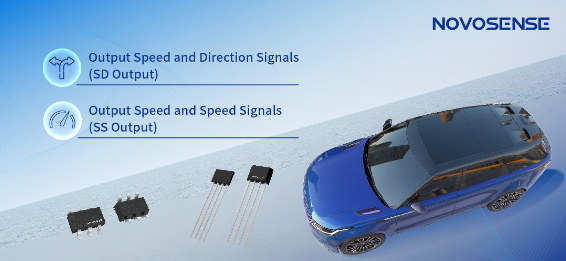
Adapting to challenging magnetic environments: MT73xx 3D dual-output Hall latches from NOVOSENSE enable precise automotive motor control
  The NOVOSENSE MT73xx series dual-output Hall latches, based on 3D Hall technology, support SS (Speed & Speed) or SD (Speed & Direction) dual-channel outputs and complies with Automotive Grade 0 standards. Ideal for motor control systems such as power windows, liftgates, and sunroofs, this product family enhances the accuracy and stability of speed and position detection, optimizing overall in-vehicle comfort.  In motor control systems, precise detection of speed and direction signals directly influences system response speed and operational stability. Traditional solutions typically rely on a combination of two separate Hall latches, requiring high magnetic ring installation precision. This often leads to issues such as signal phase deviation, poor synchronization, and structural complexity.  Integrates a 3D Hall sensing structure with inherent orthogonal output characteristics, the MT73xx series can simultaneously deliver dual-channel speed signals (SS output) with a 90° phase difference or speed and direction signals (SD output), making it widely suitable for “speed-direction” detection applications. This design reduces dependency on precise positioning of magnetic poles, mitigates dual-channel phase deviation, simplifies system architecture, and improves overall system stability, providing a more flexible and reliable solution for motion control detection.  Compatibility with diverse magnetic ring configurations enabled by VHS technology  To achieve high-precision 3D sensing, the MT73xx series adopts NOVOSENSE’s proprietary VHS (Vertical Hall Sensor) technology. Through combinations of XY, YZ, and XZ axial sensing, any two axes naturally deliver orthogonal outputs, enhancing signal synchronization.  Additionally, the MT73xx series offers excellent compatibility with various magnetic ring configurations – whether axial, radial, or irregularly shaped magnets – maintaining robust duty cycle performance. This allows customers to adapt designs flexibly depending on magnetic ring characteristics and installation environments, further reducing development complexity and tuning costs.  Dual-output design for optimized system integration  Regarding system integration, the MT73xx’s dual-output capability allows it to replace traditional single- or dual-Hall solutions by directly transmitting SS (Speed & Speed) or SD (Speed & Direction) signals to ECU, minimizing the requirements for peripheral redundant position sensors.  This approach not only saves PCB space and simplifies structural layouts, but also enhances solution integration, offering greater design flexibility for innovative applications in motor control and intelligent cockpit systems.
Key word:
Release time:2025-08-13 15:35 reading:953 Continue reading>>
Murata Launches iSIM IoT Module with Built-In Global Connectivity from 1NCE
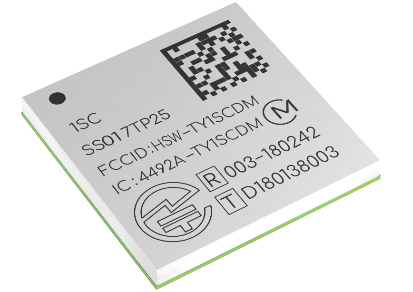
  Murata today introduced a new iSIM-compatible LPWA module, the Type 1SC, pre-integrated with out-of-the-box connectivity from 1NCE, one of the world’s fastest-growing IoT companies. The collaboration delivers simplified, scalable global connectivity, making it easier to launch and manage low-power IoT devices. Optimized for low-power, low-data applications, the solution comes bundled with 50 MB of data and optional top-ups, enabling rapid, cost-effective deployment for applications such as asset tracking, fleet management, and healthcare monitoring. Supporting both LTE-M and NB-IoT, the module offers broad compatibility across networks in 173 countries.  By embedding 1NCE’s cloud-based connectivity directly into the module, Murata eliminates the need for separate SIM provisioning, streamlining the design and manufacturing process for compact, energy-efficient devices. The result is a faster, more reliable path to market. Additionally, with over 30 million devices managed across 23,000+ customers, its platform simplifies lifetime IoT connectivity – bringing seamless integration, global reach, and built-in scalability to the next generation of connected products.  “Murata’s Type 1SC module represents our commitment to driving innovation in the IoT space,” said Hiro Hyogo, Senior Manager, Corporate Technology and Innovation at Murata Americas. “By having connectivity pre-installed on our modules, we’re reducing the complexities and costs associated with global IoT deployments while ensuring strong security and performance.”  "IoT will be dominated by software players, which is why Murata chose and trusted in 1NCE," said Fabian Kochem, Head of Global Product Strategy at 1NCE. “The supply chain of IoT is bloated, but our two companies save our customers time and money.”
Key word:
Release time:2025-08-13 15:33 reading:680 Continue reading>>
High-voltage half-bridge driver NSD2622N from NOVOSENSE: A high-reliability, high-integration solution tailored for E-mode GaN
  NOVOSENSE has launched NSD2622N, a high-voltage half-bridge driver IC specifically designed for enhancement-mode GaN (E-mode GaN). This chip integrates positive/negative voltage regulation circuits, supports bootstrap supply, and provides high dv/dt immunity and robust driving capability. It significantly simplifies GaN driver circuit design while enhancing system reliability and reducing overall costs.  Application background  In recent years, gallium nitride high-electron-mobility transistors (GaN HEMTs) are gaining increasingly widespread adoption in high-voltage, high-power applications, such as AI data center power supplies, microinverters, and on-board chargers (OBCs). With significant advantages of high switching frequency and low switching losses, GaN HEMTs enable substantially improved power density in power supply systems, noticeably optimized energy efficiency, and significantly reduced system costs.  However, GaN devices still face challenges in real-world applications. For instance, E-mode GaN devices exhibit low turn-on thresholds. In high-voltage and high-power applications, particularly in hard-switching operation mode, poorly designed driver circuits can lead to false triggering due to crosstalk during high-frequency high-speed switching. Additionally, the complexity of compatible driver circuit designs raises the barrier to GaN device adoption.  To accelerate widespread GaN adoption, leading GaN manufacturers at home and abroad have introduced some power ICs with integrated drivers, especially MOSFET-LIKE GaN power devices in Si-MOSFET-compatible packages, which somewhat reduce GaN driver circuit design complexity. However, driver-integrated GaN solutions have limitations: they struggle to meet customized design requirements and are unsuitable for applications adopting multi-device parallel or bidirectional switching topologies. Therefore, discrete GaN devices with dedicated drivers remain essential for many applications. To address the above-mentioned limitations, NOVOSENSE has developed NSD2622N – a driver IC tailored to E-mode GaN, aiming to deliver high-performance, high-reliability, and cost-competitive driving solutions for high-voltage and high-power GaN applications.  Product features  NSD2622N is a high-voltage half-bridge driver IC specifically designed for E-mode GaN. It integrates a voltage regulation circuit capable of generating a configurable stable positive voltage from 5V to 6.5V to ensure reliable GaN driving, as well as a charge pump circuit that produces a fixed -2.5V negative voltage for reliable GaN turn-off. By integrating both positive and negative voltage regulation circuits, the chip supports high-side output with bootstrap supply.  NSD2622N leverages NOVOSENSE’s proven capacitive isolation technology. Its high-side driver withstands a voltage range of -700V to +700V and a minimum SW dv/dt immunity of 200V/ns. Meanwhile, low propagation delay and tight delay matching between high-side and low-side outputs make it a perfect match for the high-frequency, high-speed switching requirements of GaN devices. Additionally, NSD2622N delivers 2A (source) and -4A (sink) peak drive currents on both high-side and low-side outputs, meeting the requirements of high-speed GaN driving and multi-device parallel configurations. The IC also includes an integrated 5V LDO that can power circuits like digital isolators in applications requiring isolation.  Key specifications of NSD2622N  SW voltage range: -700V to 700V  SW dv/dt immunity: > 200V/ns  Wide supply voltage range: 5V-15V  Adjustable positive output voltage range: 5V-6.5V  Built-in negative output voltage: -2.5V  Peak drive current: 2A (source) / 4A (sink)  Minimum input pulse width (typical): 10ns  Input-to-output propagation delay (typical): 38ns  Pulse width distortion (typical): 5ns  Rise time (1nF load, typical): 6.5ns  Fall time (1nF load, typical): 6.5ns  Built-in dead time (typical): 20ns  Bootstrap supply for high-side output  Integrated 5V LDO for digital isolator supply  Undervoltage lockout (UVLO) and overtemperature protection  Operating temperature range: -40°C to +125°CFunctional block diagram of NSD2622N  Eliminating false triggering risks and providing more stable drive voltage  Compared to conventional Si MOSFET driver solutions, the key challenge in E-mode GaN driver circuit design lies in providing appropriate, stable and reliable positive/negative bias voltages. This is because that E-mode GaN typically requires a 5V-6V turn-on voltage, while its threshold voltage is as low as 1V, or even lower at high temperatures, necessitating negative turn-off voltage to prevent false triggering. To address this challenge, two common drive solutions are used for E-mode GaN: resistive-capacitive (RC) voltage division drive and direct drive.  1. RC voltage division drive  This approach utilizes standard Si MOSFET driver ICs. As shown in the diagram, during turn-on, the parallel combination of Cc and Ra is connected with Rb in series, dividing the driver supply voltage (e.g., 10V) to provide a 6V gate drive voltage for the GaN device, with Dz1 clamping the positive voltage. During turn-off, Cc discharges to provide negative turn-off voltage for the GaN device, with Dz2 clamping the negative voltage.RC voltage division drive solution  Although the RC voltage division circuit does not require sophisticated driver ICs, it introduces additional parasitic inductance due to a large number of components involved, which can impact GaN’s switching performance at high frequencies. Moreover, since the negative turn-off voltage relies on discharge from capacitor Cc, the negative turn-off voltage proves unreliable.  As shown in the half-bridge demo board test waveforms, during the startup phase (T1 in the waveform), the absence of initial charge on Cc results in failure to establish negative voltage and thus zero-voltage turn-off; during the negative turn-off period following the driver’s signal transmission (T2), the negative voltage amplitude fluctuates with capacitor discharge; and during the prolonged turn-off period (T3), the capacitor cannot sustain negative voltage, eventually discharging to zero. Consequently, RC voltage division circuits are generally limited to medium/low power applications with relatively lower reliability requirements, and are proved unsuitable for high-power systems.Waveform of E-mode GaN using RC voltage division drive circuit(CH2: Drive supply voltage; CH3: GaN gate-source voltage)  2. Direct drive  The direct drive solution requires selecting a driver IC with an appropriate undervoltage-lockout (UVLO) threshold, for example, NSI6602VD, which is specifically designed for E-mode GaN with a 4V UVLO threshold. When paired with an external positive/negative voltage regulation circuit, it can directly drive E-mode GaN devices. Below is a typical application circuit.NSI6602VD driver circuitPositive and negative voltage regulation circuits  This direct drive solution can provide reliable negative turn-off voltage for GaN under all operating conditions, when the auxiliary power supply is functioning normally. As a result, this approach is widely adopted in various high-voltage, high-power GaN applications.  The next-generation GaN driver NSD2622N from NOVOSENSE, integrates the positive/negative voltage regulation circuits directly into the chip. As shown in the half-bridge demo board test waveforms below, NSD2622N maintains consistent negative turn-off voltage amplitude and duration regardless of operating conditions. Specifically, during startup (T1 in the waveform), the negative voltage is established even before the driver sends signals; during GaN turn-off (T2), the negative voltage remains stable in amplitude; during extended periods without driver signals (T3), the negative voltage continues to stay reliably stable.Waveforms of E-mode GaN using NSD2622N driver circuit(CH2: Low-side GaN Vds, CH3: Low-side GaN Vgs)  Simplified circuit design and reduced system costs  NSD2622N can provide stable and reliable direct drive for GaN devices. More importantly, by integrating positive/negative voltage regulators, it significantly reduces external component count. By adopting the bootstrap supply architecture, NSD2622N greatly simplifies driver power circuit design and lowers overall system costs.  Taking a 3kW power supply unit (PSU) as an example, assuming both phases of the interleaved TTP PFC and full-bridge LLC use GaN devices, a complexity comparison between two direct-drive solutions is given below:  When using the NSI6602VD driver solution, each half-bridge high-side driver requires an independent isolated power supply in conjunction with corresponding isolation and positive/negative voltage regulation circuits. This means complex auxiliary power supply design for isolation. Given the high power quality requirements of GaN driving and the fact that the main power paths of the PFC and LLC stages are typically placed on separate boards, a two-stage auxiliary power architecture is often necessary. In this configuration, the first stage typically employs a device with wide input voltage range like flyback converter, to generate regulated voltage rails. The second stage may use an open-loop full-bridge topology to provide isolated power and further regulate the power to generate the required positive and negative supply voltages for NSI6602VD. Below is a typical power architecture for such a driver solution.Typical power architecture for NSI6602VD driver solution  The NSD2622N driver solution significantly simplifies auxiliary power design through its bootstrap supply capability. Below is a typical power architecture for this approach.Typical power architecture for NSD2622N driver solution  A detailed comparison of bill-of-materials (BOM) for driver and power supply circuits between the above-mentioned two GaN direct-drive solutions is provided in the table below. It can be seen that the NSD2622N solution utilizing bootstrap supply, dramatically reduces total component count compared to the NSI6602VD’s isolated power supply approach, resulting in substantially lower system costs. Even in applications requiring isolated power supply, NSD2622N maintains its competitive edge - its integrated positive/negative voltage regulators enable a more simplified peripheral circuit relative to the NSI6602VD solution, leading to fewer components and lower system costs.BOM comparison between two GaN direct drive solutions  Versatile GaN compatibility and flexible drive voltage adjustment  The E-mode GaN driver IC NSD2622N from NOVOSENSE delivers not only superior performance but also broad compatibility across various GaN devices from different brands, of different types (including both voltage-mode and current-mode), and at different voltage ratings. For instance, the output voltage of NSD2622N can be set between 5V to 6.5V by adjusting feedback resistors. This enables selection of the most appropriate driving voltage for any GaN device by simply adjusting the feedback resistors to match specific GaN characteristics, allowing GaN devices from different brands to operate at their individual peak performance points.  In addition, NSD2622N features a minimum dv/dt immunity of 200V/ns on the switching node (SW), enhancing the upper limit of GaN switching speed. The adoption of a more compact QFN package and the design of independent turn-on and turn-off output pins further reduce the driver loop parasitic inductance. The over-temperature protection ensures safer GaN applications.  NOVOSENSE also offers single-channel GaN driver IC NSD2012N. Featuring 3mm*3mm QFN package and adjustable negative voltage capability, it can meet more personalized application requirements.
Key word:
Release time:2025-08-07 14:08 reading:1013 Continue reading>>
PRI Certification, the #2 Certification Body in China, Launches IATF 16949 Services to Support Growing Automotive Industry
  PRI Certification Expands by Adding IATF 16949 Certification Services in China and Enhances Position as One of the Top Two Chinese CBs with 18% Market Share  PRI Certification proudly announces the official launch of IATF 16949 certification services in China. The expansion through PRI China’s Beijing office allows the organization to offer IATF 16949 services directly to the Chinese marketplace. In addition to this stronger presence in China, PRI Certification also holds the #2 market share in the United States. This dual-market leadership underscores PRI’s global credibility and trusted reputation across two of the world’s most significant manufacturing regions.  This strategic move solidifies PRI Certification’s commitment to delivering high-quality, industry-specific certification solutions throughout Asia. While the Beijing office will serve as the local hub for client engagement and auditing, all technical and certification decisions will continue to be supported through PRI’s team in Warrendale, Pennsylvania, USA—ensuring global consistency, technical rigor, and impartial oversight.  Over a Decade of Experience in Asia  PRI Certification has been delivering IATF 16949 certification in Japan for over 10 years, earning a strong reputation for excellence and reliability in the region. Expanding into China is a natural progression that aligns with growing demand in the Asian automotive market.  Expert Auditors with Deep Automotive Knowledge  PRI’s auditors bring unmatched technical expertise and practical insight to each audit. This ensures clients receive not just compliance evaluations but also process improvements that contribute to lasting business value.  Tailored Audits Across 30+ Industries  PRI Certification has successfully delivered certification services across more than 30 industries worldwide. The organization’s approach to auditing is tailored to the specific needs of the automotive sector, making PRI a trusted partner for companies pursuing or maintaining IATF 16949 Certification.  Continuing a Legacy of Quality in China  PRI has been providing certification services in China since 2010, helping organizations achieve international quality benchmarks across a wide range of sectors. The introduction of IATF 16949 services marks a significant milestone, strengthening PRI’s ongoing commitment to the region’s automotive manufacturing excellence.
Key word:
Release time:2025-08-05 14:46 reading:639 Continue reading>>

Turn to

/ 240

  • Week of hot material
  • Material in short supply seckilling
model brand Quote
MC33074DR2G onsemi
RB751G-40T2R ROHM Semiconductor
CDZVT2R20B ROHM Semiconductor
TL431ACLPR Texas Instruments
BD71847AMWV-E2 ROHM Semiconductor
model brand To snap up
BU33JA2MNVX-CTL ROHM Semiconductor
TPS63050YFFR Texas Instruments
ESR03EZPJ151 ROHM Semiconductor
IPZ40N04S5L4R8ATMA1 Infineon Technologies
STM32F429IGT6 STMicroelectronics
BP3621 ROHM Semiconductor
Hot labels
ROHM
IC
Averlogic
Intel
Samsung
IoT
AI
Sensor
Chip

About us

Qr code of ameya360 official account

Identify TWO-DIMENSIONAL code, you can pay attention to

AMEYA360 mall (www.ameya360.com) was launched in 2011. Now there are more than 3,500 high-quality suppliers, including 6 million product model data, and more than 1 million component stocks for purchase. Products cover MCU+ memory + power chip +IGBT+MOS tube + op amp + RF Bluetooth + sensor + resistor capacitance inductor + connector and other fields. main business of platform covers spot sales of electronic components, BOM distribution and product supporting materials, providing one-stop purchasing and sales services for our customers.

Please enter the verification code in the image below:

verification code