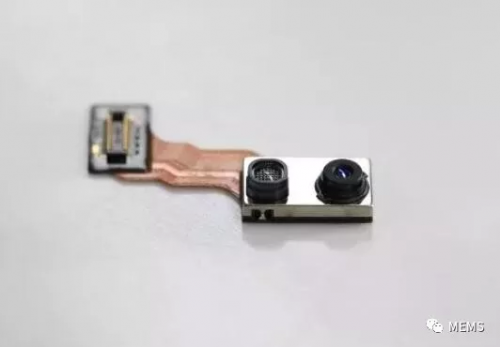

新 <span style='color:red'>iPhone</span> 将由 LG 独家供应摄像头模组?其他厂商都已放弃来发 ToF 摄像头模组
关键词:
发布时间:2019-07-04 00:00 阅读量:2241 继续阅读>>
苹果初代<span style='color:red'>iPhone</span>原型机M68 PCB曝光,十几年前的设计如今是否过时?
  “这一天我等了两年半”。苹果已故首席执行官乔布斯在2007年1月9日发布第一部iPhone时这样说道。  就在这两年半的时间里,苹果公司秘密研发了iPhone,对于公司内部的许多人而言,他们只知道该设备的代号是“M68”和“Purple 2”。苹果希望这款iPhone能让所有人都为之一振,这意味着许多在原始手机上工作的工程师甚至都不知道它最终会是什么样子。  这款iPhone原型机看起来很像PC  为了实现这种程度的保密,苹果研制了特殊的原型开发板,其中包含几乎所有iPhone的部件,分布在一块大型电路板上。现在,这块电路板被公之于众,这也是这块电路板的第一次公开展示。它提供了一个罕见的历史视角,展示了计算历史的一个重要部分,展示了苹果是如何开发出最初的iPhone的。  乍一看,红色iPhone M68原型板看起来就像是10年前的PC上的主板,它的大小大致相同,但组件略有不同。苹果为主要负责原始iPhone的软件和无线电部分的工程师开发了这种特殊的电路板,即工程验证测试(EVT)样本。这些开发人员不会知道iPhone的最终长什么样,有时这些主板甚至没有在我们现在在照片中看到的屏幕。苹果仅为其原型iPhone硬件使用红色印刷电路板,在量产时用蓝色,绿色或其他颜色。  虽然没有大风扇来冷却处理器或内存,但该原型确实有一些和旧PC硬件类似的组件。顶部有一个用于测试iPod配件的串行连接器,因为iPhone也使用了苹果的30针连接器,甚至还有一个用于连接LAN的端口。两个Mini USB连接器位于电路板侧面,工程师使用它们访问主要的iPhone应用处理器和无线电基带。苹果工程师可以使用这些Mini USB端口为设备编码,而无需看到屏幕。  大多数使用这样一块电路板的工程师都负责将苹果的底层Darwin操作系统移植到iPhone上。Darwin是一个基于Unix的操作系统,包含一组核心组件,可以为macOS,iOS,watchOS,tvOS和audioOS提供支持。苹果将与Darwin合作的开发人员称为“核心操作系统工程师”。他们负责内核,文件系统,设备驱动程序,处理器架构以及许多其他重要的低级平台工作。这些工程师确保所有重要的硬件和连接能够完美运行。  苹果工程师可以使用这块电路板测试原始iPhone的每个部分  iPhone原型板的其余部分与普通PC主板有很大不同。在顶部,你会看到一个SIM卡插槽,附近有两个用于Wi-Fi和蓝牙连接的天线。这些连接方式看起来与它在最终初代iPhone中的连接方式完全相同。这款无线电板包括来自英特尔,英飞凌,CSR,Marvell和Skyworks的芯片,可以看出苹果当时为了推出初代iPhone,找了多少公司合作。  在无线电板的右侧,你会看到一个RJ11端口,它与普通固定电话使用的插孔相同。苹果设计这个接口的目的是让工程师可以将普通固定电话耳机插入这个iPhone开发板上并测试语音电话。现在你可以使用苹果 Watch接听电话,但你很难想象2006年用这个原型iPhone开发板是如何拨打电话的。  这个原型板的中央是iPhone的核心:苹果的应用处理器。上面的标识是三星K4X1G153PC,苹果使用三星内存堆叠620MHz 的ARM处理器(ARM1176JZF)来运行iPhone操作系统。这是一种称为层叠封装PoP(package on package)的集成电路封装方法,其中CPU封装在底部,存储器封装在顶部。苹果将其与4GB的三星NAND(K9HBG08U1M)配对以用于存储操作系统。绿色NAND存储模块可供开发人员轻松移除,只需插入新卡即可快速测试不同的操作系统版本和更改。  在这个特定的开发板上,甚至还有一个屏幕,但是iPhone的主页按钮(这里称为菜单按钮)安装在显示器左侧的主板上,电源和音量按钮位于显示屏的左侧。这个原型机令人感到意外的是竟然还能开机,但是它只是显示苹果徽标。工程师会启动类似于命令提示符来测试内核更改,据了解,该原型机可以通过主板侧面的30针连接器将其连接到iTunes,iTunes会把它检测成可以恢复的iPhone。  在这块板子的其他地方,你会看到许多带针脚的白色连接器。较小的是用于低级调试的JTAG连接器。工程师可以将信号探头连接到其中一些连接器,以监控各种信号和电压,从而允许开发人员测试iPhone的关键软件更改,并确保它们不会对硬件产生负面影响。将所有组件都可用于在这样的可插拔板子上进行测试也使工程师更容易进行更改和测试,而不是在手机外壳中,如果遇到这些JTAG无法访问的组件,还有各种DIP开关可以在电路板的各个部分周围调试信号,以便进一步测试。  如果苹果内部的工程师收到一个没有屏幕的开发板,则可以使用电路板侧面的视频分量接口或RCA连接器将其连接到显示器。由于侧面还有立体声线路输出端口,工程师还可以测试耳机连接功能。甚至iPhone的主摄像头也安装在电路板上进行测试,还有一个巨大的空间来测试电池。如果工程师没有连接电池,则顶部的DC连接器可接入外部电源。苹果还为接近传感器测试留出了空间,该位置被标记为“prox flex”。  从这款iPhone开发板上可以清楚地看到,苹果公司在推出iPhone之前几个月就想到了工程师的一切。类似的主板将在2006年和2007年的6月29日推出初代iPhone之前使用。  如今苹果不再使用如此大的主板进行iPhone开发,该公司转向使用iPhone 4的小型主板作为原型机,并在新研发的iPhone原型机上套上大而笨重的安全防护罩,这使得iPhone开发人员可以在设计保密的情况下调试最终形式的硬件。许多其他手机制造商也在最后的开发阶段使用类似的巨大外壳来保密。  这个早期的原型很好地提醒人们,创造一种现在每天都有数百万人随身携带的设备所带来的巨量且保密的工作,尤其是当我们看到iPhone这样的早期硬件设计实例,这个10多年前的设计或许对现在仍有借鉴的意义。
关键词:
发布时间:2019-03-21 00:00 阅读量:2036 继续阅读>>
<span style='color:red'>iPhone</span>传第二波砍单 摩根大通砍价十台厂
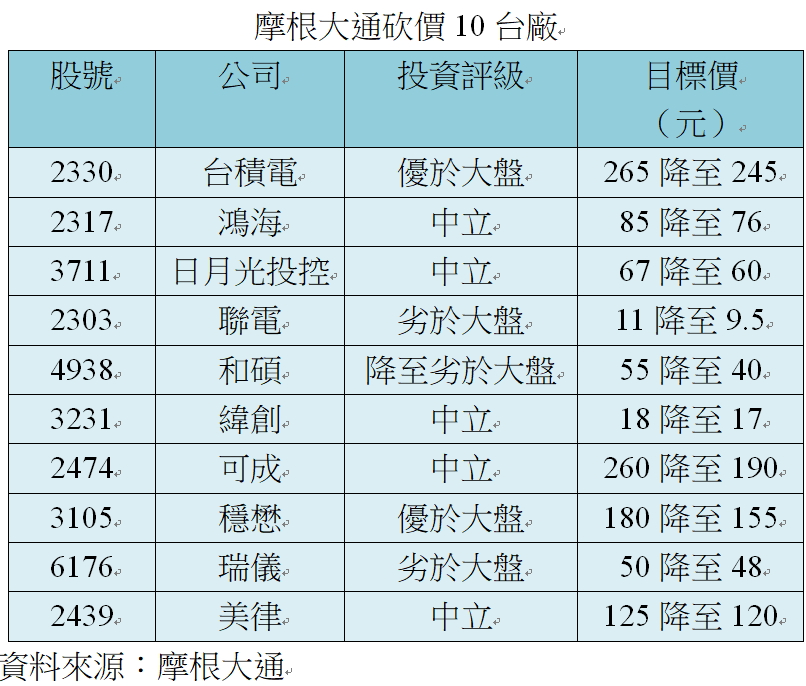
科技股再传利空! 外资摩根大通最新发布近十篇台湾供应链报告,内容包括一篇苹概股迎来第二波砍单、一篇半导体库存调整不如预期的产业报告,及台积电等10家台厂目标价遭下调的个股报告,其中,代工大厂和硕同步被降评至「劣于大盘」。摩根大通该批报告由科技产业研究部主管哈戈谷(Gokul Hariharan)负责产业分析,接力由旗下分析师发表多篇砍价报告,包括台股权王台积电目标价从265元降到245元,鸿海85元降到76元,日月光投控67元降到60元, 联电11元降至9.5元,和硕55元降至40元,其评级同时由「中立」降到「劣于大盘」。另一家代工大厂纬创获重申「中立」,目标价自18元略调降至17元,还有近期频被外资频频砍价的可成,由260元砍到190元,稳懋180元降至155元,瑞仪50元降到48元,以及美律自125元降到120元。哈戈谷表示,这次摩根大通砍价多档苹概股和半导体股,原因是iPhone进行第二波砍单的机率高,摩根大通原本就不看好今年新款iPhone,销量下滑的坏消息又屡屡传出。 目前摩根大通预测首季iPhone出货降到4,100万支,第2季降到3,500万支,今、明年iPhone EMS厂出货都降到1.85亿支。哈戈谷指出,台湾EMS厂中,鸿海、和硕和纬创各因应美中贸易战,进行不同的迁厂计划,随着iPhone出货下调,迁厂拉高支出,厂商毛利恐持续低迷。当中,又以和硕市占达到顶峰,未来的成长性较不看好,成为本次唯一被砍价又降评的代工厂。台积电方面,哈戈谷认为,另外有半导体库存调整逆风,根据摩根大通掌握,今年逻辑半导体营收可能较去年衰退,使台积电先进制程放量不如预期。小摩最新预估,台积电将于17日法说会释出的展望,今年以美元计价营收仅成长1%,远不及近年3%-5%或更高的水平。不过哈戈谷也说,台积电去年获利可望创高,股利政策有机会优于预期,预估每股派发9.5元股利,换算殖利率超过4%,将是股价来到低档的最大支撑。相较下,晶圆代工二哥联电和封测大厂日月光,在毛利、现金流提升的进度缓慢,后续半导体景气进一步衰退,两家大厂的冲击势必大很多,因此分别重申「劣于大盘」及「中立」。
关键词:
发布时间:2019-01-14 00:00 阅读量:2146 继续阅读>>
<span style='color:red'>iPhone</span>在华不好卖,苹果引爆股市2019年“第一颗雷”
2019年1月2日,金融市场出现极为“罕见的一幕”。科技巨头苹果公司在今年首个交易日盘后,意外宣布下调第一财季营收展望:第1季营收至840亿美元,随后引爆苹果盘后股价大跌8%。苹果业绩“爆雷”引发市场“巨震”。美股各大芯片公司及期指SP500均大幅下跌,原本上涨的许多公司盘后纷纷下跌。1月3日(周四)亚股开盘,台股苹概股应声重挫,截至早盘10时许,大立光、半导体龙头台积电皆下跌近 1%,鸿海下跌逾1%,可成则重挫逾 3%、嘉联益更破底大跌逾 5%。苹果韩国供货商亦随之下跌,如 LG Innotek、SK 海力士、三星 SDI 以及三星电机分别低开 3.6%、3.6%、1.9%、2.3%;苹果美国供货商 Skyworks Solution 以及 Broadcom 股价也受到拖累。苹果公司宣布的消息主要内容为:中美贸易战引发压力,下调了其本季度营收预测,理由是iPhone更新次数减少,中国销售疲软。根据Refinitiv的IBES数据,该公司预计第一季度营收将达到840亿美元,低于分析师预计的915亿美元。而苹果公司最初预计本季度的收入将在890亿至930亿美元之间。该公司将毛利率从38%至38.5%之间,降至38%左右。这意味着自 2011 年库克上任苹果执行长以来,苹果首次出现旺季营收不旺。在近日公布的“致投资者的信”中,苹果公司CEO首席执行官蒂姆•库克(Tim Cook)表示:“虽然我们预计主要新兴市场将面临一些挑战,但没有预料到经济减速的程度,特别是在大中华地区。”他表示,苹果的大部分收入低于预期,而且全球收入同比下降了100%以上,主要是因为大中华地区的iPhone、Mac和iPad的销售疲软。其他国家对新款iPhone的升级“并不像我们想象的那么强劲”。库克指出,虽然苹果的其他部门的收入比去年增长了近19%,但长期以来,iPhone一直是苹果的核心业务,如果苹果不能卖出足够的手机,整个公司都会陷入困境。不过,库克在信中承认,中国市场并不是iPhone销售的唯一问题。他表示:“虽然一些市场的宏观经济挑战是造成这一趋势的一个关键因素,但我们认为还有其他因素会对我们的iphone表现产生广泛影响,包括消费者适应运营商补贴减少、美元强势相关的价格上涨,以及一些用户利用降价显著的iPhone电池更换项目。” “如果你看看我们的结果,我们的差距超过100%来自iPhone,而且主要是在大中华区,”库克接受采访时表示。 “很明显,下半年经济开始放缓,我认为美国和中国之间的贸易紧张局势给经济增加了压力。”白宫发言人没有立即回应库克对美中贸易紧张局势的评论。苹果CEO库克在这封信件的最后表示:“尽管2019财年Q1是充满挑战的季度,我们自信公司的竞争力强劲,也会在逆境中重新调整,会利用企业文化的灵活性、适应力和创造性。最重要的是,我们有信心并对即将推出的产品与服务组合感到激动,苹果的创新是地球最佳,我们不会把脚从踩油门的模式抬起来。”值得注意,苹果在“预警信”中强调了“净现金流在长期处于中性水平”的目标,可能暗示会利用股息分红或股票回购等方式,来增加股东回馈的力度,进而帮助提振股价。公开信摘要如下:苹果投资者们:今天,我们重新修订了苹果2019年第一财季的业绩展望,本财年将于2019年12月29日结束。我们现在的预期包括:——营收约为840亿美元——毛利率约为38%——营运开支约87亿美元——其他收入/(费用)约5.5亿美元——分立项目前税率约为16.5%——我们预计用于计算摊薄每股收益的股票数量约为47.7亿股基于这些估算,我们的营收将低于本季度最初的业绩展望,其他项目仍大致符合我们此前预期。虽然我们需要几个星期才能完成并报告最终业绩,但我们现在想要得到些初步的信息。我们的最终业绩可能与这些初步估计有所不同。大约60天前,当我们与你们讨论第一季度的业绩展望时,我们知道第一季度将受到宏观经济和苹果特有因素的双重影响。根据我们对这些情况的最佳估计,我们预计本季度营收将同比略有增长。你可能还记得,我们讨论了四个因素:第一,我们知道iPhone的不同发布时间会影响我们的数据对比。我们的顶级机型(iPhone XS和iPhone XS Max)在2018年第四季度出货,而iPhone X于2018年第一季度出货。我们知道这将为2019年第一财季创造出比较困难的局面,这与我们的预期大致相符。第二,我们知道美元走强会造成不利影响,并预计这将使我们的营收同比增长减少约200个基点(大约2%)。这也大致符合我们的预期。第三,我们知道本季度新产品数量将达到前所未有的水平,并预计供应紧张将影响我们在第一财季销售某些产品。同样,这也符合我们的预期。在整个季度,苹果智能手表Apple Watch Series 4、iPad Pro、AirPods以及MacBook Air的销量都会受到很大影响。第四,我们预期某些新兴市场将进入经济增速趋稳状态。结果证明,这比我们预期的影响要大得多。此外,这些因素和其他因素导致用户升级iPhone的比例比我们预期的要少。最后两点导致我们降低了业绩展望,我想在这两个问题上再深入阐述下。新兴市场挑战我们在中国的零售店和渠道合作伙伴客流量正在下降。市场数据显示,大中华区智能手机市场的萎缩尤为明显。尽管面临这些挑战,我们相信我们在中国的业务有着光明的前景。中国的iOS开发者社区是世界上最具创新性、创造性和活力的社区之一。我们的产品在客户中拥有强大的拥护者,具有很高的参与度和满意度。我们在中国的业绩包括服务收入创下新纪录,我们的设备安装基数在过去一年有所增长。我们为能参与中国市场而自豪。iPhoneiPhone的收入低于预期,主要是在大中华区,这是导致我们的收入低于预期的主要原因。事实上,iPhone以外的类别(服务、Mac、iPad、可穿戴设备/家居产品/配件)同比增长了近19%。虽然大中华区和其他新兴市场是iPhone收入同比下降的主要原因,但在一些发达市场,iPhone的升级也没有我们预期的那么强劲。尽管在某些市场宏观经济挑战是导致这一趋势的一个关键因素,但我们认为还有其他因素广泛影响iPhone的业绩,包括运营商补贴减少、美元走强导致的价格上涨以及用户更多利用显著降价的iPhone电池更换项目。积极业绩指标尽管修改我们的业绩展望令人感到失望,但我们在许多领域的表现都显示出了非凡的实力。我们的活跃设备安装基数在12个月内增长了1亿多部,创历史新高。现在被使用的苹果设备比以往任何时候都多,这证明了我们客户的忠诚度、满意度和参与度。此外,如前所述,iPhone业务以外的收入同比增长了近19%,包括来自服务、可穿戴设备以及Mac的创纪录收入。我们的非iPhone业务更少出现在新兴市场,而绝大多数的服务业务收入于安装基数有关,与当前销售关系不大。本季度服务收入超过108亿美元,在每个地理区域都创下了新的季度纪录,我们正在努力实现从2016年到2020年将该业务规模扩大一倍的目标。随着Apple Watch和AirPods在假日购物者中广受欢迎,可穿戴设备同比增长近50%。MacBook Air和Mac mini的推出也推动了Mac电脑的营收同比增长,而新款iPad Pro的推出则推动iPad实现了两位数的营收同比增长。我们还希望在美国、加拿大、德国、意大利、西班牙、荷兰和韩国等几个发达国家创造最高收入纪录。尽管我们在某些新兴市场看到了挑战,但墨西哥、波兰、马来西亚和越南等其他国家也创下了新的纪录。最后,我们还预计苹果每股收益将创下历史新高。展望未来我们的盈利能力和现金流创造能力都很强,我们预计在本季度结束时将拥有大约1300亿美元的净现金。正如我们之前所说,我们计划在一段时间内实现净现金中性。在我们走出这个充满挑战的季度之际,我们对我们业务的根本实力一如既往地充满信心。我们习惯以实现长期目标的方式来管理苹果,苹果总是在逆境中重新审视我们的方法,利用我们文化的灵活性、适应性和创造性,并因此变得更好。最重要的是,我们对未来的产品和服务充满信心和激情。苹果的创新是地球上其他公司所不具备的,我们也没有松懈。我们不能改变宏观经济状况,但我们正在采取措施来改善我们的业绩。其中一项举措是让在我们的门店中购买手机变得更简单,随着时间的推移为购买提供资金,并帮助将数据从当前手机传输到新手机上。这不仅对环境有益,对客户也有好处,因为他们的现有手机可以作为购买新手机的补贴。此外,开发者也能从中受益,因为这可以帮助我们增加安装基础。这是我们正在采取的一系列应对措施之一。我们之所以能做出这些调整,是因为苹果具有许多优势,包括我们的韧性、我们团队的天赋和创造力,以及对我们每天工作的热爱。人们对苹果的期望很高,因为他们理应如此。我们每天都致力于超越这些期望。这一直是苹果的一贯做法,而且将永远如此。以下为原文:Letter from Tim Cook to Apple investorsJanuary 2, 2019To Apple investors:Today we are revising our guidance for Apple’s fiscal 2019 first quarter, which ended on December 29. We now expect the following:Revenue of approximately $84 billionGross margin of approximately 38 percentOperating expenses of approximately $8.7 billionOther income/(expense) of approximately $550 millionTax rate of approximately 16.5 percent before discrete itemsWe expect the number of shares used in computing diluted EPS to be approximately 4.77 billion.Based on these estimates, our revenue will be lower than our original guidance for the quarter, with other items remaining broadly in line with our guidance. While it will be a number of weeks before we complete and report our final results, we wanted to get some preliminary information to you now. Our final results may differ somewhat from these preliminary estimates. When we discussed our Q1 guidance with you about 60 days ago, we knew the first quarter would be impacted by both macroeconomic and Apple-specific factors. Based on our best estimates of how these would play out, we predicted that we would report slight revenue growth year-over-year for the quarter. As you may recall, we discussed four factors:First, we knew the different timing of our iPhone launches would affect our year-over-year compares. Our top models, iPhone XS and iPhone XS Max, shipped in Q4’18—placing the channel fill and early sales in that quarter, whereas last year iPhone X shipped in Q1’18, placing the channel fill and early sales in the December quarter. We knew this would create a difficult compare for Q1’19, and this played out broadly in line with our expectations.Second, we knew the strong US dollar would create foreign exchange headwinds and forecasted this would reduce our revenue growth by about 200 basis points as compared to the previous year. This also played out broadly in line with our expectations.Third, we knew we had an unprecedented number of new products to ramp during the quarter and predicted that supply constraints would gate our sales of certain products during Q1. Again, this also played out broadly in line with our expectations. Sales of Apple Watch Series 4 and iPad Pro were constrained much or all of the quarter. AirPods and MacBook Air were also constrained.Fourth, we expected economic weakness in some emerging markets. This turned out to have a significantly greater impact than we had projected. In addition, these and other factors resulted in fewer iPhone upgrades than we had anticipated. These last two points have led us to reduce our revenue guidance. I’d like to go a bit deeper on both. Emerging Market ChallengesWhile we anticipated some challenges in key emerging markets, we did not foresee the magnitude of the economic deceleration, particularly in Greater China. In fact, most of our revenue shortfall to our guidance, and over 100 percent of our year-over-year worldwide revenue decline, occurred in Greater China across iPhone, Mac and iPad.China’s economy began to slow in the second half of 2018. The government-reported GDP growth during the September quarter was the second lowest in the last 25 years. We believe the economic environment in China has been further impacted by rising trade tensions with the United States. As the climate of mounting uncertainty weighed on financial markets, the effects appeared to reach consumers as well, with traffic to our retail stores and our channel partners in China declining as the quarter progressed. And market data has shown that the contraction in Greater China’s smartphone market has been particularly sharp.Despite these challenges, we believe that our business in China has a bright future. The iOS developer community in China is among the most innovative, creative and vibrant in the world. Our products enjoy a strong following among customers, with a very high level of engagement and satisfaction. Our results in China include a new record for Services revenue, and our installed base of devices grew over the last year. We are proud to participate in the Chinese marketplace.iPhoneLower than anticipated iPhone revenue, primarily in Greater China, accounts for all of our revenue shortfall to our guidance and for much more than our entire year-over-year revenue decline. In fact, categories outside of iPhone (Services, Mac, iPad, Wearables/Home/Accessories) combined to grow almost 19 percent year-over-year. While Greater China and other emerging markets accounted for the vast majority of the year-over-year iPhone revenue decline, in some developed markets, iPhone upgrades also were not as strong as we thought they would be. While macroeconomic challenges in some markets were a key contributor to this trend, we believe there are other factors broadly impacting our iPhone performance, including consumers adapting to a world with fewer carrier subsidies, US dollar strength-related price increases, and some customers taking advantage of significantly reduced pricing for iPhone battery replacements. Many Positive Results in the December QuarterWhile it’s disappointing to revise our guidance, our performance in many areas showed remarkable strength in spite of these challenges. Our installed base of active devices hit a new all-time high—growing by more than 100 million units in 12 months. There are more Apple devices being used than ever before, and it’s a testament to the ongoing loyalty, satisfaction and engagement of our customers. Also, as I mentioned earlier, revenue outside of our iPhone business grew by almost 19 percent year-over-year, including all-time record revenue from Services, Wearables and Mac. Our non-iPhone businesses have less exposure to emerging markets, and the vast majority of Services revenue is related to the size of the installed base, not current period sales. Services generated over $10.8 billion in revenue during the quarter, growing to a new quarterly record in every geographic segment, and we are on track to achieve our goal of doubling the size of this business from 2016 to 2020.Wearables grew by almost 50 percent year-over-year, as Apple Watch and AirPods were wildly popular among holiday shoppers; launches of MacBook Air and Mac mini powered the Mac to year-over-year revenue growth and the launch of the new iPad Pro drove iPad to year-over-year double-digit revenue growth. We also expect to set all-time revenue records in several developed countries, including the United States, Canada, Germany, Italy, Spain, the Netherlands and Korea. And, while we saw challenges in some emerging markets, others set records, including Mexico, Poland, Malaysia and Vietnam.Finally, we also expect to report a new all-time record for Apple’s earnings per share.Looking AheadOur profitability and cash flow generation are strong, and we expect to exit the quarter with approximately $130 billion in net cash. As we have stated before, we plan to become net-cash neutral over time.As we exit a challenging quarter, we are as confident as ever in the fundamental strength of our business. We manage Apple for the long term, and Apple has always used periods of adversity to re-examine our approach, to take advantage of our culture of flexibility, adaptability and creativity, and to emerge better as a result. Most importantly, we are confident and excited about our pipeline of future products and services. Apple innovates like no other company on earth, and we are not taking our foot off the gas.We can’t change macroeconomic conditions, but we are undertaking and accelerating other initiatives to improve our results. One such initiative is making it simple to trade in a phone in our stores, finance the purchase over time, and get help transferring data from the current to the new phone. This is not only great for the environment, it is great for the customer, as their existing phone acts as a subsidy for their new phone, and it is great for developers, as it can help grow our installed base. This is one of a number of steps we are taking to respond. We can make these adjustments because Apple’s strength is in our resilience, the talent and creativity of our team, and the deeply held passion for the work we do every day.Expectations are high for Apple because they should be. We are committed to exceeding those expectations every day.That has always been the Apple way, and it always will be.TimThe information presented in this letter is preliminary and our actual results may differ. Apple plans to discuss final results during our first quarter conference call on Tuesday, January 29, 2019 at 2:00 p.m. PST / 5:00 p.m. EST.This letter contains forward-looking statements, within the meaning of the Private Securities Litigation Reform Act of 1995. These forward-looking statements include without limitation those about Apple’s estimated revenue, gross margin, operating expenses, other income/(expense), tax rate, net cash, share count and plans for return of capital. These statements involve risks and uncertainties, and actual results may differ. Risks and uncertainties include without limitation: the effect of global and regional economic conditions on Apple’s business, including effects on purchasing decisions by consumers and businesses; the ability of Apple to compete in markets that are highly competitive and subject to rapid technological change; the ability of Apple to manage frequent introductions and transitions of products and services, including delivering to the marketplace, and stimulating customer demand for, new products, services and technological innovations on a timely basis; the effect that shifts in the mix of products and services and in the geographic, currency or channel mix, component cost increases, price competition, or the introduction of new products, including new products with higher cost structures, could have on Apple’s gross margin; the dependency of Apple on the performance of distributors of Apple’s products, including cellular network carriers and other resellers; the inventory and other asset risks associated with Apple’s need to order, or commit to order, product components in advance of customer orders; the continued availability on acceptable terms, or at all, of certain components, services and new technologies essential to Apple’s business, including components and technologies that may only be available from single or limited sources; the dependency of Apple on manufacturing and logistics services provided by third parties, many of which are located outside of the US and which may affect the quality, quantity or cost of products manufactured or services rendered to Apple; the effect of product and services design and manufacturing defects on Apple’s financial performance and reputation; the dependency of Apple on third-party intellectual property and digital content, which may not be available to Apple on commercially reasonable terms or at all; the dependency of Apple on support from third-party software developers to develop and maintain software applications and services for Apple’s products; the impact of unfavorable legal proceedings, such as a potential finding that Apple has infringed on the intellectual property rights of others; the impact of changes to laws and regulations that affect Apple’s activities, including Apple’s ability to offer products or services to customers in different regions; the ability of Apple to manage risks associated with its international activities, including complying with laws and regulations affecting Apple’s international operations; the ability of Apple to manage risks associated with Apple’s retail stores; the ability of Apple to manage risks associated with Apple’s investments in new business strategies and acquisitions; the impact on Apple’s business and reputation from information technology system failures, network disruptions or losses or unauthorized access to, or release of, confidential information; the ability of Apple to comply with laws and regulations regarding data protection; the continued service and availability of key executives and employees; political events, international trade disputes, war, terrorism, natural disasters, public health issues, and other business interruptions that could disrupt supply or delivery of, or demand for, Apple’s products; financial risks, including risks relating to currency fluctuations, credit risks and fluctuations in the market value of Apple’s investment portfolio; and changes in tax rates and exposure to additional tax liabilities. More information on these risks and other potential factors that could affect Apple’s financial results is included in Apple’s filings with the SEC, including in the “Risk Factors” and “Management’s Discussion and Analysis of Financial Condition and Results of Operations” sections of Apple’s most recently filed periodic reports on Form 10-K and Form 10-Q and subsequent filings. Apple assumes no obligation to update any forward-looking statements or information, which speak as of their respective dates.Apple revolutionized personal technology with the introduction of the Macintosh in 1984. Today, Apple leads the world in innovation with iPhone, iPad, Mac, Apple Watch and Apple TV. Apple’s four software platforms — iOS, macOS, watchOS and tvOS — provide seamless experiences across all Apple devices and empower people with breakthrough services including the App Store, Apple Music, Apple Pay and iCloud. Apple’s more than 100,000 employees are dedicated to making the best products on earth, and to leaving the world better than we found it.
关键词:
发布时间:2019-01-04 00:00 阅读量:2037 继续阅读>>
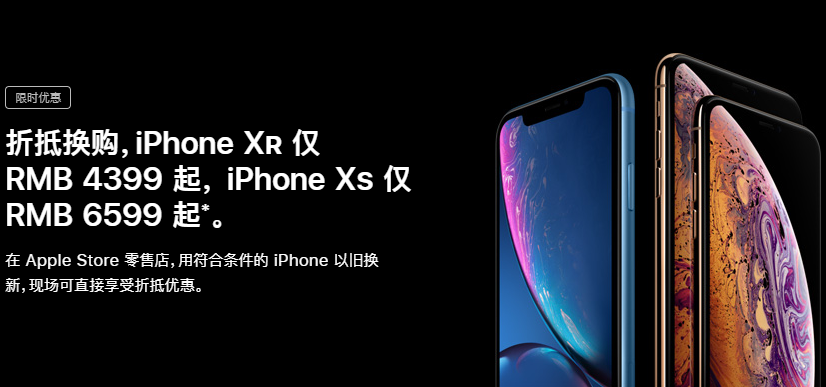
为提升购买力度,<span style='color:red'>iPhone</span>以旧换新支持华为,小米等其他品牌
今年iPhone的新机在中国销量遇冷,苹果不仅在新品推出仅3个月后,就推出了限时旧换新以提升购买力,直营店Apple Store更首度接受华为、小米、OPPO、vivo手机旧换新买iPhone新品,消费者可以在官网上先估价。不过,苹果给非iPhone的旧换新折抵价格明显过低,显然优先希望吸引苹果用户换机、而不是吸引安卓阵营投靠,至于能否奏效还有待观察。iPhone新机推出后,有意购买的消费者通常只能在美国电信官网或营业厅,或是BestBuy这类零售渠道,才能用其他品牌的手机来以旧换新折价,苹果官网与Apple Store则都只接受旧款iPhone的以旧换新。不过,或许是因为iPhone新机推出后,在中国的销量反应实在太冷淡,在中国一向强势的苹果,不仅Apple Store已经推出iPhone旧换新计划,距离iPhone XS系列上市仅3个月,Apple Store直营店甚至接受非iPhone的品牌手机旧换新,在官网上从Apple Give Back的页面进入升级XR或XS选项,可以看到除了iPhone能够旧换新之外,华为、小米、OPPO、三星、 vivo等品牌产品也可以,旧换新最高可折抵2,100元人民币,以iPhone XR售价来说,相当于打了6.7折。以华为为例,苹果接受的范围从2014年推出的中低端产品C199、到去年下半年才推出的高端机型Mate 9 Pro与P9 Pro都收,其他品牌则只收到2016年推出的机型,如三星高端机型只收到2016年推出的Galaxy S7与2015年上市的Note 5,OPPO也只回收2016上市的R9s系列。值得一提的是,本次活动是有时间限制的,在2019年1月31日前结束(换购者年龄必须要在18岁以上),同时你以旧换新的iPhone,必须是要在线下苹果零售店检测后才有效(苹果官方零售店跟苹果加盟的商家在折换iPhone价值上是有不同的,这点需要注意。),而不是之前那种网上检测,并且你折扣的金额,只能用来购买新iPhone。然而根据央视报导,Apple Store今年对于同款的旧iPhone回收估价拉高,相较之下,Apple Store对iPhone以外手机的回收价偏低。由于苹果中国官网给iPhone旧机的以旧换新价格与第三方市价接近,并明显优于非苹果品牌手机,很明显苹果优先希望旧iPhone用户换购新机,不过此举能否拉抬iPhone新机在中国低迷的购买力,有待观察。
关键词:
发布时间:2018-12-28 00:00 阅读量:2258 继续阅读>>
中,德法院先后颁布<span style='color:red'>iPhone</span>禁令 高通:肯定了高通专利的价值
据了解,慕尼黑法院认为苹果公司的产品违反看高通公司的专利,因此颁布禁售令,允许高通禁止苹果在德国销售部分型号的iPhone手机。但是,该禁令不会立即生效,高通还需要启动单独的执法程序。报道称,苹果可以对此禁令上诉。高通执行副总裁、总法律顾问唐·罗森博格表示:“仅在过去两周内,两个法域的两家受尊敬的法院确认了高通专利的价值,并认定苹果公司侵权,判决禁止iPhone在德国和中国这两个重要的市场销售。”据英国《金融时报》报道,为避免与芯片制造商高通发生法律纠纷,苹果已采取特殊措施,仅为德国用户更新其iPhone软件。但是从目前的效果来看,苹果这一措施并不能规避专利。但是,由于有中国禁售的先例在前,德国的禁售令可能会更加复杂,毕竟苹果已经有了准备。高通在德国宣称拥有多项专利,其中四项与Spotlight中的iOS搜索,联系人和快捷方式相关。 该案中涉及的其他高通的专利还包括电源管理,如果因为它们与iPhone硬件相关而被发现侵权,苹果将更难以设计。此前,12月10日,高通就表示,它已赢得了中国法院的初步禁售令,禁止苹果公司出售旧的型号的iPhone,法院认为这些型号违反了高通的两项软件专利。12月13日,高通进一步要求中国法院禁止苹果销售最新款iPhone。高通专利诉讼代理律师、北京市联德律师事务所律师蒋洪义告诉媒体,计划使用相同的专利提起诉讼,希望禁售苹果今年发布的这三款新iPhone手机。现在,随着德国禁售iPhone,高通和苹果的专利战大有愈演愈烈之势!
关键词:
发布时间:2018-12-21 00:00 阅读量:2466 继续阅读>>
25%的关税将逼走<span style='color:red'>iPhone</span>产业链?业界看法不一
据外媒报道,有消息人士透露,苹果供应商十分担忧美国将会在智能手机产品上加征关税,如果关税调高至25%,他们将重新评估情势,甚至考虑将iPhone产线全面撤出中国。尽管中美双方当前暂时达成休战协议,但新的贸易规则仍未确定,未来形势扑朔迷离,市场走势难以捉摸。业界对于加征关税的消息,就更敏感了。近日,据外媒报道,有消息人士透露,苹果供应商十分担忧美国将会在智能手机产品上加征关税,如果关税调高至25%,他们将重新评估情势,甚至考虑将iPhone产线全面撤出中国。要知道,在2018年初苹果发布的“全球200大供应商”中,包括港台地区在内的中国企业就高达85家,其中以台湾地区企业居多,共51家,最出名的就是以鸿海精密、和硕为代表的装配厂。倘若这些企业因高关税撤离中国,影响之大无须过多赘述。该消息一经传播,引起了业界的广泛关注与讨论,大家对于此消息的看法也不尽相同。解读一:谁都无法承受高成本,撤离中国是迟早的事。不得不承认,过去十多年来,以人口红利造就的中国制造神话面临着人力成本提高等因素。我们也看到一些外资工厂撤离中国。而苹果一直把中国视为主要的生产基地,需要大量的劳动人口和成熟的供应链服务。如今中国劳动成本上升,新一代iPhone销量远远不及预期,苹果的成本压力难以释放。如果再加上一个25%的高关税,想必连神仙都招架不住。解读二:iPhone加关税只是假设。苹果产业链考虑撤出中国的说法,并不现实。诸如富士康等大型的装配厂,全部撤离是不可行的,不仅要考虑到新厂成本,还要保证完成现有订单、再停产、后搬迁,目前并不是最好的时机。最重要的是,根据12月初中美达成的90天阶段性协议,如果90天以内双方没有达成一致协议,美国才会对目前已征收10%关税的产品调高至征收25%关税。鉴于包括iPhone在内的智能手机从未进入10%关税名单,因此,美国将会对iPhone加征25%关税的说法或许是只一种考虑。一直以来,苹果及其供应链是唇齿相依的关系。鉴于中国作为苹果的生产制造基地,制造体系成熟,供应链齐全,如若有任何变动都是牵一发而动全身的影响,并非短时间内能够应对的。
关键词:
发布时间:2018-12-17 00:00 阅读量:2195 继续阅读>>
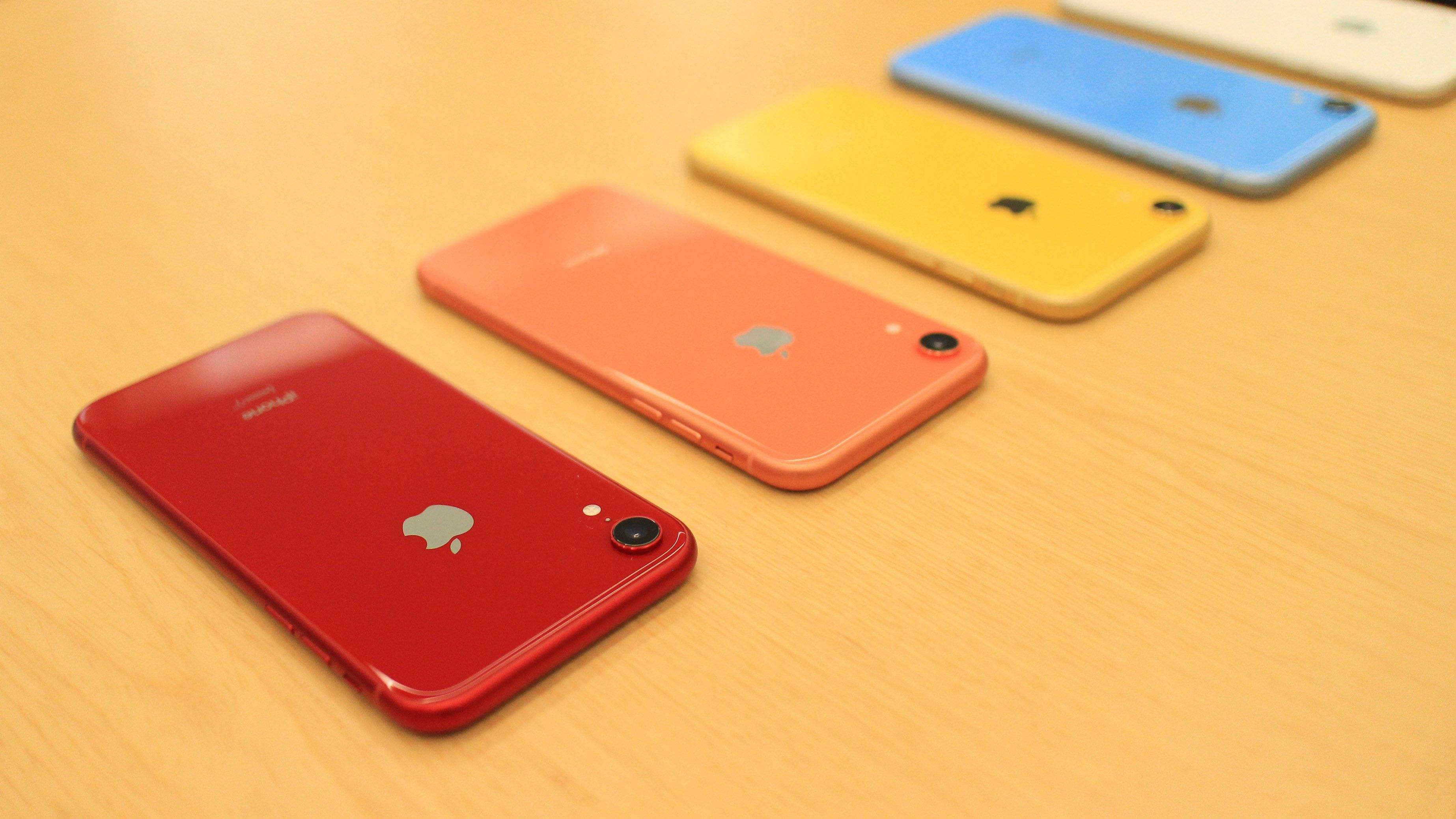
卖不动了?日本运营商对<span style='color:red'>iPhone</span> XR采用降价策略,相当于原价三折出售
受新<span style='color:red'>iPhone</span>销售低迷影响,富士康将计划进行裁员并削减29亿美元成本
同比增长18.3%,富士康Q3业绩受<span style='color:red'>iPhone</span> XR销售不振拖累

跳转至

/ 11

  • 一周热料
  • 紧缺物料秒杀
型号 品牌 询价
TL431ACLPR Texas Instruments
MC33074DR2G onsemi
BD71847AMWV-E2 ROHM Semiconductor
CDZVT2R20B ROHM Semiconductor
RB751G-40T2R ROHM Semiconductor
型号 品牌 抢购
TPS63050YFFR Texas Instruments
ESR03EZPJ151 ROHM Semiconductor
IPZ40N04S5L4R8ATMA1 Infineon Technologies
BU33JA2MNVX-CTL ROHM Semiconductor
BP3621 ROHM Semiconductor
STM32F429IGT6 STMicroelectronics
热门标签
ROHM
Aavid
Averlogic
开发板
SUSUMU
NXP
PCB
传感器
半导体

关于我们
AMEYA360商城(www.ameya360.com)上线于2011年,现有超过3500家优质供应商,收录600万种产品型号数据,100多万种元器件库存可供选购,产品覆盖MCU+存储器+电源芯 片+IGBT+MOS管+运放+射频蓝牙+传感器+电阻电容电感+连接器等多个领域,平台主营业务涵盖电子元器件现货销售、BOM配单及提供产品配套资料等,为广大客户提供一站式购销服务。

请输入下方图片中的验证码:

验证码