Infineon Inks Multi-Year Power S<span style='color:red'>emi</span>conductor Supply Agreements with Hyundai and Kia
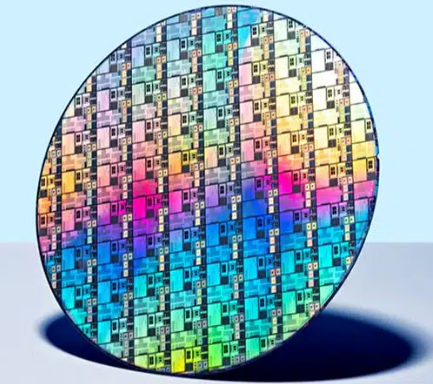
  Infineon, Hyundai, and Kia announced on October 18 that they have signed a multi-year agreement for the supply of SiC (Silicon Carbide) and Si (Silicon) power semiconductor modules and chips.  Under this agreement, Infineon will supply SiC and Si power components to Hyundai and Kia until 2030, and in return, Hyundai and Kia will support Infineon’s production capacity and reserves.  The demand for SiC power devices has surged with the growing popularity of new energy vehicles, and as a prominent industry leader, Infineon has embarked on numerous collaborations this year.  Infineon and Resonac  In January, Infineon declared a new multi-year supply and cooperation agreement with Resonac Co., Ltd. (formerly Showa Denko K.K.). According to this agreement, Resonac will provide Infineon with SiC materials for producing SiC semiconductor components, including 6-inch and 8-inch wafers. Initially focused on 6-inch wafers, Resonac will later supply 8-inch SiC wafers to support Infineon’s transition to 8-inch wafers. As part of the agreement, Infineon will also provide Resonac with SiC material technology-related intellectual property.  Infineon and TanKeBlue, SICC  In May, Infineon signed long-term agreements with TanKeBlue and SICC to ensure a more competitive and substantial supply of silicon carbide materials. These two suppliers will primarily provide Infineon with 6-inch silicon carbide substrates and offer 8-inch silicon carbide materials, aiding Infineon in transitioning to 8-inch SiC wafers. The agreements also encompass silicon carbide ingots, as Infineon had previously invested nearly 1 billion RMB in acquiring a laser-based wafer technology enterprise, aiming to enhance the utilization of silicon carbide substrates and device cost competitiveness.  Notably, both TanKeBlue and SICC will account for a double-digit percentage of Infineon’s long-term demand volume.  Infineon and Foxconn  In the same month, according to the Foxconn’s official website, Infineon and Foxconn have signed a memorandum of cooperation to establish a long-term partnership in the field of electric vehicles. Under this agreement, the two companies will focus on the adoption of silicon carbide technology in high-power applications for electric vehicles, such as traction inverters, on-board chargers, and DC converters. They also plan to jointly establish a system application center in Taiwan to expand their collaboration further.  Infineon and Schweizer Electronic  Additionally, Infineon is collaborating with Schweizer Electronic to develop an innovative solution aimed at directly embedding Infineon’s 1200V CoolSiC™ chips into PCB boards. This move seeks to significantly enhance the driving range of electric vehicles while reducing the overall system cost.  Infineon and Infypower  In September, Infineon announced a partnership with Shenzhen Infypower (INFY) to provide the industry-leading 1200V CoolSiC™ MOSFET power semiconductor devices, boosting the efficiency of electric vehicle charging stations.  In line with their goal of capturing a 30% share of the global SiC market by 2030, Infineon revealed plans to invest up to 5 billion euros over the next five years to construct the world’s largest 8-inch SiC power semiconductor facility in Malaysia.
Key word:
Release time:2023-10-20 13:27 reading:2075 Continue reading>>
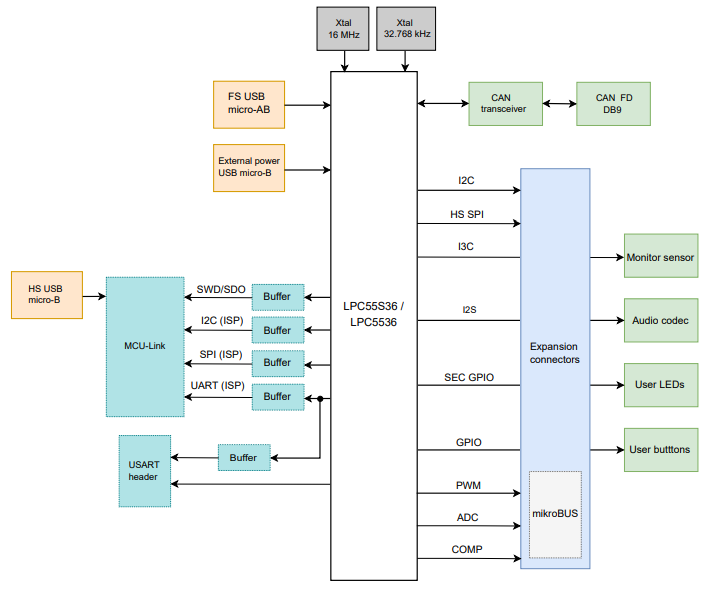
NXP S<span style='color:red'>emi</span>conductors LPCXpresso55S36 Development Board
What are the uses of gallium and germanium as s<span style='color:red'>emi</span>conductor materials
  On July 3, according to the latest news from the Ministry of Commerce, for the purpose of safeguarding national security and interests, with the approval of the State Council, China decided to implement export controls on two key metals, gallium and germanium, starting from August 1.  As we all know, gallium and germanium are very important materials in semiconductor applications. But actually, what are the uses of gallium and germanium as semiconductor materials? In this article, we will focus on gallium and germanium.  What is Gallium?  Gallium is one of the members of the strategic mineral family. It is a gray-blue or silver-white metal with atomic number 31, element symbol Ga, and atomic weight of 69.723. Gallium has a low melting point but a high boiling point. Pure liquid gallium has a significant supercooling tendency, and is easily oxidized in air to form an oxide film.  The atomic structure of gallium includes 31 protons and electrons, and a corresponding number of neutrons. In chemical reactions, gallium atoms usually exist in a trivalent state, that is, they lose three electrons to form Ga3+ ions.  Industrial uses of galliumManufacturing semiconductor gallium nitride, gallium arsenide, gallium phosphide, germanium semiconductor doping element;  Pure gallium and low melting alloy can be used as heat exchange medium for nuclear reaction;  Filling material for high temperature thermometer;  Catalyst for diesterization in organic reaction.  Gallium’s industrial applications are primitive, although its unique properties may have many applications. Liquid gallium’s wide temperature range and its low vapor pressure make it useful in pyrometers and pyrometers. Gallium compounds, especially gallium arsenide, have attracted more and more attention in the electronics industry. Precise world gallium production data are not available, but production in neighboring regions is only 20 tons/year.  Applications of gallium  1.Semiconductor industry  Gallium plays an important role in the semiconductor industry. It is used in the manufacture of high-speed electronic devices, optoelectronic devices and solar cells. Gallium-based semiconductor materials, such as gallium arsenide (GaAs) and gallium nitride (GaN), have excellent electrical properties and high-temperature characteristics, which are suitable for the manufacture of high-frequency electronic devices and high-power electronic devices.  2. LED lighting  Gallium compounds are widely used in the manufacture of LEDs (Light Emitting Diodes). Gallium-based LEDs have the advantages of high efficiency, long life, and energy saving, and are widely used in indoor and outdoor lighting, electronic displays, and automotive lighting.  3.Alloy preparation  Gallium can form alloys with other metals to improve its characteristics and performance. For example, gallium alloys are used to make low-melting alloys such as gallium-indium alloy (often used in thermometers) and gallium-bismuth alloy (often used in fire alarm devices).  What is Germanium?  Germanium, tin and lead belong to the same group in the periodic table of elements.  Germanium is a chemical element with symbol Ge, atomic number 32, and atomic weight 72.64. It is located in the fourth period and group IVA of the periodic table of chemical elements.  Germanium element is a gray-white metalloid, shiny, hard, belonging to the carbon group, chemical properties similar to tin and silicon of the same group, insoluble in water, hydrochloric acid, dilute caustic solution, soluble in aqua regia, concentrated nitric acid or sulfuric acid, so it is soluble in molten alkali, alkali peroxide, alkali metal nitrate or carbonate, and is relatively stable in the air.  The atomic structure of germanium includes 32 protons and electrons, and a corresponding number of neutrons. In chemical reactions, germanium atoms usually exist in a tetravalent state, that is, they share or lose four electrons to form Ge4+ ions.  Industrial Uses of GermaniumGermanium has special properties in many aspects, and has extensive and important applications in semiconductors, aerospace measurement and control, nuclear physics detection, optical fiber communication, infrared optics, solar cells, chemical catalysts, biomedicine and other fields. It is an important strategic resource as well. In the electronics industry, in alloy pretreatment, in the optical industry, it can also be used as a catalyst.  High-purity germanium is a semiconductor material. It can be obtained by reducing high-purity germanium oxide and then extracting it by smelting. Single crystal germanium doped with a small amount of specific impurities can be used to make various transistors, rectifiers and other devices. Germanium compounds are used in the manufacture of fluorescent panels and various high refractive index glasses.  Germanium single crystal can be used as transistor, which is the first generation of transistor material. Germanium is used in radiation detectors and thermoelectric materials. High-purity germanium single crystal has a high refractive index. It is transparent to infrared rays, and does not pass through visible light and ultraviolet rays. Besides, it can be used as a germanium window, prism or lens for infrared light.  At the beginning of the 20th century, germanium was used to treat anemia, and then became the earliest semiconductor element used. The refractive index of elemental germanium is very high, and it is only transparent to infrared light, but opaque to visible light and ultraviolet light.  Therefore, military observers such as infrared night vision devices use pure germanium to make lenses. Compounds of germanium and niobium are superconducting materials. Germanium dioxide is a catalyst for the polymerization reaction. The glass containing germanium dioxide has high refractive index and dispersion performance, and can be used as a wide-angle camera and microscope lens. Germanium trichloride is also a new type of optical fiber material additive.  According to the data, since 2013, the development of the optical fiber communication industry, the continuous expansion of the application of infrared optics in the military and civilian fields, the use of solar cells in space, and the promotion of ground-based high-efficiency solar power plants have made the global demand for germanium continues to grow steadily.  In the early 21st century, the recovery of the global optical fiber network market, especially the optical fiber market in North America and Japan, drove the rapid growth of the optical fiber market. The annual growth rate of global optical fiber demand has exceeded 20%.  Applications of germanium1.Semiconductor industry  Germanium is an important material in the semiconductor industry. It is used in the manufacture of high-speed electronic devices and optoelectronic devices, such as high-purity germanium wafers for the manufacture of solar cells and infrared detectors.  Also read: The ultimate guide to high-speed PCB and housing materials  2. Optical fiber communication  Germanium optical fiber is an important material for optical fiber communication. It has a high refractive index and transparency, and can be used to manufacture optical fibers and optical fiber amplifiers in high-speed communications.  3. Optical applications  Due to the permeability of germanium to infrared radiation, it is widely used in infrared optical systems and infrared imaging technology. Germanium lenses and germanium windows are used in areas such as infrared sensors, thermal imagers and infrared laser systems.  Also read: Optical module – A comprehensive exploration  4. Chemical catalysts  Germanium compounds are often used as catalysts and have important applications in the chemical industry. Germanium catalysts can promote chemical reactions and are used to produce polymers, prepare organic compounds, and more.  ConclusionGallium and germanium, as rare metal elements, play an important role in high-tech fields, electronics industry, energy industry, etc. As technology continues to advance, so too does the demand for these two elements.
Key word:
Release time:2023-09-26 14:49 reading:2197 Continue reading>>
ROHM S<span style='color:red'>emi</span>conductor R6049YN N-Channel Power MOSFETs
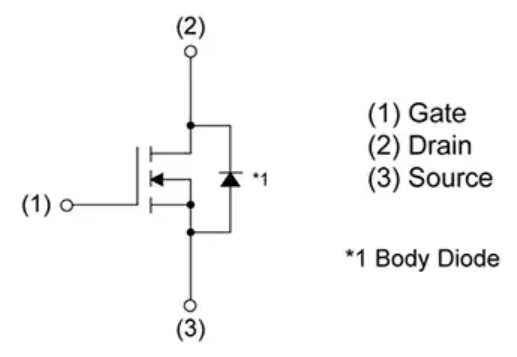
  ROHM Semiconductor R6049YN N-Channel Power MOSFETs offer high-speed switching and low-on resistances for switching applications. Operating in a -55°C to +150°C temperature range, these single-channel enhancement mode devices feature a 600V drain-source breakdown voltage, a ±22A or ±49A continuous drain current, and a 65nC total gate charge. The ROHM R6049YN N-Channel Power MOSFETs are available in TO-220AB-3, TO-220FM-3, and TO-247G-3 package options.     FEATURES  》Low on-resistance  》Fast switching  》Drive circuits can be simple  》Si technology  》Enhancement channel mode  》Through-hole mount  》Halogen-free mold compound  》Lead-free plating and RoHS-compliant  SPECIFICATIONS  》600V drain-source breakdown voltage  》±22A or ±49A continuous drain current  》±147A pulsed drain current  》82mΩ on-drain-source resistance  》±30V gate-source voltage  》4V to 6V gate-source threshold voltage range  》100μA maximum zero gate voltage drain current  》±100nA maximum gate-source leakage current  》49A maximum source current  》1.5V maximum source-drain voltage  》1.0Ω typical gate resistance  》6.5μC typical reverse recovery charge  》34A typical peak reverse recovery current  》Typical gate charge  。65nC total  。21nC source  。30nC drain  》7V typical gate plateau voltage  》90W or 448W power dissipation  》Typical capacitance  。2940pF input  。100pF output  。Effective output  .100pF energy related  .650pF time related  》Single pulse avalanche  。2.8A current  。208mJ energy  》Typical time  。38ns turn-on delay  。33ns rise  。91ns turn-off delay  。19ns fall  。380ns reverse recovery  》-55°C to +150°C operating temperature range  》TO-220AB-3, TO-220FM-3, and TO-247G-3 package options  INNER CIRCUIT
Key word:
Release time:2023-09-25 15:58 reading:2316 Continue reading>>
What is the relationship between chips, s<span style='color:red'>emi</span>conductors and integrated circuits
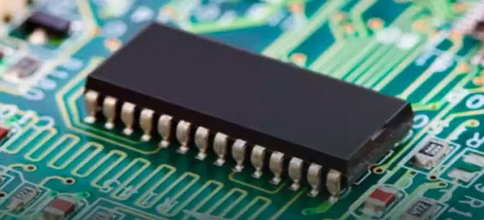
  Chips, semiconductors and integrated circuits are important concepts in the electronics field. As technology continues to develop, their application scope and influence are also expanding. So what is the relationship and difference between chips, semiconductors and integrated circuits? Let us find out together in this article.  What is a chip?A chip, also known as a microcircuit, microchip, or integrated circuit (IC), refers to a silicon chip containing an integrated circuit. It is very small and is often part of a computer or other electronic equipment.  Chip is the collective name for semiconductor component products. It is the carrier of integrated circuit (IC) and is divided into wafers. A silicon wafer is a small piece of silicon that contains an integrated circuit that is part of a computer or other electronic device.  What is semiconductor?Semiconductor refers to a material whose electrical conductivity at room temperature is between that of a conductor and an insulator. Semiconductors are widely used in radios, televisions and temperature measurement. For example, a diode is a device made of semiconductors. A semiconductor is a material whose conductivity can be controlled, ranging from an insulator to a conductor. Whether from the perspective of technology or economic development, the importance of semiconductors is huge.  The core units of most electronic products, such as computers, smartphones or digital recorders, are closely related to semiconductors. Common semiconductor materials include silicon, germanium, gallium arsenide, etc., and silicon is the most influential one in commercial applications among various semiconductor materials.  What is an integrated circuit?An integrated circuit is a miniature electronic device or component. Using a certain process, the transistors, resistors, capacitors, inductors and other components and wiring required in a circuit are interconnected, made on a small or several small semiconductor chips or dielectric substrates, and then packaged in a tube shell , becoming a microstructure with required circuit functions; all components in it have structurally formed a whole, making electronic components a big step towards miniaturization, low power consumption, intelligence and high reliability. It is represented by the letters “IC” in circuits.  The inventors of the integrated circuit are Jack Kilby (integrated circuits based on germanium (Ge)) and Robert Noyce (integrated circuits based on silicon (Si)).  Most applications in the semiconductor industry today are silicon-based integrated circuits. This is a new type of semiconductor device developed in the late 1950s and 1960s. It is a small piece of silicon that integrates semiconductors, resistors, capacitors and other components required to form a circuit with certain functions and the connecting wires between them through semiconductor manufacturing processes such as oxidation, photolithography, diffusion, epitaxy, and aluminum evaporation. on-chip, and then solder the electronic device packaged in a tube. Its packaging shell comes in various forms such as round shell type, flat type or dual in-line type.  Integrated circuit technology includes chip manufacturing technology and design technology, which is mainly reflected in processing equipment, processing technology, packaging and testing, mass production and design innovation capabilities.  What is the relationship between chips, semiconductors and integrated circuits?There is a close relationship between chips, semiconductors and integrated circuits.It can be said that a semiconductor is a material, a chip is a carrier of electronic components manufactured using semiconductors, and an integrated circuit is a technology and product that integrates multiple electronic components onto a chip.  Chip is the collective name for semiconductor component products. It is the carrier of integrated circuit (IC, integrated circuit) and is divided into wafers.  Integrated circuits refer to active devices, passive components and their interconnections that make up a circuit and are fabricated on a semiconductor substrate or an insulating substrate to form a structurally closely connected and internally related electronic circuit. It can be divided into three main branches: semiconductor integrated circuits, film integrated circuits, and hybrid integrated circuits.  Semiconductors are the basic materials needed to make chips and integrated circuits. A chip is a carrier made of semiconductor material on which multiple electronic components are integrated. These components can be transistors, resistors, capacitors, etc. and are used to perform various circuit functions.  Integrated circuits are technologies and products that integrate multiple electronic components onto a single chip. By integrating these components onto a chip, complex circuit functions can be implemented in a smaller, more efficient space. The invention and development of integrated circuits has greatly improved the performance of electronic devices and played an important role in computers, communications, consumer electronics and other fields.  Therefore, semiconductors are the basic materials for chips and integrated circuits. Chips are the carrier of integrated circuits, while integrated circuits are technologies and products that integrate multiple electronic components on a chip to achieve various functions. The relationship between them can be understood as a hierarchical relationship from materials to products.  If you need to purchase chips, please visit AMEYA mall to consult online customer service!
Key word:
Release time:2023-09-20 14:09 reading:2755 Continue reading>>
Silicon Photonics Will Become Key to S<span style='color:red'>emi</span>conductor Future Development
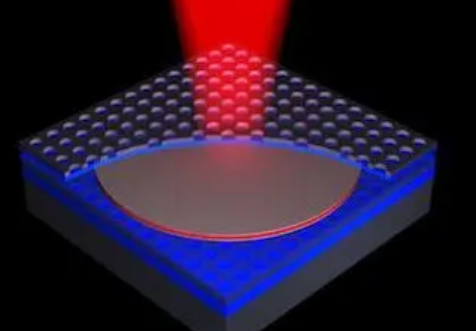
  In recent years, with the rise of AI and 5G technologies leading to increasing computational demands, Silicon Photonics technology has once again become a focal point of discussion in the semiconductor industry.  AMEYA360 Perspective:  Rewriting Semiconductor Development Rules with Silicon Photonics  Since the development of the semiconductor industry, the industry’s trajectory has largely followed the development predicted by Gordon Moore – roughly doubling the number of transistors that can be accommodated on an integrated circuit approximately every two years. However, as chip sizes continue to shrink, chip architecture design is gradually being challenged. Semiconductor manufacturers, including TSMC, Samsung, and Intel, are striving to break through Moore’s Law as their goal. Others have publicly announced their focus on mature processes (the industry divides at 7nm, with 7nm and below considered advanced processes) and optimization of existing technologies.  However, even as manufacturers push the boundaries of Moore’s Law, leading to increased transistor density per unit area, signal loss issues inevitably arise during signal transmission since chips rely on electricity to transmit signals. Despite the increased transistor count, power consumption problems persist. Silicon Photonics technology, which replaces electrical signals with optical signals for high-speed data transmission, successfully overcomes this challenge, achieving higher bandwidth and faster data processing. With this approach, chips do not need to cram more transistors per unit area or pursue smaller nanometers and nodes. Instead, they can achieve higher integration and performance on existing processes, further advancing technology.  Optimistic about Silicon Photonics Technology, but Breakthroughs Will Take Time  Currently, Silicon Photonics technology still faces various challenges, including alignment and coupling, thermal management, modulation and detection, expansion and integration, among others. Significant breakthroughs are unlikely in the short term, and major global manufacturers are still in the early development stages. In Taiwan, recent reports suggest that TSMC is actively venturing into Silicon Photonics technology. While TSMC has not officially confirmed this news, during the Silicon Photonics International Forum, a senior vice president from TSMC clearly stated, “If a good Silicon Photonics integration system can be provided, it can address the key issues of energy efficiency and AI computing power. This could be a Paradigm Shift, and we might be at the beginning of a new era.”  This suggests that TSMC is optimistic about the development of Silicon Photonics technology. Although Taiwanese companies have not formally announced their entry into the Silicon Photonics field, it is expected that with the explosive growth in demand for data transmission, storage, and computing driven by AI technology, Silicon Photonics will undoubtedly be a critical technology for future semiconductor development.
Release time:2023-09-18 16:23 reading:2906 Continue reading>>
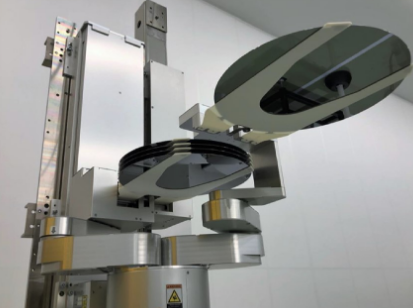
Nidec Instruments Launches New S<span style='color:red'>emi</span>conductor Wafer Transfer Robot
  Nidec Instruments’ Latest Semiconductor Wafer Transfer Robot, SR7163 series.  Despite a temporary slowdown in 2023, the global semiconductor market is expected to expand from 2024 after demand recovers in a wide variety of product groups such as memory logic and other IC products, and in the O-S-D (optoelectronics, sensor/actuator, and discrete semiconductor) segment. As the demand grows around the world for the construction of semiconductor factories with high production capacity, Nidec Instruments has developed the SR7163 series, a semiconductor wafer transfer robot to respond to its customers’ needs.  Among semiconductor manufacturing equipment, the SR7163 series is expected to be used in batch-type thermal treatment equipment and other machines in processes that require to transfer multiple substrates to a stage with a different slot pitch. A product that utilizes an arm-link mechanism to move a hand horizontally, the SR7163 series boasts a small minimum turning radius that can accommodate narrow pitches of up to the minimum limit of 6.5mm. In addition, with the use of a highly airtight link-type arm, the SR7163 series meets ISO14644-1’s Class-1 cleanliness requirements, which is the industry’s highest-level cleanliness.  As a member of the world’s leading comprehensive motor manufacturer, Nidec Instruments stays committed to offering revolutionary solutions that contribute to building a comfortable society.  For more details on the above product, Please contact AMEYA360 official customer!
Key word:
Release time:2023-09-05 13:49 reading:3200 Continue reading>>
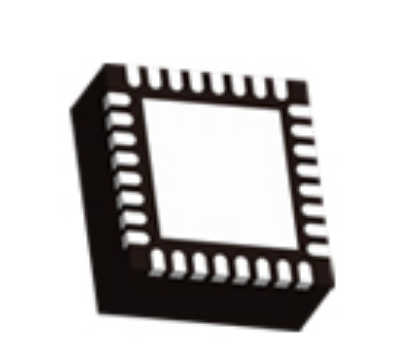
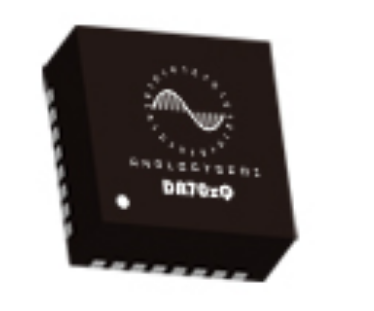
AnalogyS<span style='color:red'>emi</span> Launches High Precision, ± 275V High Common Mode Differential Amplifier IND90x
  AnalogySemi, an excellent domestic analog and digital analog hybrid chip designer dedicated to providing high-quality chips, has announced the launch of the IND90x series high-precision, high reliability, ± 275V high common mode voltage differential amplifier. This series of products has excellent DC accuracy and reliability performance, with a maximum gain error temperature drift of 3ppm/° C. The actual testing of ESD HBM can reach up to 1.75kV, which is superior to similar products. The IND90x series differential amplifier can be used as an alternative to isolation amplifiers, isolation operational amplifiers, and Hall sensors, and is widely used in various high common mode voltage applications, such as high-voltage battery pack voltage and current monitoring, battery voltage measurement for stacked battery packs, power automation, power supply current monitoring, and motor control scenarios.  Features  High common mode voltage range: ± 275VCMRR: 90dB (minimum)Power supply voltage range: ± 2.0V to ± 18VStatic current: 570 μ A (typical value)Excellent DC accuracy:Offset voltage: ± 850 μ V (maximum value)Offset voltage temperature drift: 10 μ V/° C (maximum)Gain error: 0.035% (maximum)Gain error temperature drift: 3ppm/° C (maximum)Gain nonlinearity: 0.0001% FSR (typical value)• AC performanceBandwidth: 240kHzSwing rate: 1.6V/ μ s• Input protection rangeCommon mode voltage: ± 500VDifferential voltage: ± 500V• Packaging: SOIC-8Due to the enhanced protection of input pins, the IND90x precision differential amplifier can withstand the impact of common mode or differential overload up to instantaneous 500V, and is widely used as an alternative to isolated operational amplifiers in many scenarios that do not require current isolation. When replacing isolation amplifiers, IND90x not only effectively reduces design costs, but also avoids the ripple, noise, and additional static power consumption caused by the input power supply of the isolation amplifier. In addition, the bandwidth of 240kHz and extremely low nonlinearity make the IND90x's AC performance significantly better than traditional isolation amplifiers, thereby achieving better system measurement accuracy.  In addition to the above advantages, the IND90x further strengthens the input protection structure, coupled with better ESD performance, giving it unique advantages for applications such as hot swapping. Therefore, the IND90x product can also be widely used in various high common mode voltage applications, such as measuring the voltage of individual batteries in stacked battery packs, power automation, power supply current monitoring, and motor control.  As the first high common-mode differential amplifier of analog, the launch of IND90x not only fills the gap in the layout of analog semiconductor operational amplifiers, but also continues to expand the product lineup of analog semiconductor amplifiers. At present, AnalogySemi's amplifier products have been mass-produced into seven categories, including low-power amplifiers, instrument amplifiers, zero temperature drift amplifiers, current sampling amplifiers, current power monitors, high common mode differential amplifiers, etc., with over 200 product models. In the future,AnalogySemi will continue to improve the amplifier product family to meet the diverse needs of customers with a rich product range.
Key word:
Release time:2023-08-23 11:12 reading:2657 Continue reading>>
AnalogyS<span style='color:red'>emi</span> Launches Low Temperature Drift, High Performance, Small Package Voltage Reference REF1xx
  New Product  AnalogySemi, an excellent domestic analog and digital analog hybrid chip designer dedicated to providing high-quality chips, has announced the launch of the REF1x/3xx/4xx series of low temperature drift, high-performance, low-power, and small package voltage reference sources. The initial accuracy of this series of products reaches 0.05% and has excellent temperature drift performance. The REF1xx and REF3xx series products have a typical temperature drift value of 5ppm/° C, with a maximum value of 15ppm/° C. The high-performance REF4xx series has a typical temperature drift value of 2ppm/° C, which is the ultimate performance. The working temperature of the REF1xx/3xx/4xx voltage reference source is -40~125 ℃, which is widely used in industries, photovoltaics, automobiles, medical and other fields. Among them, REF3xx, as a universal product, provides a vehicle level version that supports AEC-Q100, providing excellent performance for harsh automotive application scenarios.  Features  Excellent temperature drift performance:  REF1/3XX: typical value 5ppm/° C, maximum value 15ppm/° C, temperature range -40 to 125 ° C  ■ REF4XX: Typical value 2ppm/° C  ● Microencapsulation: SOT23-3, SOT23-6  High output current: greater than ± 20mA  High accuracy: 0.05%  Low static current:  ■ REF1XX:5 μ A  ■ REF3/4XX:50 μ A  Extreme low voltage difference: 1mV typical value  0.1Hz-10Hz noise 28 μ Vpp @Output = 2.5V  Voltage options: 1.25V/1.8V/2.048V/2.5V/3V/3.3V/4.096V/4.5V/5V  As an indispensable basic circuit module in digital analog systems, voltage reference sources provide precise and stable voltage references for circuit units such as digital to analog converters (DACs), analog-to-digital converters (ADCs), linear regulators, and switching regulators; Directly affects the performance and accuracy of electronic systems. In addition, the voltage reference source can also provide stable bias for sensor chips such as pressure bridges, thermal resistors, and MEMS. Analogous to the REF1/3/4xx series voltage reference source launched by semiconductors, it has characteristics such as high precision, micro power consumption, low voltage difference, and achieves high-performance performance of ultra-low temperature drift on the basis of small packages of SOT23-3 and SOT23-6, thereby helping the system achieve reliable stability under various variable temperatures and voltages.  he REF1xx series products have as low as 5 μ The extremely low static current of A greatly reduces power consumption and prolongs battery life. It is suitable for industrial transmitters or battery powered data acquisition systems, providing high-precision reference sources while also extending the operating time of the power supply battery. The REF3xx series is a universal reference source product that can be widely used in industries such as industrial instruments, testing and measurement equipment, and medical equipment, helping to achieve high-precision front-end data collection within the system. The REF4xx series products have lower temperature drift characteristics (2ppm/℃) and can be applied to scientific instruments, semiconductor testers, exploration instruments, and clinical medical devices with higher precision requirements.  AnalogySemi The REF1x/3xx/4xx series voltage reference sources all provide a small package of SOT23-3; In addition, the REF3xx series also offers SOT23-6 packaging types with NR pin, enable pin, and output Sense pin functions. The enable pin is used to turn off devices to save power, the output Sense pin can be used to provide more accurate voltage values for high-load applications, and the NR pin is used to connect capacitors to achieve noise reduction.
Key word:
Release time:2023-08-23 10:58 reading:2512 Continue reading>>
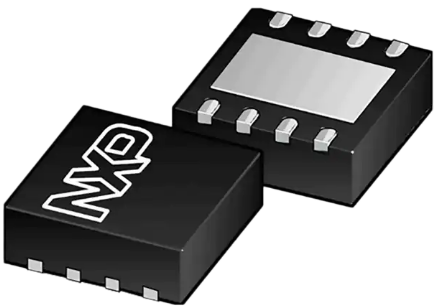
NXP S<span style='color:red'>emi</span>conductors TJA1051 High-Speed CAN Transceivers
  NXP Semiconductors TJA1051 High-Speed CAN Transceivers offer an interface between a Controller Area Network (CAN) protocol controller and the physical two-wire CAN bus. The TJA1051 is intended for high-speed CAN applications in the automotive industry. The device provides differential transmit and receive capability to (a microcontroller with) a CAN protocol controller.The TJA1051 Transceivers are part of the third generation of high-speed CAN transceivers from NXP Semiconductors, supplying significant improvements over first- and second-generation devices such as the TJA1050. The TJA1051 also provides improved ElectroMagnetic Compatibility (EMC) and ElectroStatic Discharge (ESD) performance with:  • Ideal passive behavior to the CAN bus when the supply voltage is off  • TJA1051T/3 and TJA1051TK/3 can be interfaced directly to microcontrollers with supply voltages from 3V to 5V  The TJA1051 implements the CAN physical layer defined in ISO 11898-2:2016 and SAE J2284-1 to SAE J2284-5. This implementation allows reliable communication in the CAN FD fast phase at data rates up to 5Mbit/s. These features make the TJA1051 an exceptional choice for all types of HS-CAN networks in nodes that do not require a standby mode with wake-up capability through the bus.  The TJA1051 is a high-speed CAN stand-alone transceiver with Silent mode and available in three versions, determined only by the function of pin 5:  • The TJA1051T is backward compatible with the TJA1050  • The TJA1051T/3 and TJA1051TK/3 allow for direct interfacing to microcontrollers with supply voltages down to 3V  • The TJA1051T/E allows the transceiver to be switched to a very low-current Off modeFEATURES  General  ISO 11898-2:2016 and SAE J2284-1 to SAE J2284-5 compliant  Timing guaranteed for data rates up to 5Mbit/s in the CAN FD fast phase  Suitable for 12V and 24V systems  Low ElectroMagnetic Emission (EME) and high Electromagnetic Immunity (EMI)  VIO input on TJA1051T/3 and TJA1051TK/3 allows for direct interfacing with 3V to 5V microcontrollers (available in SO8 and very small HVSON8 packages, respectively)  EN input on TJA1051T/E allows the microcontroller to switch the transceiver to a very low-current Off mode  Available in SO8 package or leadless HVSON8 package (3.0mm x 3.0mm) with improved Automated Optical Inspection (AOI) capability  Dark green product (halogen-free and Restriction of Hazardous Substances (RoHS) compliant)  AEC-Q100 qualified  Low-power management  Functional behavior predictable under all supply conditions  Transceiver disengages from the bus when not powered up (zero loads)  Protection  High ElectroStatic Discharge (ESD) handling capability on the bus pins  Bus pins protected against transients in automotive environments  Transmit Data (TXD) dominant time-out function  Undervoltage detection on pins VCC and VIO  Thermally protected  SPECIFICATIONS  4.5V to 5.5V supply voltage  -8kV to +8kV electrostatic discharge voltage  Supply current  2.5mA silent mode  10mA normal mode, bus recessive  70mA normal mode, bus dominant
Key word:
Release time:2023-08-22 13:23 reading:2553 Continue reading>>

Turn to

/ 20

  • Week of hot material
  • Material in short supply seckilling
model brand Quote
CDZVT2R20B ROHM Semiconductor
RB751G-40T2R ROHM Semiconductor
MC33074DR2G onsemi
BD71847AMWV-E2 ROHM Semiconductor
TL431ACLPR Texas Instruments
model brand To snap up
BP3621 ROHM Semiconductor
STM32F429IGT6 STMicroelectronics
ESR03EZPJ151 ROHM Semiconductor
TPS63050YFFR Texas Instruments
BU33JA2MNVX-CTL ROHM Semiconductor
IPZ40N04S5L4R8ATMA1 Infineon Technologies
Hot labels
ROHM
IC
Averlogic
Intel
Samsung
IoT
AI
Sensor
Chip

About us

Qr code of ameya360 official account

Identify TWO-DIMENSIONAL code, you can pay attention to

AMEYA360 mall (www.ameya360.com) was launched in 2011. Now there are more than 3,500 high-quality suppliers, including 6 million product model data, and more than 1 million component stocks for purchase. Products cover MCU+ memory + power chip +IGBT+MOS tube + op amp + RF Bluetooth + sensor + resistor capacitance inductor + connector and other fields. main business of platform covers spot sales of electronic components, BOM distribution and product supporting materials, providing one-stop purchasing and sales services for our customers.

Please enter the verification code in the image below:

verification code