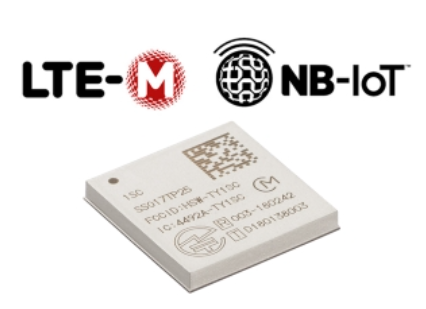
Murata’s Type 1SC-NTN module achieves Skylo <span style='color:red'>U.S.</span> certification for cellular and non-terrestrial network connectivity
TSMC’s <span style='color:red'>U.S.</span> Factory Plans Small-Scale Trial Line for Q1 2024
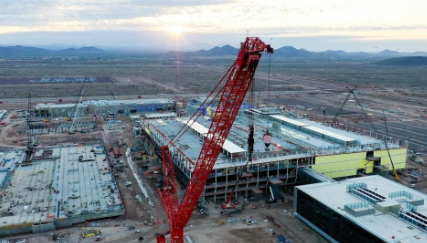
  According to a report by Taiwan’s Money DJ, the production schedule for TSMC’s semiconductor foundry in the United States has been delayed until 2025, raising concerns among observers. However, Chairman Mark Liu, in an interview on the 6th, stated that there has been significant progress over the past five months and expressed confidence in the project’s success. Industry sources have indicated that TSMC’s U.S. facility may alter its ramp-up strategy by first establishing a mini-line for trial production, with the expectation of having it in place by the first quarter of 2024.  TSMC’s Fab 21 Phase 1 construction began in April 2021, originally slated for early 2024 production. However, challenges such as a shortage of skilled equipment installation personnel, local union protests, and differences in overseas safety regulations have caused delays in equipment installation. This has compelled TSMC to adjust its plans, and the expected production timeline is now set for 2025, representing a one-year delay.  Industry analysts have noted that the efficiency of equipment entering the facility at TSMC’s U.S. plant in Arizona is only about one-third of that of its Taiwan facilities. Given the current pace of progress, the time required for equipment setup to actual production could be substantial. Therefore, TSMC has decided to change its previous ramp-up strategy and first establish a mini-line with an initial estimated monthly capacity of about 4,000 to 5,000 wafers. This approach aims to ensure some level of production output while mitigating potential contract breach issues arising from delays in production.
Key word:
Release time:2023-09-08 17:00 reading:3758 Continue reading>>
Ameya360:EU, <span style='color:red'>U.S.</span> Making Moves to Address Ethics in AI
  The United States and European Union are divided by thousands of miles of the Atlantic Ocean, and their approaches to regulating AI are just as vast. The landscapes are also dynamic, with the latest change on the U.S. side set to roll out today—about seven weeks after a big move in the EU.  The stakes are high on both sides of the Atlantic, with repercussions in practices as disparate as determining prison sentences to picking who gets hired.  The European Union’s Artificial Intelligence Act (AIA), which was approved by the Council of the EU on Dec. 6 and is set to be considered by the European Parliament as early as March, would regulate AI applications, products and services under a risk-based hierarchy: The higher the risk, the stricter the rule.  If passed, the EU’s AIA would be the world’s first horizontal—across all sectors and applications—regulation of AI.  In contrast, the U.S. has no federal law specifically to regulate the use of AI, relying instead on existing laws, blueprints, frameworks, standards and regulations that can be stitched together to guide the ethical use of AI. However, while business and government can be guided by frameworks, they are voluntary and offer no protection to consumers who are wronged when AI is used against them.  Adding to the patchwork of federal actions, local and state governments are enacting laws to address AI bias in employment, as in New York City and the entire state of California, and insurance, with a law in Colorado. No proposed or enacted local law has appeared in the news media to address using AI in jail or prison sentencing. However, in 2016, a Wisconsin man, Eric Loomis, unsuccessfully sued the state over a six-year prison sentence that was based, in part, on AI software, according to a report in The New York Times. Loomis contended that his due process rights were violated because he could not inspect or challenge the software’s algorithm.  “I would say we still need the foundation from the federal government,” Haniyeh Mahmoudian, global AI ethicist at DataRobot, told EE Times. “Things around privacy that pretty much every person in the United States is entitled to, that is something that the federal government should take care of.”  The latest national guideline is expected to be released today by the National Institute of Standards and Technology (NIST).
Key word:
Release time:2023-01-28 14:23 reading:3018 Continue reading>>
<span style='color:red'>U.S.</span> Lawmakers Propose Ban on Chip Sales to Huawei, ZTE
  A bipartisan group of U.S. lawmakers has introduced legislation which would ban the export of U.S. chips and other components to Chinese telecommunications companies Huawei and ZTE for violating U.S. export control laws.  The Telecommunications Denial Order Enforcement Act — sponsored by Senators Tom Cotton (R-Arkansas) and Chris Van Hollen (D-Maryland) and Representatives Mike Gallagher (R-Wisconsin) and Ruben Gallego (D-Arizona) — would direct the U.S. President to impose penalties pursuant to denial orders on Chinese telecommunications companies that are in violation of the export control or sanctions laws of the U.S., among other purposes.  The U.S. Commerce Det. issued a denial order banning the sale of components to ZTE last year, following a four-year investigation into ZTE's failure to comply with U.S. export control laws banning sales to Iran. The order was rescinded in June at the direction of U.S. President Donald Trump — who said it would result in too many Chinese job losses — in the midst of trade negotiations between the U.S. and China.  Last month, Huawei Chief Financial Officer Meng Wanzhou was arrested in Canada at the request of U.S. prosecutors on charges of violating U.S. sanctions.  "Huawei is effectively an intelligence-gathering arm of the Chinese Communist Party whose founder and CEO was an engineer for the People's Liberation Army," Cotton said in a statement.  Cotton added that if Chinese companies like Huawei violate U.S. sanctions or export control laws, "they should receive nothing less than the death penalty — which this denial order would provide."  "Huawei and ZTE are two sides of the same coin," Senator Van Hollen said. "Both companies have repeatedly violated U.S. laws, represent a significant risk to American national security interests, and need to be held accountable."  The bill's introduction comes at a time of high trade tensions between the U.S. and China, with both sides imposing tariffs on products imported from the other. The Trump Administration continues to negotiate with China on a long term trade deal that would presumably end the trade war, but so far no agreement has been produced.  On Thursday, the Wall Street Journal reported that Trump Administration officials are debating the relaxation or removal of some tariffs against Chinese products in an effort to aid the trade talks between the two countries.  Also Thursday, the Wall Street Journal reported that U.S. federal prosecutors are investigating whether Huawei stole trade secrets from U.S. business partners, including T-Mobile.
Key word:
Release time:2019-01-21 00:00 reading:1647 Continue reading>>
<span style='color:red'>U.S.</span> lawmakers introduce bipartisan bills targeting China's Huawei and ZTE
  A bipartisan group of U.S. lawmakers introduced bills on Wednesday that would ban the sale of U.S. chips or other components to HuaweiTechnologies Co Ltd , ZTE Corp or other Chinese telecommunications companies that violate U.S. sanctions or export control laws.  Senator Tom Cotton and Representative Mike Gallagher, both Republicans, along with Senator Chris Van Hollen and Representative Ruben Gallego, both Democrats, introduced the measures, which would require the president to ban the export of U.S. components to any Chinese telecommunications company that violates U.S. sanctions or export control laws.  The bills specifically cite ZTE and Huawei, both of which are viewed with suspicion in the United States because of fears that their switches and other gear could be used to spy on Americans. Both have also been accused of failing to respect U.S. sanctions on Iran.  Huawei is the world's biggest producer of telecommunications equipment.  "Huawei is effectively an intelligence-gathering arm of the Chinese Communist Party whose founder and CEO was an engineer for the People's Liberation Army," Cotton wrote in a statement. "If Chinese telecom companies like Huawei violate our sanctions or export control laws, they should receive nothing less than the death penalty - which this denial order would provide."  Huawei's founder, Ren Zhengfei, denied this week that his company was used by the Chinese government to spy.  Canada detained Ren's daughter, Meng Wanzhou, who is Huawei's chief financial officer, in December at the request of U.S. authorities investigating an alleged scheme to use the global banking system to evade U.S. sanctions against Iran.  For its part, ZTE agreed last year to pay a $1 billion fine to the United States that had been imposed because the company breached a U.S. embargo on trade with Iran. As part of the agreement, the U.S. lifted a ban in place since April that prevented ZTE from buying the U.S. components it heavily relies on to make smartphones and other devices.
Key word:
Release time:2019-01-18 00:00 reading:1317 Continue reading>>
AI a Focus as <span style='color:red'>U.S.</span> Preps Export Controls
Uncle Sam wants to restrict a few good technologies — and it needs engineers to help identify them.As part of legislation passed this summer, the U.S. Commerce Department put out a call for input by Dec. 19 on which of 14 broad emerging technologies should face export controls. The call quickly got attention from industry veterans and groups concerned that controls could hurt U.S. companies and worsen a growing tech trade war with China.The call issued on Nov. 14 listed aspects of biotech, AI, quantum computing, semiconductors, robotics, drones, and advanced materials as possible candidates. It gave special attention to AI, listing 10 specific areas ranging from computer vision and natural-language processing to AI chipsets. In semiconductors, it called out even broader areas including microprocessor technology, SoCs, stacked memory on chip, and memory-centric logic.The effort aims to determine which emerging technologies could be strategic to national security and how to identify and control them without “negatively impacting U.S. leadership in the science, technology, engineering, and manufacturing sectors.” It did not define the range of the controls except to say that, “at a minimum, it [would] require a license for [their] export … to countries subject to a U.S. embargo, including those subject to an arms embargo.”A government spokesperson said that the Commerce Dept. plans to publish proposed controls on emerging technologies after reviewing comments to its call. It will take public comments on the proposed controls before making them final, but the spokesperson gave no timeline for the process.The Commerce Dept. is expected to issue a second call early next year for guidance on what it calls fundamental or more mature technologies, including semiconductors and manufacturing equipment. The actions stem from the Foreign Investment Risk Reduction Management Act (FIRRMA) aimed to use export controls to stem a perceived leaking of sensitive technologies, especially to China.The bill also expanded the role of the Committee on Foreign Investment in the U.S. Under an 18-month pilot program, CFIUS can now review non-controlling investments in U.S. companies in 27 areas, including semiconductors and semiconductor tools.More than a dozen reactions to the Commerce call are already live on the government’s website, several pointing out the challenges and dangers of the effort. The Association for Computing Machinery is one of multiple groups requesting up to a 60-day extension of the deadline to submit responses due to the effort’s “enormous import not only to national security but to the future of American technological progress in industry and academia.”“The list of technologies that Commerce is considering for controls is so broad that restrictions could severely limit opportunities to participate in international markets, weakening U.S. companies and U.S. competitiveness overall,” said Chris Rowen, a serial entrepreneur in semiconductors, now CEO of BabbleLabs, an AI software startup in Campbell, California.The idea of export controls on AI is “analogous to saying, ‘Let’s not export software because it’s used in military systems,’” said Rowen, who is preparing his own response to the government call.“AI has become a basic software technique. I would not limit it in sweeping ways … they need to focus on areas where the majority of use is associated with the military.”Nvidia is most likely to feel the impact of any export controls on AI given that its GPUs are widely used for training neural networks in data centers of global web giants such as Amazon, Alibaba, and Google. Controlling sales of its GPUs could “represent one of the few temporary choke points in AI development,” said Rowen.Both Nvidia and Intel declined to comment on the government effort.The move comes at an interesting moment in the rising trade war between the U.S. and China. President Trump and China’s Xi Jinping are expected to meet in Buenos Aires this weekend. It will be their first encounter since the two started levying increasing tariffs on each other’s goods, moves that industry groups lobbied against.Looking toward the new export controls, industry representatives “just want to make sure this process is done thoughtfully, with a scalpel and not an ax,” said one expert, who asked not to be named.One of the trickiest parts of the export controls is untangling so-called dual-use technologies that have clear military and commercial uses.“We want appropriate controls on a targeted subset of technologies relevant to security interests, but we want to make sure we have access to commercial markets around the world … in addition, it serves no purpose if the U.S. controls technology that’s available elsewhere,” said the expert.Another challenge is that China, the primary target of the moves, “is a big part of the tech supply chain and one of the largest markets for U.S. semiconductors,” he added.It’s unclear how long the process will take. Government policy makers will need time to sift through what could become hundreds of comments to form proposed export controls. Industry representatives hope that they get at least 90 days to review and comment on the proposed rules before they are made final.“We view this as a really important process that our industry is taking very seriously and plan to engage in because the outcomes are of great consequence for us,” Christian Troncoso, a policy director at BSA, a Washington-based trade group for companies including Apple, Microsoft, IBM, and Oracle, told the Washington Post.
Key word:
Release time:2018-11-30 00:00 reading:1517 Continue reading>>
<span style='color:red'>U.S.</span> asks allies to avoid Huawei's equipment: WSJ
SEMI Global Trade Seminar in China focuses on shifting <span style='color:red'>U.S.</span>-Sino relations
Meeting Attended by More than 100 Tech Company RepresentativesOver the past decade, China has become a central market for the semiconductor industry. China is now home to more than 30 percent of semiconductor end users worldwide. All semiconductor companies, regardless of size, operate in China. The rise of China’s semiconductor market has been enabled by global commerce and a vast network of supply chains that span the globe.With China now a prominent player in the industry, it has become critically important for semiconductor companies to effectively engage with China. In order to help our member companies better understand the challenges and opportunities and navigate what can be a complex landscape, SEMI hosts annual trade compliance conferences in China for trade professionals. This year, SEMI, with CompTIA and U.S. Information Technology Office (USITO), hosted two global trade seminars in China, one in Shanghai on October 30th and the other in Beijing on November 1st.Over 120 representatives from more than two dozen technology companies attended the 2018 trade compliance seminars. Over the course of the two sessions, speakers from government, business, and law firms highlighted the most pressing trade issues in China. Speakers included thought leaders, trade practitioners and senior Chinese government officials.Sessions included a deep dive on China’s draft customs reform law, a panel discussion on U.S. export controls, and a briefing on how best to engage with China Customs and how China’s products are classified. Another well-received session focused on the status of China’s export control law, which has been in the drafting process for years.However, the overarching question for many attendees was U.S.-China economic relations, which are undergoing a sea change, with the U.S. having imposed or threatened tariffs on all imports from China – totaling more than $500 billion in goods – over the past six months. As a speaker noted during a session on the U.S.-China tensions and the surrounding broader geopolitical impacts, the environment is becoming increasingly complex and volatile. In fact, on the morning of the first session, Fujian Jinhua Integrated Circuit was added to the U.S. Commerce Department’s entity list, which effectively restricts exports to the company.As a result of the trade actions, ranging from tariffs to enhanced export controls, U.S. semiconductor companies are beginning to increase prices, reduce research and development (R&D) budgets, restructure supply chains and take other mitigation actions that will ultimately slow innovation. Certain export controls and other regulations that prohibit U.S.-companies from conducting business with targeted companies will put the U.S. at a competitive disadvantage.In fact and as we speak, some companies with China-based operations have cancelled orders from U.S. companies and shifted to suppliers that are not subject to U.S. actions to reduce the associated risks of supply interruption and cost increases. Ultimately, U.S. trade policy could backfire, threatening jobs, curbing growth, cutting U.S. R&D investments and compromising the competitiveness of U.S. firms.
Key word:
Release time:2018-11-22 00:00 reading:1263 Continue reading>>
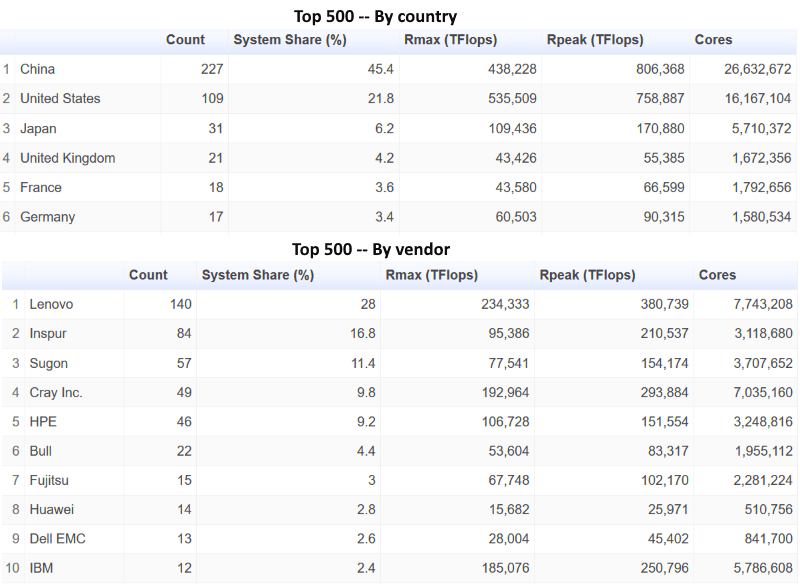
Top 500 Shows China, <span style='color:red'>U.S.</span> Gains
China extended its lead in numbers of supercomputers, but the U.S. made gains in overall performance in the rankings released Monday. The latest Top 500 listcomes as China and the U.S. are running neck-in-neck in a race to deliver before 2022 exascale-class machine, 10 times more powerful than today’s largest systems.China now has 227 Top 500 supercomputers, 45% of the total, while the U.S total fell to 109 (22%), an historic low. “That’s a big gap,” said Jack Dongarra, a professor of electrical engineering and computer science at the University of Tennessee and one of the organizers of the Top 500 list.Vendors based in the People’s Republic have also taken leadership in supercomputing. China’s Lenovo, Inspur and Sugon are the thee top vendors in the current rankings.Together with Huawei at No. 8, Chinese vendors installed 295 of the Top 500 systems. By comparison, four U.S. vendors in the top 10 — Cray, HPE, Dell EMC and IBM — installed 120 systems.The good news for the U.S. is it still leads in overall performance at 38% compared to 31% for second-place China. Its position was boosted significantly when Summit and Sierra, the No. 1 and No. 2 systems, submitted updated results that boosted their performance levels to 143.5 and 94.6 petaflops, increases of more than 15% and 30%, respectively.“The Summit system is quite impressive and represents 10% of the total Top 500 performance,” said Dongarra.Sierra’s rise pushed China’s Sunway TaihuLight supercomputer into third place. The 93-petaflop system installed at the National Supercomputing Center in Wuxi was No. 1 on the Top 500 list for two years.Both China and the U.S. have ramped up programs to deliver as many as three exascale systems each before 2022. The U.S. Department of Energy announced in April it is spending $1.8 billion on hardware alone for its program that includes separate spending on software.“The U.S. is investing a tremendous amount for exascale. We could always use more, but it’s hard to say how much,” Dongarra said.Three U.S. government labs will house its exasacle machines — Argonne, Livermore and Oak Ridge. China is expected to give a green light to three projects competing to deliver exascale systems as early as 2020.One system is expected to use a China-designed CPU called the FT-2000 based on 64-bit ARM cores with vector extensions. China is designing its own chip, at least in part because the U.S. is putting restrictions on Intel supplying government-led projects its high-end Xeon chips that are widely used in supercomputers.In recent years, China has been increasing the amount of silicon it designs for its high-end systems, including its own interconnect chips and accelerators.For example, the Tianhe-2A, No. 4 on the latest list at 61.4 petaflops, uses a homegrown Matrix-2000+ accelerator, replacing an Intel Xeon Phi it used previously.The Matrix-2000+ packs 128 cores in a 16nm device that delivers 2.048 teraflops/second at 2 GHz. A Matrix-3000 chip is expected to power one of China’s three exascale systems.Nvidia continues to be one of the big winners in the Top 500 along with Intel whose Xeon chips are used in more than 90% of the systems. A total of 137 systems on the list used Nvidia GPUs as accelerators, up from 110 six months ago.For example, both the No. 1 and No. 2 Summit and Sierra systems are IBM-built supercomputers, using its Power 9 CPUs and Nvidia V100 GPUs. Summit consists of 4,356 nodes, each with two 22-core Power 9s and six Tesla V100s linked on a Mellanox EDR InfiniBand network. Sierra is made up of 4,320 nodes with two Power 9s and four NVIDIA Tesla V100 GPUs.Overall, the Top 500 now sports 429 systems delivering a petaflop/second or more, up from 272 systems six months ago. The BM-built Roadrunner system was the first to break the petaflop barrier in 2008.A representative of the U.S. DoE will give an update on its exascale project this week at Supercomputing 2018 conference where the Top 500 list also will be revealed. European researchers will deliver an update on their exascale project at the event. In addition, a researcher from the University of Texas will unveil details of its plans for a next-generation system to replace its Blue Waters supercomputer with funding from the U.S. National Science Foundation.
Key word:
Release time:2018-11-13 00:00 reading:1520 Continue reading>>
SEMI supports <span style='color:red'>U.S.</span> return to trade talks with China, issues trade negotiation principles
SEMI, the global industry association serving the electronics manufacturing supply chain, today voiced support and encouragement for trade discussions between U.S. President Donald Trump and People’s Republic of China President Xi Jinping – talks that are planned for Dec. 1 during the G20 Summit in Argentina. Representing the semiconductor industry end-to-end, from chip design through manufacturing, SEMI expressed hope for a deal and offered principles beneficial to the global microelectronics manufacturing supply chain.“With SEMI members being key enablers of the more than $2 trillion electronics manufacturing supply chain, SEMI has a clear foundational mission based on free and fair trade, open markets, and support for international laws governing IP, cybersecurity and national security,” said Ajit Manocha, SEMI president and CEO. “Adhering to these principles benefits all SEMI member companies and the global ecosystem of industries and applications enabled by semiconductor manufacturing. I commend our global government leaders for returning to the negotiating table.”Recent tariffs and trade tensions, on top of newly imposed and rumored export controls, have complicated the global electronics manufacturing supply chain, forcing many SEMI member companies to rethink their investment strategies. Over the past six months, SEMI has testified that tariffs threaten to undercut the ability of many SEMI members to sell overseas by increasing costs, stifling innovation, and curbing U.S. technological leadership.SEMI continues to educate U.S. lawmakers, as well as governments worldwide, about the critical importance of free and fair trade, open markets, and respect and enforcement of IP for all players in the global electronics manufacturing supply chain. As part of this initiative, SEMI is providing the 10 Principles for the Global Semiconductor Supply Chain in Modern Trade Agreements below to government officials and encouraging them to include these guidelines in forward-looking agreements.These core principles outline the primary considerations for balanced trade rules that benefit SEMI members around the world, strengthen innovation and perpetuate the societal benefits of affordable microelectronics – essential components in all advanced communications, computing, transportation, healthcare and consumer electronics.10 Principles for the Global Semiconductor Supply Chain in Modern Trade Agreements1. Affirm principles of non-discrimination.Non-discriminatory treatment is a central tenet of the global trading system. SEMI strongly believes that any trade deal should provide that all products from a party to the deal cannot be put at a competitive disadvantage in any other party’s market. Related, any agreement must be fully compliant with the World Trade Organization’s rules.2. Maintain strong respect for intellectual property and trade secrets through robust safeguards and significant penalties for violators.Protection for intellectual property are essential for the semiconductor industry. These standards enable the ability to innovate and grow. SEMI supports robust copyright standards, strong patent protections, and regulations that safeguard industrial design. SEMI also strongly supports rules that preserve trade secrets protection, including establishing criminal procedures and penalties for theft, including by means of cyber theft.3. Remove tariffs and end technical barriers on semiconductor products.Parties should eliminate tariffs and technical barriers on semiconductors and all technology products, that rely on electronic chips. Removing tariffs and technical barriers is crucial for businesses, especially for small and medium-sized enterprises, in penetrating new markets. Related, any trade deal should open markets for services providers, ensuring that all face fair and transparent treatment.4. Simplify and harmonize the customs and trade facilitation processes.The trade deals should include strong commitments on customs procedures and trade facilitation to ensure that border processing will be quick, transparent, and predictable. The parties should also work to use electronic customs forms to expedite customs processing.5. Combat any attempts of forced technology transfer.All trade deals should have clear and firm rules that prohibit countries from requiring companies to transfer their technology, intellectual property, or other proprietary information to persons in their respective territories.6. Enable the free flow of cross-border data.In today’s global economy, all industries, including the semiconductor industry, rely on the free flow of data. Countries should refrain from putting in place unjustifiable regulations that limit the free flow of information, which simply serve to curb innovation and impact growth. SEMI supports provisions that enable the movement of data, subject to reasonable safeguards for privacy and other protections.7. Eliminate forced data localization measures.Many countries have created laws that require physical infrastructure and data centers in every country they seek to serve, which adds unnecessary costs and burdens. Forward-looking policies should eliminate the use of forced data localization measures.8. Harmonize global standards to achieve “one standard, one test, accepted everywhere.”Businesses should not have to face different standards for each market they serve. Global standards, driven by industry, should be market-oriented, and there should be strong commitments on transparency, stakeholder participation and coordination.9. Create transparent rules for state-owned and -supported enterprises to ensure fair and non-discriminatory treatment.SEMI supports a trade deal that contains robust commitments to ensure that state-owned and -supported enterprises compete based on performance, quality and price, as opposed to discriminatory regulation, opaque subsidies, favoritism, or other tools that artificially benefit state-backed businesses.10. Establish protections for companies and individuals that respect privacy while also balancing security.Any trade deal should have firm consumer protections, including privacy, that enables ease of use, but also does not forgo security. SEMI support efforts to use encryption products in support of this venture and also believes that parties should work to advance efforts on cybersecurity through self-assessment, declaration of conformity, increased cooperation and information sharing, all of which will help prevent cyber-attacks and stop the diffusion of malware.
Key word:
Release time:2018-11-09 00:00 reading:1334 Continue reading>>

Turn to

/ 5

  • Week of hot material
  • Material in short supply seckilling
model brand Quote
BD71847AMWV-E2 ROHM Semiconductor
CDZVT2R20B ROHM Semiconductor
TL431ACLPR Texas Instruments
MC33074DR2G onsemi
RB751G-40T2R ROHM Semiconductor
model brand To snap up
ESR03EZPJ151 ROHM Semiconductor
STM32F429IGT6 STMicroelectronics
TPS63050YFFR Texas Instruments
IPZ40N04S5L4R8ATMA1 Infineon Technologies
BU33JA2MNVX-CTL ROHM Semiconductor
BP3621 ROHM Semiconductor
Hot labels
ROHM
IC
Averlogic
Intel
Samsung
IoT
AI
Sensor
Chip

About us

Qr code of ameya360 official account

Identify TWO-DIMENSIONAL code, you can pay attention to

AMEYA360 mall (www.ameya360.com) was launched in 2011. Now there are more than 3,500 high-quality suppliers, including 6 million product model data, and more than 1 million component stocks for purchase. Products cover MCU+ memory + power chip +IGBT+MOS tube + op amp + RF Bluetooth + sensor + resistor capacitance inductor + connector and other fields. main business of platform covers spot sales of electronic components, BOM distribution and product supporting materials, providing one-stop purchasing and sales services for our customers.

Please enter the verification code in the image below:

verification code