Murata:Radisol Redefines Antenna Interference Countermeasures for Smartphones and Wearables
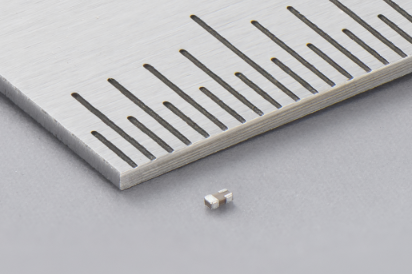
  Murata Manufacturing Co. Ltd announces the launch of Radisol – an innovative product designed to suppress interference between nearby antennas with low insertion loss, improving isolation and antenna radiation efficiency. This world-first solution is specifically engineered to meet the demands of compact modern devices like smartphones and wearables, offering benefits such as reduced power consumption, miniaturized construction, and enhanced communication quality. In addition, Radisol has been adopted by Motorola Mobility LLC (Headquarters: Libertyville, Illinois, USA, President: Sergio Buniac), in the new Edge series of smartphones scheduled to be released in August 2024. Motorola has realized a method of improving the characteristics of Wi-Fi® antennas by using Radisol.  As the demand for smaller smartphones and wearable devices grows, the number of antennas is also increasing to accommodate the expanding range of communication methods and bands. Additionally, MIMO technology to improve communication quality and speed is encouraging an increase in the number of antennas, while new designs such as foldable smartphones are encouraging antenna crowding. This has posed new difficulties, specifically the implications on antenna isolation and the decline in antenna effectiveness, as the interference of nearby antennas leads to a decrease in radiation efficiency.  Although discrete filters are a common solution for improving antenna isolation, they are not suitable when communication bands are closely situated, as insertion loss can impair antenna performance and occupy valuable board space. To address these challenges, Murata has created Radisol, a low-loss filter for antenna area that uses Murata’s unique ceramic multilayer technology and RF circuit design technology.  Antenna engineers usually construct a filter circuit using discrete L and C chip components to implement effective countermeasures. Instead, Radisol is just a single 0603-sized component that resolves the persisting challenges of antenna performance and packaging constraints. It effectively suppresses antenna interference, without significantly impacting the passband, and results in enhanced radiation efficiency and reduced power consumption.  Each Radisol component operates as a dedicated filter circuit designed specifically to mitigate the antenna interference associated with a specific communication band. The compact component integrates one capacitor and two inductors, providing band-stop filter characteristics within a single chip. Radisol features a unique design that utilizes the generation of lossless mutual inductance by two magnetically coupled coils. This setup forms a band-stop circuit with no notable insertion loss in the communication band. This specialized approach to antenna isolation enables Radisol to offer enhanced performance, with low insertion loss and high efficiency and system integration.  Included in the Radisol family are variants designed to effectively address the needs of common bands, including 2G & 5G Wi-Fi® as well as GPS signals. This eliminates the necessity of designing discrete filter circuits, simplifying the implementation of countermeasures. Murata will continue to expand upon the initial product lineup to further meet market demands and drive further innovation in antenna technology.  “By using Radisol engineers can address the challenges of modern communication devices without compromising signal integrity and radiation efficiency,” said Satoru Muto, General Manager of New Business Incubation Department at Murata. “By utilizing Murata's cutting-edge technology, this solution takes integration to a whole new level, eliminating the need for complex discrete filter circuits and saving valuable space.”  Radisol samples are available for evaluation and mass production has already begun in June 2024. To learn more about Radisol or to request samples, please contact your local Murata representative or visit here.
Key word:
Release time:2024-08-14 13:39 reading:1032 Continue reading>>
Temperature Sensor : Types, Applications, Working Principle and Much More
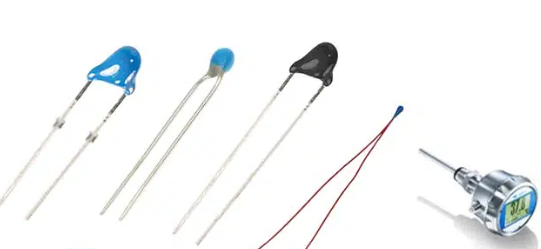
  A temperature sensor is a vital component in many systems where monitoring or controlling of temperature is required.  It allows one to measure the temperature of an object or environment and provide thermal data which is further used by various devices and applications.  Temperature sensors play an important role across many industries from automotive and medical to consumer appliances.  What is a temperature sensor?A temperature sensor is a device that helps in measuring the temperature of its environment, object or substance and converts the measurement into an electronic signal.  This electronic signal is further processed by auxiliary instrumentation such as temperature indicators, temperature controllers and temperature recorders to display or use the temperature data.  There are various types of temperature sensors available based on different sensing technologies like thermistor, thermocouple, Resistance Temperature Detector (RTD) etc.  What are different types of temperature sensors?Some of the common types of temperature sensors are:  Thermocouple  A thermocouple is a temperature sensor made by joining two different conductors at their ends to form a thermocouple junction. The voltage produced is dependent on the temperature difference between the thermocouple junction and a reference junction. Thermocouples are inexpensive, rugged and can measure a wide range of temperatures.  Resistance Temperature Detector (RTD)  An RTD is made up of a pure metal like platinum, copper or nickel which exhibits change in electrical resistance when exposed to change in temperature. The resistance increases linearly as temperature rises which makes it easy to convert to temperature using a simple formula. RTDs provide good accuracy over a wide temperature range.  Thermistor  A thermistor is a type of resistor whose resistance varies significantly with temperature changes. It exhibits a non-linear but known resistance-to-temperature relationship. Negative temperature coefficient (NTC) thermistors decrease in resistance with rising temperature while positive temperature coefficient (PTC) thermistors increase in resistance. They provide high accuracy and fast response time.  Integrated Circuit Sensor  An integrated circuit temperature sensor consists of a temperature sensitive circuit integrated onto a silicon chip that outputs voltage proportional to sensed temperature. They are small in size, inexpensive and mass producible. But accuracy is less as compared to other sensor types.  Infrared Sensor  Infrared sensors detect infrared energy radiated from an object or surface and produce an electronic signal proportional to the temperature. They are contactless and suitable to measure temperature without disturbing the environment but have less accuracy.  What are the advantages and disadvantages of temperature sensors?Advantages  • Provide accurate and repeatable temperature measurements.  • Respond quickly to temperature variations.  • Can measure a wide range of temperatures from below zero to thousands of degrees Celsius depending on type.  • Rugged, withstand vibrations and withstand hostile environmental conditions like humidity and pressure.  • Low cost options available for general purpose temperature measurements.  • Integrated circuit temperature sensors are small, mass producible and inexpensive.  Disadvantages  • Contact sensors disturb the medium whose temperature is being measured.  • Thermocouples produce small voltage signals requiring amplification.  • Response time of temperature sensors depends on thermal mass and insulation which limits fast temperature tracking.  • Temperature sensors have limited lifespan and require calibration over time.  • Special sensors are needed for measuring ultra-low or ultra-high temperatures.  How important is a temperature sensor?  A temperature sensor plays a vital role in maintaining quality and safety standards across many industries.  Some key applications where temperature sensors are mission critical include:  • Medical equipment and patient monitoring – Ensures safe temperatures for drug infusion, surgical/therapy devices, incubators etc.  • Automotive – Monitors engine temperature, fuel systems, brake fluid, transmission oil, exhaust gas recirculation.  • Industrial manufacturing – Controls processes in plastics molding, food processing, chemical reactions requiring specific temperatures.  • HVAC equipment – Essential component in thermostats, air conditioners, refrigerators to regulate temperatures.  • Fire/overheat detection – Prevents accidents by triggering alarms when abnormal high temperatures detected.  • Consumer appliances – Maintains safe cooking temperatures in ovens/stoves, cool temperatures in refrigerators.  Where are temperature sensors used?Industrial applications  Oil and gas plants to monitor pipeline temperatures, boiler temperatures.  Pulp and paper industry for dryer skin temperatures, consistency measurements.  Power plants to monitor transformer temperatures, boiler steam temperatures.  Iron and steel industry for molten metal temperatures, annealing furnace controls.  Automotive  Engine coolant temperature sensor in radiator.  Intake air temperature sensor.  Exhaust gas temperature sensor before catalytic converter.  Transmission fluid temperature sensor.  Rear differential and transfer case temperature sensors.  Medical  Patient thermoregulation- temperature probes in incubators, warming blankets.  Medical sterilizers- monitors autoclave temperatures.  Hyperthermia therapy- controls localized temperature increases.  HVAC  Thermostat temperature sensor  Duct-mounted temperature sensors  Outdoor temperature sensors  Household appliances  Refrigerator/freezer temperature sensors  Oven temperature sensors  Water heater thermostats  What is the difference between thermal sensor and temperature sensor?The main difference between a thermal sensor and a temperature sensor are:  Thermal sensors detect heat without direct contact while temperature sensors measure temperature through properties like resistance that change with temperature.  Thermal sensors provide relative heat indication without units while temperature sensors provide measured temperature output in units like Celsius or Fahrenheit.  How do temperature sensors work?Temperature sensors function based on different working principles depending on the sensing technology used:  Thermistors  Thermistors are made from semiconductor materials that change resistance predictably with temperature changes. As temperature rises, the mobility of charge carriers in the semiconductor increases resulting in lower electrical resistance that can be measured.  Thermocouples  When two different conductors are joined together, a voltage is produced dependent on their Seebeck coefficient and the temperature difference between the junction and reference junction. The output voltage is linearly proportional to temperature and is measured.  RTDs  Resistance Temperature Detectors use metals like platinum that change resistance reliably with temperature. Resistance increases linearly as temperature rises following PRT (Platinum Resistance Thermometers) or ITS-90 standard curves.  Integrated circuits  Complementary metal–oxide–semiconductors (CMOS) and bipolar transistors on an IC change current or voltage levels proportionally to temperature which is output analog or digital signals.  Infrared sensors  Infrared sensors contain a detector which absorbs infrared radiation from the target. The absorbed IR energy causes the detector temperature to rise above ambient. This temperature change alters the electrical properties to provide an output signal related to target temperature.  How to design a temperature sensor?  The steps involved in designing a temperature sensor are:  1. Select sensing element material based on required temperature range, accuracy, response time etc. like RTD, thermistor etc.  2. Design sensor probe matching application requirements like immersion, surface, air temperature sensing.  3. Choose appropriate housing material that withstands application environment. Consider thermal insulation, heat transfer etc.  4. Design signal conditioning circuitry to convert sensor output to standardized signals compatible with instruments like amplifiers, filters, transmitters etc.  5. Develop calibration curves and apply compensation algorithms in microcontroller if required for high accuracy.  6. Implement temperature scaling and linearization if needed in firmware or hardware.  7. Add optional features like remote sensor with transmission line, displays, alarms, microprocessor integration.  8. Test prototype under standard reference temperatures for calibration, accuracy, repeatability.  9. Enhance product through validation testing under field conditions, certifications.  10. Prepare design documentation for manufacturing.  What is the range of a temperature sensor?Temperature sensors can measure a wide range of temperatures based on the sensing technology and construction. Some common measurement ranges are:  • Thermocouples: -250°C to 1350°C  • RTDs: -200°C to 650°C  • Thermistors: -55°C to 150°C  • Integrated circuits: -55°C to 150°C  • Infrared sensors: -50°C to 500°C  Special types of sensors further extend the limits to measure very low cryogenic temperatures below -200°C for applications like liquified natural gas plants, high energy physics labs.  Similarly, special metallurgical thermocouples and optical pyrometer sensors go up to 3000°C for processes like steel making, glass welding.  ConclusionAn accurate and reliable temperature sensor is fundamental for process and quality control across major industries due to its role in monitoring, regulating and safety applications.  Understanding sensor types, principles, design and selection based on application demands is key.  Advancing technologies are continuously improving sensing capabilities to wider ranges, higher precisions and intelligent outputs.  As temperature measurement takes a more vital role, evolution of sensors will keep pace with the emerging trends.
Release time:2024-07-10 13:19 reading:930 Continue reading>>
400mA, High Output Slew Rate: NOVOSENSE's NSOPA240x Series Cracks the Challenge of Resolvers
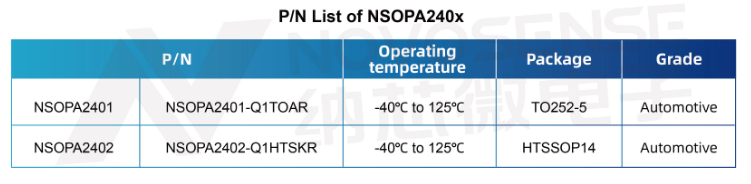
  With the continuous pursuit of high-precision, high-performance motor control technology, the ability of resolvers, as one of its core components, to accurately measure angular position and rotational speed becomes particularly important.  However, the special requirements of resolver drive circuits have always been a technical bottleneck in the development of the industry. To address this challenge, NOVOSENSE recently released the new NSOPA240x series of operational amplifier, which is designed to simplify circuit design and improve system robustness, bringing innovative solutions to resolver drive applications.  As electromagnetic sensors that can be used to accurately measure angular position and rotational speed, resolvers are widely used in industrial motor controls, servos, robots, and powertrain units in electric and hybrid vehicles. Particularly in electric vehicles, resolvers provide motor control algorithms with precise and stable position information, which is critical to ensuring ideal performance in a wide range of driving conditions. Through their unique operating principle, resolvers provide real-time and accurate feedback on the rotor angle and speed, enabling electric vehicles' motor control algorithms to accurately adjust the current output for smooth driving and instant response. In addition, resolvers' high temperature resistance, simple and reliable mechanism, compact size and low cost make them adaptable to the compact design requirements of electric vehicles and reduce overall costs.  In practice, the design of resolver drive circuits faces multiple challenges. First, the requirements for high current output and high slew rate must be met to ensure a stable excitation signal for resolvers. Second, simplifying circuit design and improving system robustness are also important issues faced by engineers. In addition, complex noise environments and stringent safety requirements bring more difficulties to the design.  With their excellent high gain bandwidth and slew rate, as well as continuous high output current drive function, NOVOSENSE's NSOPA240x high-current output operational amplifiers meet the stringent requirements of resolver primary coils for low-distortion and differential high-amplitude excitation. More importantly, NSOPA240x integrates internal thermal shutdown and overcurrent production, which not only optimizes the circuit design and reduces the system cost, but also significantly improves the overall system reliability and performance.  The automotive version of the NSOPA240x series meets the reliability requirements of AEC-Q100 Grade 1 and can work in harsh environments of -40~125°C. Different channel versions are available to meet different customer needs, with TO252-5 package for single-channel and HTSSOP14 package for dual-channel, as shown in the table below.  High current output capability - adapt to various resolver primary coil drives  Output current capability and output swing are among the most important indicators to measure the driving capability of power amplifiers. The relationship between load current and output swing directly determines the dissipated power in driving operational amplifiers. The excitation primary coil of a resolver usually has a very low DCR (DC resistance), typically less than 100Ω, so a strong current output capability up to 200mA is required to drive the coil. NSOPA240x is designed with a maximum continuous output current capability of 400mA, fully meeting the drive requirements of various resolvers.  High output slew rate - ensure undistorted primary coil excitation signal  Slew rate is one of the most important performance indicators reflecting the dynamic response of an operational amplifier, and the minimum requirement for undistorted sinusoidal signals is shown in the following formula:  Different types of resolvers have different requirements for the amplitude and frequency of the excitation signal. Taking a 7Vrms, 10kHz excitation signal as an example. According to the calculation results of the above formula, the minimum slew rate required to ensure no distortion is about 0.6 V/μs. With a slew rate of 5.5 V/μs, NSOPA240x meets most application requirements for resolver drives.  Integrated current limiting protection and overheating protection - improve resolver system reliability, and reduce complexity and cost  For the power level of several hundred mA at the primary drive end of a resolver, perfect protection measures must be taken, otherwise the system will be seriously threatened or even burned due to overheating and other reasons. NSOPA240x integrates a thermal shutdown protection function. When the chip junction temperature exceeds 173°C, the device will be disabled and the occurrence of a thermal shutdown event will be indicated by the OTF/SH_DN status. To prevent repeated triggering, the overtemperature shutdown function has a temperature hysteresis, where the junction temperature needs to fall back to 155°C before the device is re-enabled and the state of the OTF/SH_DN pin changes to indicate that the thermal shutdown event has stopped.  As shown in the figure below, NSOPA240x can provide customers with system-level functional safety and simultaneously indicate short circuit to power and short circuit to ground.  In addition, each operational amplifier in the chip has current limiting protection for the PMOS (high side) and NMOS (low side) output transistors, because overcurrent may be found on the high side or the low side. And two dedicated pins (as shown in the red box in the figure) are provided to distinguish between high side overcurrent and low side overcurrent, corresponding to the applications of short circuit to ground and short circuit to supply voltage respectively. When the output current returns to normal, the indicator pins will be released synchronously, allowing the system to easily cope with short circuit test scenarios similar to those specified in the ISO 16750 standard.
Key word:
Release time:2024-07-01 13:47 reading:751 Continue reading>>
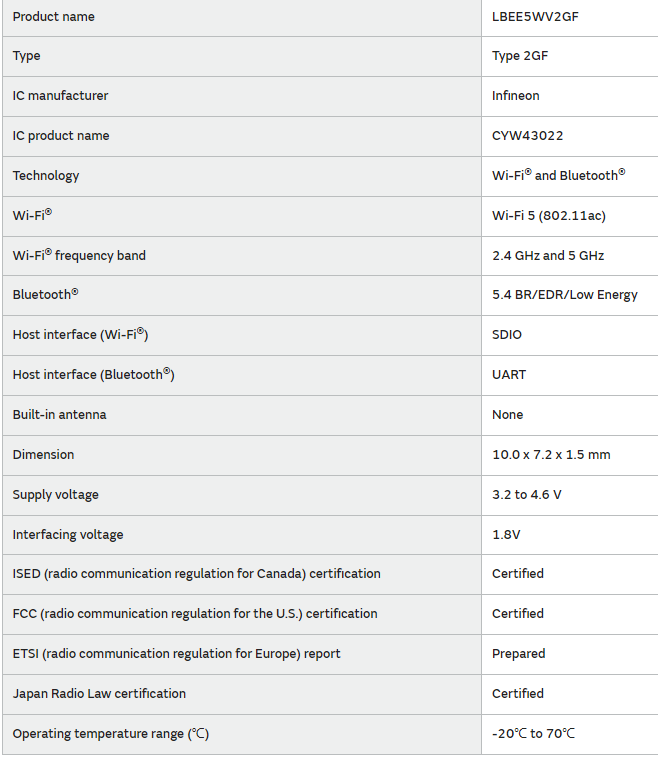
Murata commercializes low-power Wi-Fi®/Bluetooth® combo module:Helping proliferate battery-powered IoT equipment
Key word:
Release time:2024-06-28 11:31 reading:879 Continue reading>>
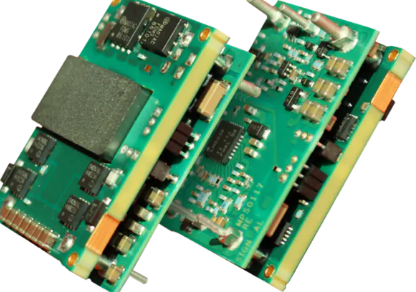
Murata Power Solutions MPS Isolated DC-DC Converters
Key word:
Release time:2024-06-25 14:43 reading:1035 Continue reading>>
novosns:Technical Sharing | The Introduction of Gate Drivers and the Applications
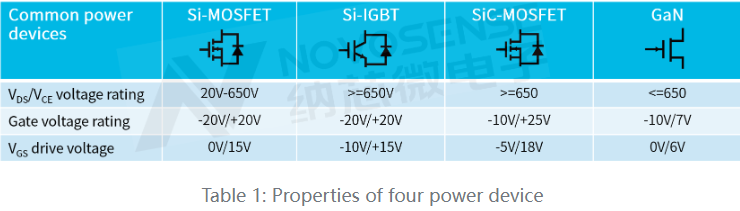
  1) Introduction of the Gate Drivers  Gate driver is a buffer circuit between the low-voltage controller and the high-power circuit, which is used to amplify the control signals of the controller for more effective turn-on and turn-off of power devices.  1. The functions of gate driver are as follows  - Gate driver can convert the low-voltage signal from the controller to higher-voltage drive signal, so as to achieve stable turn-on and turn-off of power devices.  - Gate driver can provide transient source and sink peak currents, which can improve the switching speed of power devices and reduce the switching loss.  - Gate driver can effectively isolate the noise of high-power circuits and protect sensitive circuits against interference.  - Gate driver typically integrates protection functions to effectively prevent damages to power devices.  It can be seen that gate driver is used to ensure better performance of power devices in the system.  2. There are four types of common power devices  - Si-MOSFET devices, which withstand voltage of 20V-650V and are suitable for low-power systems.  - Si-IGBT devices, which withstand voltage of greater than 650V and provide a strong current endurance capability. This type is suitable for high-voltage and high-power systems.  --- Both Si-MOSFET and Si-IGBT are Si-based power devices that have been widely used, and their manufacturing technologies are mature and stable.  - SiC-MOSFET devices, which provide withstand voltage range comparable to IGBT, but feature fast switching speed and low switching loss. They are more suitable for high-voltage and high-power systems.  - GaN devices, currently constrained by the manufacturing technology, typically have a withstand voltage of less than 650V, but provide obviously advantageous switching performance. This power device type is suitable for high-frequency and high-power systems.  --- SiC-MOSFET and GaN devices are wide bandgap semiconductors that boast significant performance advantages over Si-based ones, and will have a broad range of applications in the future.  3. NOVOSENSE gate drivers  Different power devices have varied requirements for gate drivers. Currently, NOVOSENSE has developed driver products suitable for these four types of power devices.  4. Switching process of power devices  How does a gate driver control the turn-on and turn-off of power devices? Below is a detailed explanation of the switching process of power devices. In power devices, there are equivalent parasitic capacitances, such as CGS, CGD and CDS. The switching process of a power device can be equivalent to the charging and discharging process of its parasitic capacitances.  4.1 Turn-on process  In the turn-on process, the driver IC connects the output signal to the driver power supply through an internal source current MOS, and charges CGS and discharges CGD through a gate resistor.  - (t0-t1) stage: The gate current charges CGS, and VGS gradually increases. At this point, the power device is still turned off.  - (t1-t2) stage: When VGS increases to a value greater than the gate threshold voltage Vth, the power device begins to turn on, and IDS increases with VGS until it reaches the maximum value.  - (t2-t3) stage: This is the Miller Plateau period, where the gate current mainly discharges CGD, and VDS begins to decrease. The device is fully turned on.  - (t3-t4) stage: The gate current continues to charge CGS, and VGS gradually increases to the power supply voltage. When the gate current reduces to zero, the turn-on process ends. The turn-on loss of the power device mainly occurs at the t1-t3 stage.  4.2 Turn-off process  In the turn-off process, the driver IC connects the output signal to the GND through an internal sink current MOS, and discharges CGS and charges CGD through a gate resistor.  - (t0-t1) stage: The gate current mainly discharges CGS, and VGS gradually decreases.  - (t1-t2) stage: This is the Miller Plateau period, where the gate current mainly charges CGD, and VDS begins to increase. When the voltage reaches VDC, the Miller Plateau ends.  - (t2-t3) stage: IDS begins to decrease. When VGS decreases to Vth, IDS drops to zero, and the power device is completely turned off.  - (t3-t4) stage: The gate current continues to discharge CGS, and VGS eventually drops to zero. The turn-off process ends. The turn-off loss of the power device mainly occurs at the t1-t3 stage.  It can be seen from the analysis above that shortening the t1-t3 stage can effectively reduce the switching loss of power devices.  4.3 Three types of common driver IC  At present, there are three types of commonly used driver ICs, namely non-isolated low-side drivers, non-isolated half-bridge drivers, and isolated drivers.  - Non-isolated low-side drivers are only suitable for power devices with a reference to GND, and provide dual-channel or single-channel driving capability. Non-isolated drivers are relatively simple to implement, requiring only single power supply. They are mainly used in low-voltage systems, such as AC/DC converters, electric tools, and low-voltage DC/DC converters. Currently, NOVOSENSE offers non-isolated low-side driver ICs including NSD1026V and NSD1015.  - Non-isolated half-bridge drivers are used in power systems with a half-bridge configuration. The withstand voltage of the high and low sides is usually achieved through level shifting or isolation, ranging from 200V to 600V. To prevent shoot-through, half-bridge drivers provide an interlock function. When a non-isolated half-bridge driver is used in a system, single power supply plus bootstrap power is typically adopted. This driver IC type is mainly used in low-voltage or high-voltage systems, such as AC/DC converters, motor drives, and on-board DC/DC converters. Currently, the half-bridge driver ICs from NOVOSENSE include NSD1624 and NSD1224.  - Isolated drivers use an internal isolation barrier to physically isolate high and low voltages. Isolated drivers provide flexibility in application. Single-channel and dual-channel isolated drivers are available for low-side, high-side, or half-bridge applications. To achieve primary and secondary isolation in the system, the high-voltage side requires an isolated power supply, making the power supply system relatively complex. Isolated drivers are mainly used in high-voltage systems, such as electric drives, photovoltaic inverters, and OBCs. Currently, NOVOSENSE offers NSI6602 dual-channel isolated driver IC, NSI6601/NSI6601M single-channel isolated driver IC, NSI6801 opto-compatible isolated single-channel driver IC, and NSI6611/NSI68515 smart isolated driver IC.  2) Introduction to Isolation Solutions  In a high-voltage power system, there is usually isolation between high voltage and high voltage, as well as between high voltage and low voltage. Why is isolation driver needed? First, an isolated driver can avoid harm to human body caused by high-voltage electricity, and meet safety standards through isolation. Second, it can protect the control system from damages that can be caused by lightning strikes and high voltage transients. Third, an isolated driver can eliminate ground loops and reduce interference from the high voltage side to the low voltage side. Fourth, it can realize voltage or current change and energy transfer.  There are three commonly used isolation schemes. The first is optocoupler isolation, which achieves signal transmission through light-emitting diodes and phototransistors. This isolation scheme is low-cost, but provides weak CMTI (Common Mode Transient Immunity), limited temperature range, and short service life. The second isolation scheme is magnetic isolation, where the chip integrates micro-transformer and electronic circuit to achieve signal transmission. The magnetic isolation chips deliver benefits such as long lifetime, wide temperature range, and strong CMTI, but involve complex technology, high cost, and prominent EMI issue. The third isolation scheme is capacitive isolation, which achieves signal transmission through isolation capacitors and electronic circuits. It usually uses silicon dioxide (SiO2) as the insulating material. The capacitive isolation scheme features low cost, long isolation life, wide temperature range, and strong CMTI. NOVOSENSE adopts the capacitive isolation scheme.  NOVOSENSE isolation solution  Isolated driver ICs from NOVOSENSE usually have two dies – the primary die on the input side and the secondary die on the output side. There is a physical isolation between the dies. Two isolation capacitors are connected in series on the die to achieve double insulation capability. If one of the dies experiences an EOS failure, the driver IC can still maintain basic insulation capability. The top and bottom substrates of the two isolation capacitors are insulated using SiO2, which can ensure stable material properties, good chip consistency, and long isolation life. The top substrates of the two isolation capacitors are connected by metal wires for signal transmission. NOVOSENSE’s isolated driver ICs can withstand surge voltage up to 12kV and 8kV transient insulation voltage test, far exceeding the insulation requirements of high-voltage systems.  The communication between the dies adopts the differential OOK modulation scheme, which ensures stable and reliable communication. The input signal is modulated at a high frequency and then transmitted from the primary die to the high-voltage die through the isolation capacitor, with the modulation frequency at a level of over 100 MHz. A proprietary CMTI modular circuit is added at the input side of the differential signal, allowing the IC to achieve a stronger CMTI capability up to 150V/ns. For power systems with a high dv/dt, the IC can still work stably without abnormal wave emission.
Key word:
Release time:2024-06-21 11:23 reading:940 Continue reading>>
Renesas’ R-Car Open Access Platform Accelerates Software-Defined Vehicle Development With Market-Ready Software
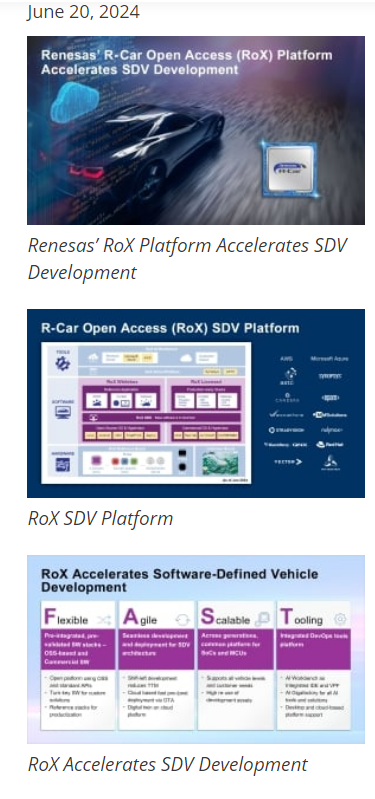
  Renesas Electronics Corporation (TSE:6723), a premier supplier of advanced semiconductor solutions, today launched R-Car Open Access (RoX), a development platform for software-defined vehicles (SDVs) that integrates all essential hardware, operating systems (OS), software and tools needed for automotive developers to rapidly develop next-generation vehicles with secure and continuous software updates. Designed for the Renesas R-Car family of system on chips (SoCs) and microcontrollers (MCUs), the SDV platform includes comprehensive tools for the seamless deployment of AI applications. By pre-integrating all fundamental layers required to develop SDVs, RoX drastically reduces the complexities for car OEMs and Tier 1 suppliers, saving time and money.  The advent of SDVs represents a major step forward in automotive technology – accelerating toward more driving autonomy, electrification and connected experiences. Cars have to be aware of the 360-degree surrounding space with ASIL D levels of sensing, processing and control to deliver safety and autonomy applications. The in-cabin experiences for drivers and passengers are being revolutionized. As a result, modern electrical/electronics (E/E) architecture depends on software to control vehicle functions, manage real-time data networks across different ECU zones, and provide customer differentiation. It has become more difficult to maintain and upgrade these complex software stacks while ensuring the highest levels of safety. Renesas’ customizable solution solves these challenges by offering a cloud-native development environment and a simulation platform, supporting the software-first approach and parallel hardware and software development.  Out-of-box Platform with Market-Ready Software Stacks  The flexible RoX SDV platform is available in two versions. “RoX Whitebox” is an open, easily accessible software package that includes royalty-free OS and hypervisor software such as Android Automotive OS, FreeRTOS, Linux, Xen and Zephyr RTOS, as well as reference applications designed for specific domain systems. “RoX Licensed” is based on industry-proven commercial software solutions, such as QNX and Red Hat In-Vehicle Operating System, as well as AUTOSAR-compliant software and SAFERTOS®. It is pre-integrated and tested to run on Renesas’ R-Car SoCs and MCUs and includes pre-validated software stacks from STRADVISION for Advanced Driver Assistance Systems (ADAS) and Candera CGI Studio for in-vehicle infotainment (IVI), to name a few. These software solutions can be easily productized and customized or expanded depending on OEMs’ needs.  With the RoX SDV platform, automotive system engineers can start building their software immediately using a highly integrated toolchain even before the hardware is available. This is made possible through the cloud environment and the virtual development platform, which let developers design, debug in simulation, and verify their software before deploying on live SoCs and MCUs. The virtual development platform includes the Renesas Fast Simulator (RFS) as well as partner solutions such as ASTC VLAB VDM and Synopsys Virtualizer Development Kit (VDK) to provide broad coverage of simulation speed, features and use cases.  For seamless end-to-end AI development, RoX offers the AI Workbench to enable developers to validate and optimize their models and test their AI applications all in the cloud, either on the virtual development platform or on Renesas board farms. A wide range of AI models, automated pipelines, as well as a specific hybrid compiler toolchain (HyCo) are available to support the rapid AI deployment on the R-Car heterogeneous compute platform across generations of SoCs.  AWS Cloud Services Now Available  The RoX SDV platform now supports Amazon Web Services (AWS) cloud computing services as part of the AI Workbench development environment. With the Renesas R-Car SDK (Software Development Kit) containerized in the AWS cloud environment, developers can innovate and optimize their designs more efficiently. This tight integration allows them to simulate and test hardware and software combinations instantly and deploy AI applications that seamlessly run on R-Car devices.  Scalable R-Car Gen 5 Family  The RoX SDV platform is designed for current generation R-Car SoCs, the upcoming R-Car Gen 5 MCU/SoC Family, and future devices. The SDV platform provides car OEMs and Tier1 suppliers the flexibility to design a broad range of scalable compute solutions for ADAS, IVI, gateway and cross-domain fusion systems as well as body control, domain and zone control systems.  Renesas’ R-Car Gen 5 is currently the only hardware architecture in the industry that can accommodate the full range of processing requirements – from zonal ECUs to high-end central compute, serving from entry-level vehicles to luxury-class models. Thanks to a new unified hardware architecture based on Arm® CPU cores, customers developing with the R-Car Gen 5 devices will be able to reuse the same software and tools across diverse E/E applications that span car models and generations, preserving their engineering investments. Renesas’ high-performance SoC products will offer both domain-specific and cross-domain solutions using application processing, large display capabilities, sensor connectivity, GPU and AI processing.  “RoX is a significant advancement that will speed up the shift-left approach for software-defined vehicles,” said Vivek Bhan, Senior Vice President and General Manager of High Performance Computing at Renesas. “Today, car OEMs and Tier1 suppliers are heavily investing in software development and maintenance. Renesas understands this challenge and is closely working with them to deliver a flexible, ready-to-deploy development solution that can be maintained throughout the vehicle’s lifespan. The RoX platform empowers our customers to design vehicles that deliver new value and bring improved safety and delightful comfort experiences to drivers and passengers.”  “At AWS, we’re committed to helping our customers and partners accelerate development and bring innovation to drivers faster than ever before,” said Andrea Ketzer, Director of Technology Strategy, Automotive & Manufacturing at AWS. “With Renesas’ R-Car Gen 5 devices supported by the AI Workbench on AWS, customers will achieve faster and more validated simulations and the ability to develop independently of hardware. This step change in development will drive the industry forward and place software innovation at the forefront of mobility.”  According to TechInsights, the market shift to domain, zonal and centralized architectures will translate to a growing processor market, incorporating SoCs and MCUs, worth $25.9 billion by 2031. “Being able to maintain and upgrade complex software stacks that incorporate operating systems, hypervisors and other functional software stacks will thus become an increasingly critical element of the supply chain,” said Asif Anwar, Executive Director of Automotive End Market Research at TechInsights. “By also being able to offer cloud-native environments to support a software-first approach to development and testing of the hardware, the Renesas RoX SDV platform offers a ready-built ecosystem that encompasses these elements in support of a scalable portfolio of next generation R-Car Gen 5 processors to address this sizable market.”  Renesas’ R-Car Open Access Platform is being demonstrated at the AWS Summit Japan in Tokyo from June 20-21.  RoX SDV Platform Partners:  Operating System/Hypervisor Partners  QNX  Red Hat  Vector AUTOSAR  WITTENSTEIN SAFERTOS®  Software Stack Partners  Candera CGI Studio  EPAM AosEdge  Excelfore eSync  MM Solutions  STRADVISION SVNet  Nullmax  Development Tools Partners  ASTC VLAB Works  Synopsys Virtualizer Development Kit (VDK)  Cloud Partners  AWS  Microsoft Azure  Availability  The R-Car Open Access Platform is available today with the option to license. Open-source OS, commercial OS, full application software stacks, virtual development, cloud infrastructure and debugging and emulation tools are available by Renesas or through partners. Additional information about the development platform is available here and information about the R-Car Gen 5 Family can be found here. Please contact your local sales teams for more details.
Key word:
Release time:2024-06-20 10:53 reading:1505 Continue reading>>
ROHM’s New TRCDRIVE pack™ with 2-in-1 SiC Molded Module: Significantly Reduces the Size of xEV Inverters
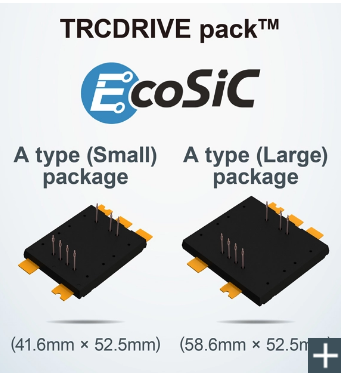
  ROHM has developed four models as part of the TRCDRIVE pack™ series with 2-in-1 SiC molded modules (two of 750V-rated: BSTxxxD08P4A1x4, two of 1,200V-rated: BSTxxxD12P4A1x1) optimized for xEV (electric vehicles) traction inverters. TRCDRIVE pack™ supports up to 300kW and features high power density and a unique terminal configuration - help solving the key challenges of traction inverters in terms of miniaturization, higher efficiency, and fewer person-hours.  As the electrification of cars rapidly advances towards achieving a decarbonized society, the development of electric powertrain systems that are more efficient, compact, and lightweight is currently progressing. However, for SiC power devices that are attracting attention as key components, achieving low loss in a small size has been a difficult challenge. ROHM solves these issues inside powertrains with its TRCDRIVE pack™.  A trademark brand for ROHM SiC molded type modules developed specifically for traction inverter drive applications, TRCDRIVE pack™ reduces size by utilizing a unique structure that maximizes heat dissipation area. On top, ROHM’s 4th Generation SiC MOSFETs with low ON resistance are built in - resulting in an industry-leading power density 1.5 times higher than that of general SiC molded modules while greatly contributing to the miniaturization of inverters for xEVs.  The modules are also equipped with control signal terminals using press fit pins enabling easy connection by simply pushing the gate driver board from the top, reducing installation time considerably. In addition, low inductance (5.7nH) is achieved by maximizing the current path and utilizing a two-layer bus-bar structure for the main wiring, contributing to lower losses during switching.  Despite developing modules, ROHM has established a mass production system similar to discrete products, making it possible to increase production capacity by 30 times compared to conventional SiC case-type modules. To obtain samples, please contact a sales representative or visit the contact page on ROHM’s website.  Product LineupTRCDRIVE pack™ is scheduled to be launched by March 2025 with a lineup of 12 models in different package sizes (Small / Large) and mounting patterns (TIM: heat dissipation sheet / Ag sinter). In addition, ROHM is developing a 6-in-1 product with built-in heat sink that is expected to facilitate rapid traction inverter design and model rollout tailored to a variety of design specifications.  ☆: Under Development  AQG 324 is a qualification standard for automotive power modules established by ECPE (European Center for Power Electronics).  European automakers are required to comply with this standard when considering adoption.  Application Examples・ Automotive traction inverters  Sales InformationAvailability: June 2024 (OEM quantities)  Pricing: $550/unit (samples, excluding tax)  Comprehensive Support      ROHM is committed to providing application-level support, including the use of in-house motor testing equipment. A variety of supporting materials are also offered, such as simulations and thermal designs that enable quick evaluation and adoption of TRCDRIVE pack™ products. Two evaluation kits are available as well, one for double-pulse testing and the other for 3-phase full bridge applications, enabling evaluation in similar conditions as practical inverter circuits.  For details, please contact a sales representative or visit the contact page on ROHM’s website.  EcoSiC™ BrandEcoSiC™ is a brand of devices that utilize silicon carbide (SiC), which is attracting attention in the power device field for performance that surpasses silicon (Si). ROHM independently develops technologies essential for the evolution of SiC, from wafer fabrication and production processes to packaging, and quality control methods. At the same time, we have established an integrated production system throughout the manufacturing process, solidifying our position as a leading SiC supplier.  TerminologyTraction Inverter  Traction motors in electric cars are driven by 3-phase AC power with a phase shift of 120°. Traction inverters convert direct current supplied from the battery into 3-phase alternating current.  2-in-1  To convert DC into 3-phase AC, one high-side and one low-side MOSFET are required per phase for switching. A 2-in-1 configuration combines both of these MOSFETs into a single module.
Key word:
Release time:2024-06-19 14:57 reading:962 Continue reading>>
Fibocom Launches a Series of On-device AI Solutions for Compute-intensive Applications powered by Qualcomm-based Platforms at Computex 2024
  Inevitably, the adoption of generative AI and LLM (Large Language Model) has fueled more intelligence and efficiency in our lives and works than in the past decade. Moving forward, the demand for running AI and LLM at the edge devices is growing as it provides lower latency, higher privacy, and more flexibility, which is set to redefine the level of intelligence of smart devices as well as broaden the landscape of mobile scenarios.  Taipei, Taiwan – June 7th 2024 – Fibocom (Stock code: 300638), a global leading provider of IoT (Internet of Things) wireless solutions and wireless communication modules, launches a series of on-device AI solutions powered by Qualcomm® QCS8550 and QCM6490 processors from Qualcomm Technologies, Inc. The solutions are designed to satisfy compute-intensive application scenarios such as robotics, automated vehicles, video collaborations, smart retailing, etc., accelerating industrial digitalization and intelligent transformation.  Flagship on-device AI solution powered by Qualcomm QCS8550 processor  Utilizing the powerful Qualcomm QCS8550 processor, Fibocom’s flagship on-device AI solution is designed to deliver strong performance and unparalleled multimedia capabilities. Equipped with an octa-core CPU and an Adreno™ 740 GPU, the solution can support up to 4 concurrent displays, and 8K video encoding and decoding. It serves as a strong core for industries requiring high-definition video playing, fast data analytics and lower latency like automated vehicles, robotics, remote medical surgery, computer vision systems, live streaming, videoconference systems, and more.  Premium on-device AI solution powered by Qualcomm QCM6490 processors, piloting the high-end AIoT market  The solution developed using the Qualcomm QCM6490 processor, features an octa-core processor with high-speed HVX (Hexagon Vector Extension) technology, and a high-performance graphics engine to allow smooth 4K video playing and multi-channel camera inputs. In addition, the solution is capable of allowing a maximum of 5 ISPs (Image Signal Processing) and up to 5-8 camera streams simultaneously, helping customers to ease their concerns on multi-camera deployments as well as dual-screen display scenarios. The solution offers flexible wireless connections such as 5G, Wi-Fi, Bluetooth, and is equipped with a GNSS receiver for precise navigation both indoors and outdoors. In terms of software, the solution supports the mainstream operating systems: Android, Linux, and Windows. Leveraging the computing power of up to 13 TOPS, the solution efficiently helps customers handle data-intensive computation and processing, running various 1.3B/3B/7B open-source LLMs on the device, making it an ideal solution for smart retail, in-vehicle infotainment (IVI) and industrial inspection.  “We are excited to see our powerful Qualcomm processors, the QCS8550 and QCM6490, being utilized in Fibocom's innovative on-device AI solutions,” stated Dev Singh, Vice President of Business Development and Head of building, enterprise & industrial automation at Qualcomm Technologies, Inc. “This collaboration is a testament to our commitment to advancing AI capabilities at the edge, enhancing performance and efficiency across a range of applications from industrial automation to smart retail.”  "It is paramount to master the productivity of AI and create value-added solutions from the edge side for our customers that are in urgent need of building their smart devices based on our solutions. We are thrilled to develop these solutions based on the advanced and powerful chipsets from Qualcomm Technologies, as it not only provides the fundamental architecture of edge intelligence, also enriches flexibility in network connections such as 5G/Wi-Fi/Bluetooth," said Ralph Zhao, VP of MC BU at Fibocom. "In collaboration with Qualcomm Technologies, Fibocom is dedicated to injecting new versatility to the future of intelligence, and accelerating the implementation of our collaboration in robotics, industrial automation, live streaming, and more."
Key word:
Release time:2024-06-18 16:12 reading:1264 Continue reading>>
Renesas and Indian Institute of Technology Hyderabad Sign Agreement to Accelerate India’s Semiconductor Independence
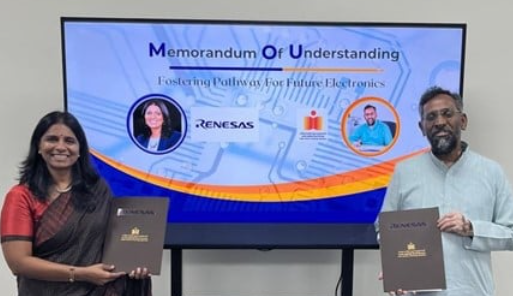
  TOKYO, Japan and HYDERABAD, India, June 05, 2024 ― Renesas Electronics Corporation (TSE:6723), a premier supplier of advanced semiconductor solutions, and the Indian Institute of Technology Hyderabad (IITH) have signed a three-year memorandum of understanding (MOU) for research and collaboration in the field of VLSI and embedded semiconductor systems. The engagement with IITH professors and staff will focus on R&D and academic interactions with a goal to drive innovation in India’s semiconductor industry and advance the nation’s “Make in India” strategy.  The signing ceremony of the agreement was held on June 3, 2024 at the IITH in Telangana state between Malini Narayanamoorthi, Country Head of India and Senior Director of Engineering, Analog & Connectivity Product Group, Renesas, and Prof. B.S. Murty, Director, IITH.  The MOU will help the IITH foster talent development in support of India’s ambition to build a self-reliant semiconductor industry while enabling Renesas to add talented employees in India through closer collaboration with the country’s educational institutions to capture huge market opportunities.  Under the MOU, Renesas this year will begin supporting university course curriculum development, hands-on learning using Renesas development boards and various outreach programs designed to advance lab work and proof-of-concept projects. IITH engineering students will be eligible to apply for six-month Renesas internships and pursue full-time employment with the company.  “India holds significant importance within our business operations, and we appreciate its dynamic innovation environment and strong potential for growth,” said Julie Pope, Senior Vice President and Chief Human Resources Officer, Renesas. “We are delighted to partner with IITH in its goal to be the cradle for semiconductor innovation in India. We aim to strengthen India's semiconductor product ecosystem, and support the “Make in India” objective of providing increasing semiconductor content for India and the world.”  “Recognizing the importance of India at the forefront of the semiconductor industry in influencing the future, our collaboration with Renesas will provide a chance for our students to gain exposure and learn directly from Renesas experts about constructing products with cutting-edge technologies. IITH is pioneering several initiatives to foster talent development in Electronic System Design and Manufacturing (ESDM) sector across India. This synergistic collaboration is a booster to that effort. This is also a pathway for R&D collaboration as IITH boasts several expert faculty spanning across several departments who can co develop next generation electronic products with Renesas,” said Prof. B.S. Murty, Director, IITH. “The opportunity for employment at a leading global company is a tremendous additional benefit.”  About Renesas Electronics Corporation  Renesas Electronics Corporation (TSE: 6723) empowers a safer, smarter and more sustainable future where technology helps make our lives easier. A leading global provider of microcontrollers, Renesas combines our expertise in embedded processing, analog, power and connectivity to deliver complete semiconductor solutions. These Winning Combinations accelerate time to market for automotive, industrial, infrastructure and IoT applications, enabling billions of connected, intelligent devices that enhance the way people work and live.  About IIT Hyderabad  Indian Institute of Technology Hyderabad (IITH) is one of the eight IITs established by the Government of India in 2008. In a short span of 15 years, the institute has become one of the top-ranked institutions in the country and has received global recognition. It has 300+ full-time faculty, 4,700+ students (60% of them being PG+PhD students), 18 Departments + 1 Centre for Interdisciplinary Programs, nearly 500+ state-of-the-art Research Facilities, and five research and entrepreneurship centres. The institute has a strong research focus with approx. Rs. 1,100+ Cr of sanctioned research funding (Rs. 250+ Cr in 2023-24). IITH has more than 10,500+ research publications with 1,60,000+ Citations, 275+ Published Patents, 3,700+ sponsored/consultancy projects with 500+ running projects, and about 190+ startups that have generated 1,100+ jobs and a revenue of Rs. 1,500+ Cr.
Key word:
Release time:2024-06-12 13:37 reading:1568 Continue reading>>

Turn to

/ 93

  • Week of hot material
  • Material in short supply seckilling
model brand Quote
BD71847AMWV-E2 ROHM Semiconductor
RB751G-40T2R ROHM Semiconductor
CDZVT2R20B ROHM Semiconductor
TL431ACLPR Texas Instruments
MC33074DR2G onsemi
model brand To snap up
IPZ40N04S5L4R8ATMA1 Infineon Technologies
TPS63050YFFR Texas Instruments
STM32F429IGT6 STMicroelectronics
BP3621 ROHM Semiconductor
BU33JA2MNVX-CTL ROHM Semiconductor
ESR03EZPJ151 ROHM Semiconductor
Hot labels
ROHM
IC
Averlogic
Intel
Samsung
IoT
AI
Sensor
Chip

About us

Qr code of ameya360 official account

Identify TWO-DIMENSIONAL code, you can pay attention to

AMEYA360 mall (www.ameya360.com) was launched in 2011. Now there are more than 3,500 high-quality suppliers, including 6 million product model data, and more than 1 million component stocks for purchase. Products cover MCU+ memory + power chip +IGBT+MOS tube + op amp + RF Bluetooth + sensor + resistor capacitance inductor + connector and other fields. main business of platform covers spot sales of electronic components, BOM distribution and product supporting materials, providing one-stop purchasing and sales services for our customers.

Please enter the verification code in the image below:

verification code