What is a light emitting diode? What are the types of light emitting diode?
  Light-Emitting Diodes (LEDs) are semiconductor devices that produce light when electricity passes through them. They operate on electroluminescence, emitting efficient, durable, and long-lasting illumination.  Known for their energy efficiency and small size, LEDs find widespread use in lighting, displays, and indicators across industries. Their diverse color range, durability, and environmental friendliness make them pivotal in modern lighting solutions, from household lighting to advanced technological applications.  LEDs continue to drive innovation in illumination, offering versatility, longevity, and reduced energy consumption, reshaping how we light our world. In this article, we will introduce about Light-Emitting Diodes.  What is a light emitting diode?A light-emitting diode (LED) is a semiconductor device that emits light when an electric current passes through it. It works on the principle of electroluminescence, where the movement of electrons within the semiconductor material releases energy in the form of photons (light).  What are the types of light emitting diode?Light-emitting diodes (LEDs) come in various types, each designed for specific applications or to offer different functionalities. Here are some common types of LEDs:  Through-Hole LEDs: These are traditional LEDs with two wire leads, often used for indicator lights on electronic devices. They can emit different colors such as red, green, blue, yellow, and others.  Surface-Mount LEDs (SMD LEDs): These LEDs are smaller and more suitable for automated assembly processes. They come in various sizes, from standard packages like 1206, 0805, 0603 to smaller miniaturized versions.  High-Power LEDs: These LEDs produce higher levels of light output and are used in applications requiring intense illumination, such as outdoor lighting, spotlights, automotive lighting, and industrial lighting.  RGB LEDs: These contain red, green, and blue elements within the same package, allowing them to emit a wide range of colors. By adjusting the intensity of each color, they can produce a spectrum of hues.  UV (Ultraviolet) LEDs: Emitting ultraviolet light, these LEDs find applications in sterilization, forensic analysis, curing, and medical devices.  IR (Infrared) LEDs: Emitting infrared light, these LEDs are used in applications like remote controls, sensors, night vision devices, and communication systems.  OLEDs (Organic Light-Emitting Diodes): Unlike traditional LEDs, OLEDs use organic compounds to emit light. They’re used in displays, TVs, smartphones, and lighting panels.  Miniature LEDs: These are extremely small LEDs often used in applications like indicator lights on circuit boards, small-scale lighting, and wearable technology.  COB LEDs (Chip-on-Board LEDs): These are multiple LED chips bonded directly to a substrate to form a single module. They offer higher light density and improved thermal management, commonly used in lighting applications.  Smart LEDs: These are programmable LEDs that can change colors, brightness, and effects through control systems. They are used in decorative lighting, stage lighting, and smart home applications.Each type of LED has its own characteristics, advantages, and limitations, making them suitable for various applications across industries. The choice of LED type depends on factors such as brightness requirements, color range, energy efficiency, size constraints, and specific application needs.  What are the characteristics of LEDs?1. Energy Efficiency: LEDs are highly energy-efficient, converting a higher percentage of electricity into light compared to traditional lighting sources like incandescent bulbs.  2. Longevity: They have a long lifespan, typically lasting tens of thousands of hours, contributing to reduced maintenance and replacement costs.  3. Durability: LEDs are solid-state devices, resistant to shock, vibration, and frequent switching. This durability makes them suitable for various applications.  4. Small Size: LEDs are compact and come in various sizes and shapes, enabling their use in diverse applications, from indicator lights to large-scale lighting fixtures.  What are the applications of light-emitting diode?  Light-emitting diodes (LEDs) have found widespread applications across various industries due to their numerous advantages, such as energy efficiency, durability, long lifespan, and versatility in emitting different colors. Some key applications of LEDs include:  ● Lighting:  • General Illumination: Used in homes, offices, and public spaces for energy-efficient lighting solutions.  • Street Lighting: LEDs are used in streetlights due to their longevity and energy efficiency, reducing maintenance costs.  • Automotive Lighting: Found in headlights, taillights, brake lights, interior lighting, and indicators in vehicles.  • Architectural Lighting: Used for accent lighting, highlighting architectural features, and creating specific atmospheres in buildings.  ● Display and Signage:  • Electronic Displays: LED screens in TVs, computer monitors, and large-scale displays due to their high brightness and color accuracy.  • Outdoor Displays: Used in billboards, scoreboards, and outdoor signage due to their visibility in various lighting conditions.  • Indicators: Small LEDs serve as indicator lights in devices, appliances, control panels, and electronic systems.  ● Decorative and Entertainment:  • Decorative Lighting: LEDs are used for decorative purposes, such as in holiday lights, interior decor, and artistic installations.  • Stage Lighting: LEDs provide colorful and dynamic lighting effects in theaters, concerts, and events.  • Lighting Effects: Used in clubs, parties, and entertainment venues for dynamic lighting effects.  ● Specialty and Scientific Applications:  • UV (Ultraviolet) LEDs: Used in sterilization, curing, forensic analysis, and medical devices.  • IR (Infrared) LEDs: Employed in remote controls, sensors, night vision devices, and communication systems.  • Plant Growth Lighting: Specific LED wavelengths aid in indoor plant growth for horticulture.  ● Emerging Applications:  • Smart Lighting: Connected LED systems that can be controlled and programmed for various effects, integrated with smart home systems.  • Wearable Technology: LEDs integrated into clothing, accessories, and wearable devices for visual enhancements or notifications.The versatility of LEDs and ongoing advancements in LED technology continue to expand their applications into new areas, making them increasingly prevalent across various industries.  What is the difference between light emitting diode and Zener diode?  The primary difference between a light-emitting diode (LED) and a Zener diode lies in their fundamental functions and operating principles:  Light-Emitting Diode (LED):  Function: Converts electrical energy into light energy when forward biased.  Operation: When a forward voltage is applied across the LED, it allows current to flow, causing electrons to recombine with electron holes in the semiconductor material, emitting photons (light) in the process.  Usage: Typically used for illumination, indicators, displays, and lighting purposes.  Polarity: An LED is polarized and operates only in the forward direction.  Zener Diode:  Function: Allows current to flow in reverse bias at a specified voltage, providing a stable reference voltage for voltage regulation.  Operation: In reverse bias, when the voltage across the Zener diode reaches its breakdown voltage (Zener voltage), it conducts current in the reverse direction, maintaining a nearly constant voltage across it.  Usage: Primarily used for voltage regulation, protection against voltage spikes, and as a voltage reference in circuits.  Polarity: Zener diodes are bidirectional and conduct current in both forward and reverse directions, but they are primarily used in the reverse bias mode for their voltage regulation function.In summary, while both are semiconductor diodes, their functions, operating principles, and applications differ significantly. LEDs primarily emit light when forward biased, while Zener diodes are used for voltage regulation and operate in reverse bias by allowing controlled current flow above a specific breakdown voltage.  What material is used in the light emitting diode?Light-emitting diodes (LEDs) are primarily made from semiconductor materials that emit light when an electric current passes through them. The choice of semiconductor materials is crucial in determining the color and efficiency of the emitted light. Some of the common semiconductor materials used in LEDs include:  Gallium Arsenide (GaAs): Used primarily for red and infrared LEDs.  Gallium Phosphide (GaP): Used for green and yellow LEDs.  Gallium Nitride (GaN): Used for blue, green, and white LEDs. GaN-based LEDs have enabled the production of blue LEDs, which, when combined with phosphors, produce white light.  Indium Gallium Nitride (InGaN): Widely used for blue, green, and white LEDs. The addition of indium to gallium nitride allows for tuning the wavelength of emitted light, enabling the production of different colors.The combination of these semiconductor materials, along with doping techniques and different structures, determines the characteristics of LEDs, including their color, brightness, efficiency, and operating properties. Depending on the desired wavelength and performance, manufacturers select specific semiconductor materials and employ precise fabrication processes to create LEDs for various applications.
Key word:
Release time:2023-11-30 10:37 reading:2891 Continue reading>>
Nidec Instruments Launches High-security Card Reader that Meets International Standard PCI PTS*1
  Nidec Instruments Corporation (“Nidec Instruments”), a wholly owned subsidiary of Nidec Corporation, today announced the launch of a card reader that meets the latest Ver. 6 of the PCI PTS POI (Payment Card Industry PIN Transaction Security Point Of Interaction) mandated by the PCI SSC (PCI Security Standards Council), the organization jointly established by five globally recognized credit card companies.  Nidec Instruments’ PCI Ver. 6-certified Security Card Reader  The global credit card payment market was US$521.8 billion in size as of 2022, and it is expected to continue to grow sustainably. On the other hand, however, the amount of damage caused by credit card misuse is increasing yearly, making safety measures a critical task for credit card companies. Nidec Instruments’ latest card reader, developed to read magnetic strip-attached credit cards and contact-type IC cards, is anticipated to be installed in POS systems at gas stations and kiosk terminals at airports, among many other locations.  Credit card readers installed outdoors are required to meet the PCI PTS, a security standard for credit cards and their security code readers, and the aforementioned product not only meets the latest Version 6 of the standard, but is equipped with a durable magnetic head and a contact-type IC chip interface as well.  As a member of the world’s leading comprehensive motor manufacturer, Nidec Instruments stays committed to offering revolutionary solutions that contribute to creating a comfortable society.  *1. PCI PTS: A security standard required of “venders” that develop mPOS payment terminals, and also a security requirement for PIN-entering payment terminals to meet.
Key word:
Release time:2023-11-29 14:26 reading:2310 Continue reading>>
What are the advantages and disadvantages of light-dependent resistors
  What is LDRLight Dependent Resistor (LDR) is a type of sensor used to detect the intensity of light. It is also known as a photoresistor or photocell. It is a passive electronic component, which means that it doesn’t require any power source to operate. Instead, it works by changing its resistance based on the intensity of light that falls on it.  It is a device that changes its resistance based on the amount of light it receives. It is usually made up of two metals or semiconductors, one for the anode and one for the cathode. When no light falls on an LDR, its resistance will be low, and vice versa when there is plenty of light coming down onto it. The change in electrical current between these two metals causes them to repel each other; therefore, if you place your finger over one side’s terminal while holding another wire with its terminal connected to the ground via some sort of switch or button, then all you’ll feel is static electricity!  How many types of LDR are there  There are two types of LDRs – intrinsic and extrinsic.  ◎ Intrinsic LDRs are made of semiconductor materials that exhibit photoconductivity naturally, such as cadmium sulfide (CdS) or lead sulfide (PbS).  ◎ Extrinsic LDRs are made by doping a semiconductor material with impurities, such as arsenic, to enhance its photoconductivity.  What are the advantages and disadvantages of light-dependent resistorsA light-dependent resistor is a device that changes its resistance depending on the amount of light hitting it. LDRs are used in a variety of applications and have many advantages over other types of resistors.  The advantages of LDR include its low cost, simplicity of use, and low power consumption. LDRs are also sensitive to a wide range of light frequencies, making them useful in many applications.  However, LDRs have some disadvantages. They are slow to respond to changes in light intensity and can be affected by temperature changes. Additionally, their resistance can vary significantly between individual components, making it difficult to achieve consistent performance.  What does a Light Dependent Resistor doA light-dependent resistor (LDR) is a resistance that changes its resistance based on the amount of light that falls on it. It is used in various applications like photodiodes, photocells, light sensors, etc. It is also used in photovoltaic applications to convert solar energy into electricity using photocurrent generation.  Where is LDR used  LDR is used in a lot of applications. It is used to measure the intensity of light, detect the presence of light, and detect its intensity in a sensor.  LDRs are used in a wide range of applications, including streetlights, security systems, cameras, and light meters. In streetlights, they are used to turn on the lights when it gets dark and turn them off when it gets light. In security systems, they are used to detect the presence of intruders by sensing changes in light intensity. Cameras use LDRs to control the exposure settings, while light meters use LDRs to measure the intensity of light in a scene.  How do you use LDR in a circuitLDRs can be used in a variety of PCBs , such as voltage dividers, oscillators, and timers. A voltage divider circuit consists of an LDR and a fixed resistor connected in series. The output voltage of the circuit varies based on the resistance of the LDR, which changes with the intensity of light. Oscillator and timer circuits use LDRs to control the frequency or duration of a signal based on the light intensity.  What is the difference between LDR and a photoresistorA light-dependent resistor (LDR) is a special kind of resistor that works based on the amount of light it receives. It has two terminals one terminal goes to the ground, while the other terminal goes to the power. If no voltage is applied, it will be in its lowest resistance state and if you apply a high enough voltage through this pin, it will become active and start flowing electricity through its internal wiring.  LDRs and photo resistors are two different types of sensors used to detect light. LDRs are made of semiconductor materials and change their resistance based on the intensity of light.  Photo resistors, on the other hand, are made of a thin film of a material that changes its conductivity based on the intensity of light. While both sensors can detect light, LDRs are more sensitive and provide a wider range of detection.  What is the construction of an LDRThe device consists of a semiconductor material and an electrode, which can be biased by applying a small electric current through them. When exposed to light, electrons are knocked out of their orbitals around the atoms in this material.  An LDR is typically constructed using a semiconductor material, such as CdS or PbS. The material is sandwiched between two metal electrodes, which form the terminals of the component. The surface of the semiconductor is often treated with a protective layer to prevent damage from dust or moisture.  What material is used in LDR  In LDR, the active material is made of semiconductors. The p-n junction is a key component of this application. A p-n junction has two regions with different electrical conductivities: one region where electrons flow easily and another region where they don’t move so well.  To make an LDR (or any transistor), you need these Materials.  ◎ The most common material used in light-dependent resistors (LDRs) is cadmium sulphide, CdS. This material has a high resistance to light and even higher heat resistance. The resistance of CdS is dependent on the intensity and wavelength of light that it encounters.  ◎ Lead sulphide, PbS is another commonly used material for LDRs. Lead sulphides are semiconductors that have a low band gap and are therefore sensitive to visible light. Lead sulphide has a higher resistance than cadmium sulphides because it does not absorb as much light at longer wavelengths (which is why you can see through it).  ◎ Indium antimonide, InSb, is another material commonly used in LDRs due to its high conductivity for visible light and heat.  What is the resistance of an LDR  An LDR is a light-dependent resistor (LDR) that changes its resistance according to the amount of light falling on it. This can be used to control electrical devices such as LEDs, fluorescent lamps, and laser pointers.  The resistance of an LDR is measured in milliohms (1MΩ) or microohms (µΩ), depending on whether you’re measuring with a high-voltage probe or low-voltage one respectively. The reason for this relates to how electrons behave when they move through materials: they prefer moving from the left side to the right side rather than vice versa due to their charge polarity.
Release time:2023-11-28 10:55 reading:2748 Continue reading>>
Renesas Electronics RA8M1 Arm® Cortex®-M85 Microcontrollers
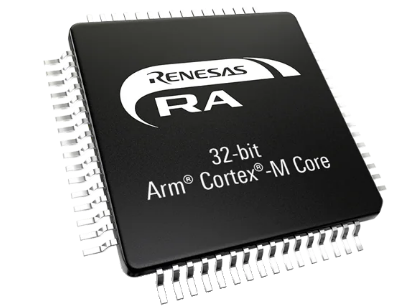
  Renesas Electronics RA8M1 Arm® Cortex®-M85 Microcontrollers (MCUs) are a high-performance MCUs based on the Arm® Cortex®-M85 core with Helium for compute-intensive DSP and AI/ML tasks. Leading performance of 480MHz with up to 2MB code flash memory, 1MB SRAM, and advanced peripherals that support a broad range of IoT applications. Octal SPI interface with decryption-on-the-fly for highly secure interface to external memory. High integration with 16-bit CEU camera interface, 12-bit A/D converter, 12-bit D/A converter, PWM timers, High-Speed Analog Comparators, Ethernet MAC with DMA, CAN-FD, USB HS/FS, SCI, SPI, I2C/I3C and safety features. Advanced security with TrustZone®, next-gen cryptography, immutable storage for FSBL, secure boot and tamper protection, including DPA/SPA side-channel attack protection.      The Renesas Electronics RA8M1 is built on a highly efficient 40nm process and supports a wide operating voltage range of 1.68V-3.6V. To ease application development, the RA8M1 is supported by the Flexible Software package (FSP), evaluation kits, software development tools, and Cloud solutions.      FEATURES  》480MHz Arm Cortex-M85 core with Helium  *M-Profile vector extension for AI/ML  *High-performance core featuring Armv8.1m architecture with Helium for DSP/ML acceleration  *Up to 2MB Flash memory and 1MB SRAM included TCM; 384KB user SRAM and 128KB TCM are ECC-protected  *32KB I/D caches (ECC protected), 12KB data Flash  *Advanced security with TrustZone, RSIP Cryptographic engine, immutable storage, and tamper protection  *Scalable from 100-pin to 224-pin packages  *Octal SPI interface with decryption-on-the-fly, Ethernet MAC with DMA, CAN-FD, and USB HS/FS (host and device) connectivity options  *CEU Camera i/f, 12-bit ADCs, 12-bit DACs, high-speed analog comparators, and 3x sample and hold circuits  *SCI (UART, simple SPI, simple I2C), SPI, I2C, I3C  *High-performance MCUs @ 480MHz for a broad base of compute-intensive IoT applications  *High integration for lower costs and simplified design  *Octal SPI interface with a secure interface to external memory for storage of code and data  *Advanced security for highly secure IoT  *Open Arm Ecosystem, easy-to-use Flexible Software Package and comprehensive solutions to enable fast development  *S/H enable motor control applications  APPLICATIONS  *Broad-based IoT applications  *Industrial automation  *IoT gateways/hubs  *Smart home/home automation products  *Thermostats  *Home appliances (refrigerators, ovens, washing machines, etc.)  *Security cameras  *Building automation (HVAC, access)
Key word:
Release time:2023-11-27 14:40 reading:2067 Continue reading>>
NVIDIA Confirms Development of “Compliance Chips” for the Chinese Market
  According to IJIWEI’s report, NVIDIA recently confirmed that it is actively working on new “compliant chips” tailored for the Chinese market. However, these products are not expected to make a substantial contribution to fourth-quarter revenue.  On November 21, during NVIDIA’s earnings briefing for the third quarter of 2024, executives acknowledged the significant impact of tightened U.S. export controls on AI. They anticipated a significant decline in data center revenue from China and other affected countries/regions in the fourth quarter. The controls were noted to have a clear negative impact on NVIDIA’s business in China, and this effect is expected to persist in the long term.  NVIDIA’s Chief Financial Officer, Colette Kress, also noted that the company anticipates a significant decline in sales in China and the Middle East during the fourth quarter of the 2024 fiscal year. However, she expressed confidence that robust growth in other regions would be sufficient to offset this decline.  Kress mentioned that NVIDIA is collaborating with some customers in China and the Middle East to obtain U.S. government approval for selling high-performance products. Simultaneously, NVIDIA is attempting to develop new data center products that comply with U.S. government policies and do not require licenses. However, the impact of these products on fourth-quarter sales is not expected to materialize immediately.  Previous reports suggested that NVIDIA has developed the latest series of computational chips, including HGX H20, L20 PCIe, and L2 PCIe, specifically designed for the Chinese market. These chips are modified versions of H100, ensuring compliance with relevant U.S. regulations.  As of now, Chinese domestic manufacturers have not received samples of H20, and they may not be available until the end of this month or mid-next month at the earliest. IJIWEI’s report has indicated that insiders have revealed the possibility of further policy modifications by the U.S., a factor that NVIDIA is likely taking into consideration.
Key word:
Release time:2023-11-23 13:24 reading:3159 Continue reading>>
Murata:What Are the Conditions for Increasing the Efficiency of Power Conversion and Motor Drives and for Expanding the Use of SiC and GaN Power Semiconductors?
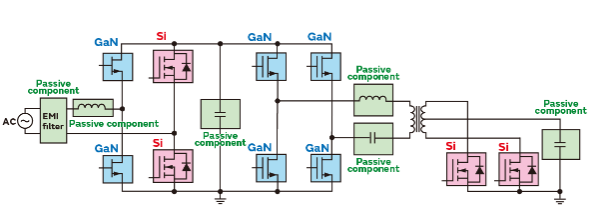
  Governments around the world and companies in all industries and businesses are coming together to engage in efforts to achieve carbon neutrality (Fig. 1). Every conceivable multifaceted decarbonization measure is being taken. This includes, for instance, the utilization of renewable energies such as solar power, the electrification of equipment that was previously used by burning fossil fuels, and the reduction in power consumption of existing devices like home appliances, IT equipment, and industrial motors.  Various countries and regions have introduced carbon pricing mechanisms as systems to shift greenhouse gas emissions from business activities to costs. As a result, in addition to being meaningful as social contribution, carbonization initiatives now have a clear numerical impact on the financial statements that serve as a report card for corporate management.  Full Model Change in Semiconductor Materials for the First Time in 50 Years  There has been an increase in activity for decarbonization efforts. Against this background, there is a field in semiconductors where the pace of the movement in technological innovation is rapidly accelerating. This is the power semiconductor field.  Power semiconductors are semiconductor devices that play the role of managing, controlling, and converting the power necessary to operate electrical and electronic equipment. These devices are built into so-called power electronics circuits. These circuits include power circuits that stably supply drive power to home appliances and IT equipment, power conversion circuits to transmit and distribute power without waste, and circuits that drive motors with high efficiency at a torque and rotational speed that can be controlled freely. These power semiconductors, which are key devices to realize a sustainable society, have now started to undergo a once-in-50-years full model change.  Power semiconductors have various device structures including MOSFET*1, IGBT*2, and diodes. They are used differently according to the purpose. Nevertheless, although the structure differs, silicon (Si) has consistently been used for more than 50 years as the device material. That is because Si has good electrical characteristics and has the property of being easy to process into various device structures at the same time.  *1: A Metal Oxide Semiconductor Field Effect Transistor (MOSFET) is a type of Field Effect Transistor. It functions as an electrical switch. These transistors consist of three layers: a metal, oxide, and semiconductor. The current is turned on and off by applying a voltage to the electrode called a gate.  *2: An Insulated Gate Bipolar Transistor (IGBT) is a transistor with a structure that combines a MOSFET and bipolar transistor. It is characterized by combining the high-speed operation of the MOSFET with the high withstand voltage and low resistance of the bipolar transistor.  However, Si-based power semiconductors are no longer able to clear the high level of technical requirements to further reduce the power consumption of various electrical and electronic equipment. To overcome this situation, progress is underway on the utilization of new materials such as silicon carbide (SiC) and gallium nitride (GaN), which are more suitable than Si as materials for power semiconductors. SiC and GaN have multiple physical properties and characteristics suitable for power semiconductors. These include their dielectric breakdown field strength (affects the withstand voltage), mobility (affects the operating speed), and thermal conductivity (affects reliability). If we can develop a device that brings out those excellent characteristics, we can realize power semiconductors with even higher performance.  SiC-based MOSFETs and diodes have already been commercialized. They are being used in electric vehicle (EV) motor drive inverters, DC/AC converters in solar power generation power conditioners, and other equipment. GaN-based HEMT*3 have also already been commercialized. They are now being used in AC converters for ultra-small PCs, chargers for smartphones, and other equipment.  *3: A High Electron Mobility Transistor (HEMT) is a Field Effect Transistor that enables high-speed switching by joining semiconductors with differing properties to induce electrons with high mobility.  Evolution of Capacitors, Inductors, and Other Equipment Is Essential to Draw out the Potential of SiC and GaN  It is not possible to draw out the full outstanding potential of power semiconductors made based on new materials simply by replacing the Si-based devices in existing power electronics circuits. This is because the other semiconductor ICs, passive components, and even the control software that comprise power electronics circuits have been developed and selected on the assumption they would be used in Si-based power semiconductors. It is necessary to newly re-develop and re-select these peripheral components as well to effectively utilize new material-based power semiconductors.  Fig. 2: Example of an AC/DC converter circuit utilizing a GaN-based power semiconductor used in data center servers and other technologies  For example, numerous GaN HEMTs are being used in AC/DC converter circuits that have adopted GaN HEMTs recently introduced to lower power consumption in the power supplies of data center servers (Fig. 2). It is possible to improve the switching frequency (operating frequency) of power electronics circuits by utilizing the features of GaN HEMTs in that they enable high-speed switching at high voltages. The reactance value of capacitors embedded into circuits and inductors in reactor signal processing circuits can be lower in circuits with a high operating frequency. In general, low reactance components have a small size. Therefore, it is possible to downsize the circuit board and to improve the power density. Similarly, introducing SiC MOSFETs even in inverter circuits which drive EV motors and other components enables the downsizing of peripheral components and also allows the overall inverter circuits to be made smaller and more lightweight.  On the other hand, a high level of noise may arise from high-voltage and high-speed switching power supplies. There is a possibility that noise may then adversely affect the operation of the peripheral equipment. Power supplies comprising power semiconductors made with SiC and GaN switch at an even higher frequency. Therefore, the risk of noise occurring further increases. Accordingly, stricter noise suppression is required than when using existing power electronics circuits. At that time, there is a need to use noise suppression components designed to be applied to high-voltage, large-current, and high-frequency circuits rather than those for conventional circuits.  In addition, there is also a need for small transformers that operate at even higher frequencies for transformers that are particularly heavy components even among passive components. Low profile planar transformers and other components have already been developed and launched onto the market under the assumption that they will be used in SiC- and GaN-based power semiconductors.  Attention Focusing on the Evolution of Peripheral Components in Addition to Power Semiconductors  Various types of semiconductors, not limited to power semiconductors, have been made based on Si up to now. Therefore, many existing electronic components have been developed under the implicit assumption that they will be used by being combined with Si-based semiconductors. It may become necessary to develop new products to suit the new technical requirements instead of simply searching for even better products among existing components to maximize the effect of introducing power semiconductors made with new materials.  In general, Si-based power semiconductors tend to operate at lower speeds the greater the voltage and current they can handle (Fig. 3). That is the reason why there are not enough small capacitors and reactors that can handle high voltages and large currents. Moreover, there is a trend to simplify the heat dissipation system and to reduce the size, weight, and cost for SiC-based power semiconductors that can operate stably under high temperatures. In these cases, the passive components also need to have a guaranteed high reliability under a high-temperature environment.  The introduction of new materials in the power semiconductor field is a major move to update the electrical and electronic ecosystem that has been optimized to Si materials for more than 50 years. Therefore, we also want to pay a great deal of attention to the evolution of peripheral electronic components optimized for new materials.
Key word:
Release time:2023-11-22 14:42 reading:1947 Continue reading>>
Intel’s Next Gen CPU to Produce at TSMC with 3nm in First Half of Next Year
  Intel’s upcoming Lunar Lake platform has entrusted TSMC with the 3nm process of its CPU. This marks TSMC’s debut as the exclusive producer for Intel’s mainstream laptop CPU, including the previously negotiated Lunar Lake GPU and high-speed I/O (PCH) chip collaborations. This move positions TSMC to handle all major chip orders for Intel’s crucial platform next year, reported by UDN News.  Regarding this news, TSMC refrained from commenting on single customer business or market speculations on November 21st. Intel has not issued any statements either.  Recent leaks of Lunar Lake platform internal design details from Intel have generated discussions on various foreign tech websites and among tech experts on X (formerly known as Twitter). According to the leaked information, TSMC will be responsible for producing three key chips for Intel’s Lunar Lake—CPU, GPU, and NPU—all manufactured using the 3nm process. Orders for high-speed I/O chips are expected to leverage TSMC’s 5nm production, with mass production set to kick off in the first half of next year, aligning with the anticipated resurgence of the PC market in the latter half of the year.  While TSMC previously manufactured CPUs for Intel’s Atom platform over a decade ago, it’s crucial to note that the Atom platform was categorized as a series of ultra-low-voltage processors, not Intel’s mainstream laptop platform. In recent years, Intel has gradually outsourced internal chips, beyond CPUs, for mainstream platforms to TSMC, including the GPU and high-speed I/O chips in the earlier Meteor Lake platform—all manufactured using TSMC’s 5nm node.  Breaking from its tradition of in-house production of mainstream platform CPUs, Intel’s decision to outsource to TSMC hints at potential future collaborations. This move opens doors to new opportunities for TSMC to handle the production of Intel’s mainstream laptop platforms.  It’s worth noting that the Intel Lunar Lake platform is scheduled for mass production at TSMC in the first half of next year, with a launch planned for the latter half of the year, targeting mainstream laptop platforms. Unlike the previous two generations of Intel laptop platforms, Lunar Lake integrates CPU, GPU, and NPU into a system-on-chip (SoC). This SoC is then combined with a high-speed I/O chip, utilizing Intel’s Foveros advanced packaging. Finally, the DRAM LPDDR5x is integrated with the two advanced packaged chips on the same IC substrate.
Key word:
Release time:2023-11-22 11:18 reading:2182 Continue reading>>
Tech Giants Launch AI Arms Race, Aiming to Spark a Wave of Smartphone and Computer Upgrades
  According to CNA’s news, the potential business opportunities in artificial intelligence have spurred major tech giants, with NVIDIA, AMD, Intel, MediaTek, and Qualcomm sequentially launching products featuring the latest AI capabilities.  This AI arms race has expanded its battleground from servers to smartphones and laptops, as companies hope that the infusion of AI will inject vitality into mature markets.  Generative AI is experiencing robust development, with MediaTek considering this year as the “Generative AI Year.” They anticipate a potential paradigm shift in the IC design industry, contributing to increased productivity and significantly impacting IC products.  This not only brings forth new applications but also propels the demand for new algorithms and computational processors.  MediaTek and Qualcomm recently introduced their flagship 5G generative AI mobile chips, the Dimensity 9300 and Snapdragon 8 Gen 3, respectively. The Dimensity 9300, integrated with the built-in APU 790, enables faster and more secure edge AI computing, capable of generating images within 1 second.  MediaTek points out that the smartphone industry is experiencing a gradual growth slowdown, and generative AI is expected to provide new services, potentially stimulating a new wave of consumer demand growth. Smartphones equipped with the Dimensity 9300 and Snapdragon 8 Gen 3 are set to be released gradually by the end of this year.  Targeting the AI personal computer (PC) market, Intel is set to launch the Meteor Lake processor on December 14. Two major computer brands, Acer and ASUS, are both customers for Intel’s AI PC.  High-speed transmission interface chip manufacturer Parade and network communication chip manufacturer Realtek are optimistic. The integration of AI features into personal computers and laptops is expected to stimulate demand for upgrades, leading to a potential increase in PC shipments next year.  In TrendForces’ report on November 8th, it has indicated that the emerging market for AI PCs does not have a clear definition at present, but due to the high costs of upgrading both software and hardware associated with AI PCs, early development will be focused on high-end business users and content creators.  For consumers, current PCs offer a range of cloud AI applications sufficient for daily life and entertainment needs. However, without the emergence of a groundbreaking AI application in the short term to significantly enhance the AI experience, it will be challenging to rapidly boost the adoption of consumer AI PCs.  For the average consumer, with disposable income becoming increasingly tight, the prospect of purchasing an expensive, non-essential computer is likely wishful thinking on the part of suppliers. Nevertheless, looking to the long term, the potential development of more diverse AI tools—along with a price reduction—may still lead to a higher adoption rate of consumer AI PCs.  Read more  Key Development Period for AI PCs in 2024; Global Notebook Market Set to Rebound to Healthy Supply-Demand Cycle with an Estimated Growth Rate of 3.2%, Says TrendForce。
Key word:
Release time:2023-11-21 10:41 reading:741 Continue reading>>
Notice Regarding the Completion of Purchase and Settlement of Tendered Shares Certificates, etc
  As announced in the press release dated November 14, 2023, “Notice Regarding the Results of the Tender Offer for Takisawa Machine Tool Co., Ltd. (Securities Code: 6121)”, in the tender offer conducted by Nidec Corporation in accordance with the Financial Instruments and Exchange Act (Act No. 25 of 1948, as amended) and related laws and regulations (the “Tender Offer”), regarding the common shares issued by Takisawa Machine Tool Co., Ltd. (listed on the Standard Market of the Tokyo Stock Exchange, Inc. Securities Code: 6121. the “Target Company”), the total number of the share certificates, etc. tendered for the Tender Offer (the “Tendered Share Certificates, etc.”) exceeded the minimum number to be purchased in the Tender Offer, and therefore Nidec Corporation was scheduled to purchase, etc. all of the Tendered Share Certificates, etc.  Today, we would like to announce that Nidec Corporation has completed the purchase, etc. and settlement of all of the Tendered Share Certificates, etc. of 5,502,183 shares in total through Mita Securities Co., Ltd. and Monex Inc. (subagent). As a result, we owns 86.14% of the voting rights in the Target Company and it has become a member of Nidec Group. The Target Company's lathes will be newly added to Nidec’s machine tool business portfolio, and under the goal of becoming the world's No.1 comprehensive machine tool manufacturer, we aim to enhance not only the Target Company’s corporate value but also an entire corporate value of Nidec group by creating synergies between Nidec Group and the Target Company.  We will advance and carry out squeeze-out procedures through consolidation of shares in the Target Company in order to make the Target Company our wholly owned subsidiary as soon as possible.
Key word:
Release time:2023-11-21 10:28 reading:2126 Continue reading>>
Fibocom Unveils 4G Premium Smart Module SC228 to Drive AIoT Applications in the Global Market
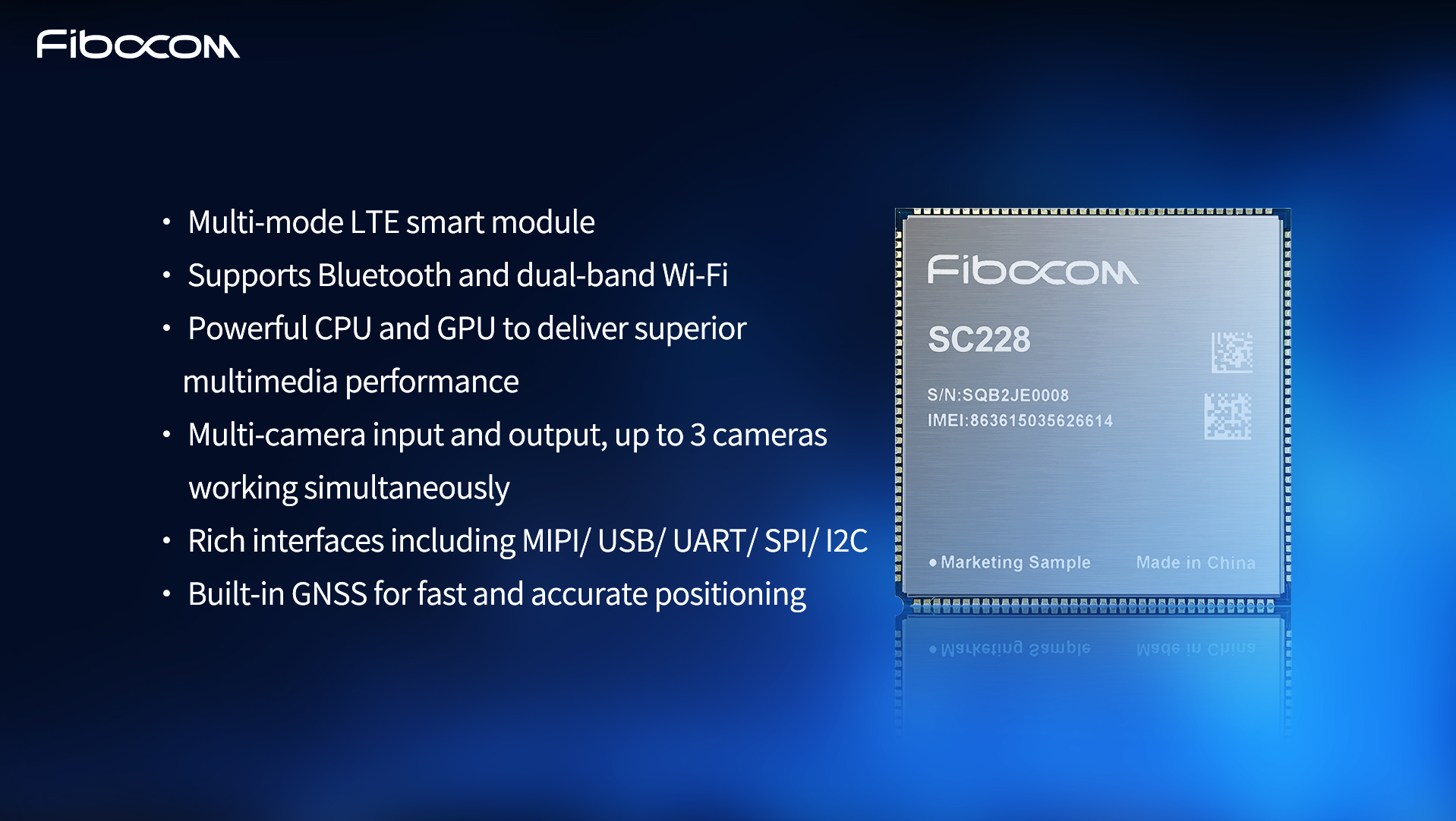
  Fibocom (Stock code: 300638), a global leading provider of IoT (Internet of Things) wireless solutions and wireless communication modules, announces the release of a new LTE smart module SC228 for the acceleration of digital transformation in smart retailing, smart wearable camera, Industrial IoT, In-vehicle infotainment market. Integrated with a 6nm processor, the module utilizes the powerful CPU and GPU to deliver superior multimedia performance while conserving power. Compatible with frequency bands worldwide, the module also supports Bluetooth and dual-band Wi-Fi for short-distance wireless communication.  The integration of AI and IoT is reshaping the way that decision-makers from various industries operate and respond to real-time information. The highly integrated smart module SC228 is capable of offering a comprehensive solution for industry customers to improve product performance and facilitate the decision-making process. Equipped with a powerful CPU, SC228 can support the smooth running of AI algorithms, which ensures the terminals realize a bunch of functionalities such as facial recognition, HMI (Human-machine Interaction), etc. In terms of multimedia processing, the SC228 is integrated with a low-power island DSP (Digital Signal Processors) for sensors and audio, furthermore, it also supports multi-camera input and output with up to three of them working simultaneously. To cater to diverse IoT application scenarios, the SC228 is designed with rich interfaces including MIPI/ USB/ UART/ SPI/ I2C to help customers develop the terminals flexibly. In software design, the SC228 is preset with an upgradable Android 14 operating system in cope with the ever-evolving software innovations, which can help our customers quickly meet the requirements for GMS (Google Mobile Service) certification and continuous development for long lifecycle terminals. Notably, the premium smart module is also built-in with GNSS for fast and accurate positioning for mobile scenarios.  “AI-driven productivity is inevitably evolving as an essential to extend the capabilities of IoT devices, significantly improve the operational efficiency by enriching the IoT device with edge computing,” said Eden Chen, General Manager of MC BU at Fibocom. “We are pleased to be at the forefront of the AIoT market to provide a comprehensive, highly integrated SC228 smart module solution for various industries, looking forward, we are optimistic to unleash the interconnected intelligence with our powerful smart module portfolio.”  Engineering sample will be available by late December 2023.
Key word:
Release time:2023-11-21 10:22 reading:2533 Continue reading>>

Turn to

/ 85

  • Week of hot material
  • Material in short supply seckilling
model brand Quote
RB751G-40T2R ROHM Semiconductor
TL431ACLPR Texas Instruments
BD71847AMWV-E2 ROHM Semiconductor
MC33074DR2G onsemi
CDZVT2R20B ROHM Semiconductor
model brand To snap up
ESR03EZPJ151 ROHM Semiconductor
TPS63050YFFR Texas Instruments
BU33JA2MNVX-CTL ROHM Semiconductor
IPZ40N04S5L4R8ATMA1 Infineon Technologies
STM32F429IGT6 STMicroelectronics
BP3621 ROHM Semiconductor
Hot labels
ROHM
IC
Averlogic
Intel
Samsung
IoT
AI
Sensor
Chip

About us

Qr code of ameya360 official account

Identify TWO-DIMENSIONAL code, you can pay attention to

AMEYA360 mall (www.ameya360.com) was launched in 2011. Now there are more than 3,500 high-quality suppliers, including 6 million product model data, and more than 1 million component stocks for purchase. Products cover MCU+ memory + power chip +IGBT+MOS tube + op amp + RF Bluetooth + sensor + resistor capacitance inductor + connector and other fields. main business of platform covers spot sales of electronic components, BOM distribution and product supporting materials, providing one-stop purchasing and sales services for our customers.

Please enter the verification code in the image below:

verification code