
<span style='color:red'>5G</span> handsets are coming
Handset manufacturers are on the path to 5G, but when are we going to see high-end phones running 5G in consumer’s hands?Speaking at Qualcomm’s recent ‘State of Play’ 5G briefing in London last month, Ben Timmons, Senior Director of Business Development at Qualcomm Europe, suggested that while there was considerable PR swirling around 5G, there was a real possibility that we would see the commercial launch of 5G devices as early as Q1 2019.As recently as June the idea of devices appearing next year and the very ‘idea’ of 5G, “seemed distant,” he said.However, pointing to ‘real’ activity on the device side and to significant new developments around the issue of interoperability, Timmons now believes that the prospects for the next generation technology were far more “tangible” than had been the case, hitherto.Timmons said that in order for 5G to become a reality it was crucial that interoperability between technologies, such as Qualcomm’s Snapdragon X50 5G modem and the infrastructure network platforms of vendors, was proven and seen to work.Qualcomm demonstrated the interoperability of its technology earlier this year at Mobile World Congress. Working with Ericsson and Nokia it had shown, “that the technology we are developing – that was actually going to end up in the device – worked, and would interwork with other infrastructure vendors”.In June, the wireless networks community had an enormous box ticked with the completion of the 5G new radio (NR) standard.5G will use different kinds of antennas, operate on different radio spectrum frequencies, connect many more devices to the internet, minimise delays, and deliver ultra-fast speeds, so these latest standard specifications will present some significant challenges for the designers of 5G systems.“People are committing,” suggested Timmons, “and want to make 5G happen, but there has been a lot of criticism of recent announcements, demos, trials and pilots.”5G will use higher frequencies, which introduces new complexity that will require different baseband algorithms and radio architectures to contain cost and achieve performance goals. While also achieving power efficiency and linear performance across wide bandwidths in the RF front-end, including power amplifiers that require adaptive DSP techniques such as digital predistortion (DPD), and often must be designed and verified in simulation before the RF hardware is even available.Qualcomm had been “critical” of early 5G demos which were only based on end-to-end proprietary systems.“If the network side equipment and device side equipment interoperate, big deal. The thing that is really critical is making sure that my device technology works with someone else’s infrastructure technology and that has always been our focus.”Central to Qualcomm’s 5G developments has been its 5G test phone, which is powered by the X50 chip.According to Timmons, while the device is certainly large, although considerably smaller than competitors’ test devices, he hastened to add, it was actually being used by engineers, infrastructure vendors and operators “to test 5G is actually working”.The test device, along with its X50 chip and the next Snapdragon processor, due to be unveiled shortly, suggest that Qualcomm is on “route to commercialisation”, according to Timmons.So, when are devices likely to be in the hands of consumers?“The end of Q1 next year, or the beginning of Q2,” says Timmons. However, he warned that while there may be phones, “It may be there is no network there and operators don’t have launch plans in those timeframes. But in terms of the process that we are going through, in terms of doing interoperability testing with the infrastructure vendors and developing a commercial smartphone, we are on track.”That will come as a relief to those telecoms companies who are investing in spectrum for 5G.Financial concerns are palpable. In Italy, after a fiercely fought auction, the Italian government was able to raise €6.5bn from selling the country’s 5G frequencies.The auction winners, Telecom Italia and Vodafone, each committed to pay about €2.4bn for the largest blocks of spectrum.“We might not be there yet,” Timmons concluded, “but devices are in factories, being tested and they are working.”
Key word:
Release time:2018-10-11 00:00 reading:1331 Continue reading>>
Brighton testbed looks to help UK become leader in <span style='color:red'>5G</span> technology
A UK 5G testbed has been launched to showcase some of the region’s latest innovation and immersive technology companies.Digital Catapult, Coast to Capital LEP, Wired Sussex, and the University of Brighton has welcomed leaders from the region’s digital technology community to FuseBox in Brighton.The hope is that the new 5G testbed will allow Brighton-based small businesses to benefit from 5G mobile wireless communications, and provide a space to test and explore the potential applications of 5G.The immersive technology showcase presented “the best of local” virtual reality, augmented reality and mixed reality technologies, demonstrating the technological innovation and development in Brighton. The testbed should also help to meet the commitment in the Government’s Industrial Strategy for the UK to be a world-leader in 5G technology.The facility provides an environment where startups and scaleups can access “the most advanced digital technology solutions”, including an Immersive Lab, designed to help these businesses grow faster. Digital Catapult and partners are encouraging local companies to register to take part in using the testbed to develop their ideas.Dr Jeremy Silver, CEO, Digital Catapult, said: "The 5G Brighton testbed lets companies experiment with new applications and services which take advantage of the unique nature of 5G. This is a major step forward in the wider roll out of this advanced technology, helping take the technology out of university labs and into the market.“5G represents more than just faster internet on the move, it’s the first mobile technology that, by design, enables free standing setup in individual locations, offers new companies the opportunity to control their own networks, and enables operators to manage computing at the edge as a new business model for the future."
Key word:
Release time:2018-09-28 00:00 reading:1185 Continue reading>>
Huawei lashes out at Australia’s ‘politically motivated’ ban on <span style='color:red'>5G</span> products
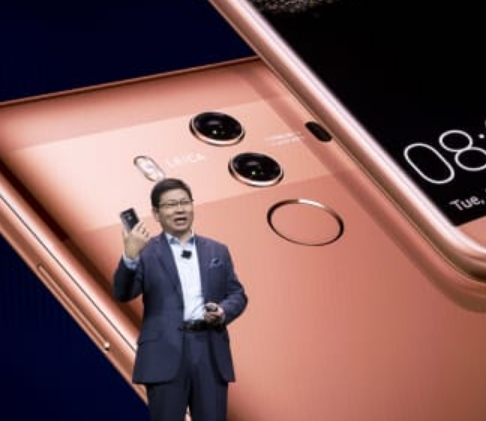
David Paul Morris | Bloomberg | Getty ImagesRichard Yu, chief executive officer of Huawei Technologies Co., holds the Mate 10 Pro smartphone while speaking during the company's keynote event at the 2018 Consumer Electronics Show (CES) in Las Vegas, Nevada, U.S., on Tuesday, Jan. 9, 2018. Chinese smartphone maker Huawei criticized the Australian government for preventing it from being able to sell 5G products in the country.Shenzhen-based Huawei, along with domestic rival ZTE, were blocked from rolling out 5G technology in Australia Thursday over national security concerns.Huawei said in a tweet that day that the move was "disappointing" and maintained it had provided wireless technology in Australia "safely and securely" for 15 years.But on Friday, the company stepped up its position on the matter, calling the decision "politically motivated.""It is not aligned with the long-term interests of the Australian people, and denies Australian businesses and consumers the right to choose from the best communications technology available," Huawei said in an emailed statement to CNBC.Australia's Department of Communications and the Arts was not immediately available for comment on the latest comments from Huawei.The Australian government said Thursday that it could not allow firms that can be "subject to extrajudicial directions from a foreign government that conflict with Australian law" to participate in 5G rollouts.Critics claim Chinese smartphone manufacturers like Huawei and ZTE cannot be trusted due to the legal requirement that citizens and businesses cooperate with Chinese intelligence authorities. In the U.S. and elsewhere in the West, authorities have alleged that Huawei's technology could be used to spy on customers.Huawei said Friday that it was not compelled by Chinese law to install "backdoors or listening devices" to engage in espionage, and that it had "never been asked to engage in intelligence work on behalf of any government."The firm's Chief Executive Richard Yu has been vocal about the company's struggle to gain traction in the U.S. market. Earlier this year, he condemned Huawei's American rivals for allegedly playing politics to boot it out of the country.Huawei has quickly secured its position as the second biggest smartphone seller in the world, dethroning Apple in the second quarter.The development of 5G technology is an important battleground for tech and telecoms firms. Various companies in the sector are racing to build products for the next generation of wireless networks.
Key word:
Release time:2018-08-27 00:00 reading:1217 Continue reading>>
Huawei and ZTE banned from selling <span style='color:red'>5G</span> equipment to Australia
China's Huawei and ZTE have been banned from providing 5G technology equipment to Australia.Huawei made a statement on Twitter Thursday saying that the Australian government had made the move despite the Chinese firm "safely and securely" delivering wireless technology in the country for nearly 15 years.Twitter Ads info and privacyA spokesperson for Australia's Department of Communications and the Arts, which overseas telecoms regulations, did not say Huawei and ZTE had been banned specifically, but pointed CNBC toward a statement released Thursday regarding security guidance for Australian mobile carriers."The government considers that the involvement of vendors who are likely to be subject to extrajudicial directions from a foreign government that conflict with Australian law, may risk failure by the carrier to adequately protect a 5G network from unauthorized access or interference," part of the statement said, highlighting that the government feels both Chinese firms could post national security threats.Huawei and ZTE were not immediately available for comment.5G next generation mobile internet technology is touted as being the backbone of future cities and even driverless cars. Many countries, including China and the U.S., are laying the groundwork to roll this technology out in the next few years. But it is also highly politicized with China and the U.S. battling it out to become a leader in the technology.In the U.S., Huawei and ZTE are restricted from selling telecoms equipment because of national security concerns.
Key word:
Release time:2018-08-24 00:00 reading:1041 Continue reading>>
Samsung to invest $22 billion into new growth areas like A.I. and <span style='color:red'>5G</span>
SeongJoon Cho | Bloomberg | Getty ImagesSouth Korea's largest conglomerate Samsung Group is planning to invest about 25 trillion Korean won ($22 billion) over the next three years into new growth areas, led primarily by Samsung Electronics.Those investments would be made in four key areas: artificial intelligence (AI), fifth-generation mobile network technology, electronic components for future cars and bio-pharmaceuticals, the company said on Wednesday.To expand its AI capability, Samsung will be increasing the number of researchers to 1,000 across its global AI centers in the U.K., Canada, Russia, U.S. and South Korea.Samsung Electronics is currently the world's largest smartphone-maker but also boasts a very strong semiconductor business that supplies chips to the companies such as Apple.Overall, the conglomerate said it planned to invest a total of 180 trillion won ($161 billion) over the next three years, which will include capital expenditures as well as research and development in its semiconductors and displays businesses. Most of that investment — about 130 trillion won of the total — will be spent in South Korea, the company said without giving further breakdowns.Samsung also said it expects to create about 40,000 new jobs over the next three years.Last week, Samsung Electronics posted its slowest quarterly profit growth in more than a year following a slowdown in the global smartphone market. Still, the company said its chip business continued to do well.Samsung Electronics shares were marginally down in afternoon trade against a flat Kospi index.
Key word:
Release time:2018-08-09 00:00 reading:1452 Continue reading>>
China has outspent the US by $24 billion in <span style='color:red'>5G</span> technology since 2015
China has in recent years outspent the U.S. by $24 billion in the area of next-generation mobile internet technology known as 5G, potentially creating a "tsunami" that will be difficult to catch up with, according to a Deloitte study published Tuesday.5G would make it possible for people to download films and stream high bandwidth video for technologies including virtual reality. But beyond consumer applications, the tech could support connected infrastructure in cities, including driverless cars. In 2035, 5G is expected to enable $12.3 trillion of global economic output, IHS Markit estimated in a recent report.So it's no wonder there is a race to dominate the technology. That's become a factor in the current U.S.-China trade war.For now, it appears China has more money behind its effort.Since 2015, it has outspent the U.S. by $24 billion in 5G infrastructure, Deloitte's study found. China has built 350,000 new cell sites, while the U.S. has built fewer than 30,000 in the same time-frame. Deloitte's report noted that China plans hundreds of billions of dollars in 5G-related spend.And it could be tougher for the U.S. to match China on investment. Deloitte estimated that the equipment necessary to add a carrier in China cost about 35 percent less than the U.S., suggesting that Washington would need to spend 2.67 times the amount that China does to generate an equivalent amount of wireless network capacity."China and other countries may be creating a 5G tsunami, making it near impossible to catch up," Deloitte said in its report.Deloitte recommended that the U.S. deliver "lighter-touch policy frameworks" to help reduce deployment times of equipment required for 5G. The consultancy also said that mobile carriers and other partners needed to collaborate more. It recommended the creation of a "national communications infrastructure database" in order to help share data between various parties.As another era of untapped economic potential emerges with the adoption of 5G technology ... investment in upgrading the underlying communications infrastructure becomes even more critical," Deloitte's report said."But unless tangible steps are taken to help rebalance the private investment case for the upgrade with the demonstrated external benefits to other industries and the public good, the United States may risk losing the leadership it gained in the previous era. The negative consequences could take decades to overcome, and other countries are already making their moves."
Key word:
Release time:2018-08-08 00:00 reading:1269 Continue reading>>
Nokia to supply $3.5 billion worth <span style='color:red'>5G</span> gears to this company
T-Mobile US named Nokia to supply it with $3.5 billion in next-generation 5Gnetwork gear, marking the world's largest 5G deal so far and solid evidence of a new wireless upgrade cycle starting to take root. T-Mobile, the third biggest U.S. mobile carrier, said on Monday the Nokia deal would help to deliver the first nationwide 5G services in the United States, where T-Mobile in April agreed to a merger with Sprint to create a more formidable rival to U.S. telecom giants Verizon and AT&T.The T-Mobile award is critical to Nokia, whose results have been battered by years of slowing demand for existing 4G networks and mounting investor doubts over whether 5G contracts can begin to boost profitability later this year."This is our largest 5G deal to date, in fact it's one of our largest-ever deals," Phil Twist, Nokia's global marketing chief said in interview. "This is reinforcing the fact that we see 5G accelerating to market in Q3 and ramping up in Q4."5G networks promise to deliver faster speeds for mobile phone users and make networks more responsive and reliable for the eventual development of new industrial automation, medical monitoring, driverless car and other business uses. But cash-strapped telecom operators around the world have been shy of committing to commercial upgrades of existing networks, with many seeing 5G technology simply as a way to deliver incremental capacity increases instead of new features. Terms of the new deal call for Nokia to supply a range of 5G hardware, software and services that will allow T-Mobile to capitalise on licensed airwave to deliver broad coverage on 600 megahertz spectrum and ultra high-speed capacity on 28 gigahertz airwaves in urban areas with dense traffic, the companies said. Customers, however, will not notice a discernible difference in terms of faster speeds or other features until the first 5G-ready smartphones go on sale in early 2019. Even then, full-featured, 5G phones are unlikely to go mainstream until at least 2020 for a mix of technical and economic reasons, analysts said.Nokia said it will supply T-Mobile with its AirScale radio access platform along with cloud-connected hardware, software and acceleration services, the two companies said.T-Mobile said in February it was working both with Nokia and rival network vendor Ericsson of Sweden to build out 5G networks in 30 U.S. cities during 2018.Ericsson was not immediately available to comment on where it stood on finalising its own previously announced plans to deliver 5G networks in New York, Los Angeles and Las Vegas. In first announcing its plans with T-Mobile earlier this year, Nokia had said it was focusing on Dallas and other unnamed "heavily populated areas of the country." It provided no further details on what cities Monday's commercial deal might cover.WAITING FOR 5GNokia delivered lower profits in the first two quarters of 2018 but pledged to meet full-year targets as 5G demand begins to take off later this year. The company reiterated its outlook after the T-Mobile deal, saying it was fully calculated into its existing guidance.Nokia traded up 1.3 percent to 4.76 euros on the Helsinki stock exchange. T-Mobile stock rose more modestly on Nasdaq. The network equipment business, led by China's Huawei, Nokia and Ericsson - has struggled with flagging growth since demand for the current generation of 4G mobile equipment peaked in 2015.Network vendors are counting on rivalry between the four big U.S. mobile carriers to drive initial 5G purchases this year into next. South Korea and Japan are poised to jump in with 5G commercial rollouts in 2019's first half, followed by the world's biggest mobile market, China, later next year, with operators in the Middle East to follow from 2020 onwards. T-Mobile and Sprint, are using 5G to win President Donald Trump's backing for their merger that will reduce the U.S. mobile market from four players to three.They argue the combined company is the United States' best hope for nationwide 5G services, which, in turn, can help the country to maintain technology leadership over China.T-Mobile has previously projected capital spending on new equipment of around $5 billion for 2018. T-Mobile Chief Technology Officer Neville Ray said in the joint statement that every dollar it is spending from now onward will be on 5G-related equipment.
Key word:
Release time:2018-07-31 00:00 reading:1236 Continue reading>>
SiTime and Intel to collaborate on MEMs timing for <span style='color:red'>5G</span>
SiTime, a provider of MEMS timing, and Intel are to work together on integrating timing solutions for Intel’s 5G multi-mode radio modems, with additional applicability to Intel LTE, millimeter-wave wireless, Wi-Fi, Bluetooth, and GNSS solutions."Our collaboration with SiTime on MEMS-based silicon timing solutions will help our customers build leading 5G platforms to best take advantage of the increased performance and capacity that the 5G NR standard brings,” said Dr. Cormac Conroy, corporate vice president and general manager of the Communication and Devices Group at Intel.SiTime’s MEMS timing solutions are used to enhance system performance where stressors such as vibration, high temperature, and rapid thermal transients, can disrupt the timing signal and result in network reliability issues, lower data throughput, and even connectivity drops.The MEMS solutions being provided to Intel’s 5G modem business, are intended to meet the much higher performance requirements of emerging 5G radio modem platforms.In order for 5G to be successfully rolled out, networks will need to become faster, more agile, and much denser, using more equipment. Systems will be deployed closer to connected devices and in uncontrolled locations such as on streetlamps, traffic lights, rooftops, stadiums, and parking garages.In these settings, 5G devices will be subject to a range of environmental stressors, all of which will create demand for new, complex and higher-performance timing solutions to ensure that the deployment of 5G is successful.
Key word:
Release time:2018-07-27 00:00 reading:3448 Continue reading>>
Qualcomm delivers breakthrough <span style='color:red'>5G</span> NR mmWave and Sub-6 GHz RF module
Qualcomm Technologies has unveiled the world’s first fully-integrated 5G NR millimeter wave (mmWave) and sub-6 GHz RF modules for smartphones and other mobile devices.The QTM052 mmWave antenna module family and the QPM56xx sub-6 GHz RF module family pair with Qualcomm's Snapdragon X50 5G modem to deliver modem-to-antenna capabilities across several spectrum bands, in a very compact footprint that is intended for integration in mobile devices. “This announcement concerning the first commercial 5G NR mmWave antenna modules and sub-6 GHz RF modules for smartphones and other mobile devices represents a major milestone for the mobile industry. Qualcomm's early investment in 5G has allowed us to deliver a working mobile mmWave solution that was previously thought unattainable, as well as a fully-integrated sub-6 GHz RF solution. Now, these type of modem-to-antenna solutions, spanning both mmWave and sub-6 spectrum bands, make mobile 5G networks and devices, ready for large scale commercialisation,” said Cristiano Amon, President, Qualcomm. To date, mmWave signals have not been used for mobile wireless communications due to the technical and design challenges they pose, all of which impact nearly every aspect of device engineering, including materials, form-factor, industrial design, thermals, and regulatory requirements for radiated power. As such, many in the mobile industry considered mmWave highly impractical for mobile devices and networks, and thus unlikely to materialise. The QTM052 mmWave antenna modules work in tandem with the Snapdragon X50 5G modem, as a comprehensive system, to help overcome the formidable challenges associated with mmWave. They support advanced beam forming, beam steering, and beam tracking technologies, improving the range and reliability of mmWave signals. They feature an integrated 5G NR radio transceiver, power management IC, RF front-end components and phased antenna array.They support up to 800 MHz of bandwidth in the 26.5-29.5 GHz (n257), as well as the entire 27.5-28.35 GHz (n261) and 37-40 GHz (n260) mmWave bands. Most importantly, the QTM052 modules integrate all these capabilities in a very compact footprint, such that up to four of them can be integrated in a smartphone. This allows OEMs to continue evolving the industrial design of their mobile devices, offering attractive form factors combined with the benefits of extremely high speeds from mmWave 5G NR, and making such devices available for launch as early as 2019. While mmWave is best suited for providing 5G coverage in dense urban areas and crowded indoor environments, broad 5G NR coverage will be achieved in sub-6 GHz spectrum bands. As such, the QPM56xx RF module family (including the QPM5650, QPM5651, QDM5650, and QDM5652) is designed to allow smartphones based on the Snapdragon X50 5G modem to support 5G NR in sub-6 GHz RF bands.The QPM5650 and QPM5651 feature integrated 5G NR PA/LNA/Switch and filtering subsystem. The QDM5650 and QDM5652 feature integrated 5G NR LNA/switch and filtering subsystem for diversity and MIMO support.All four modules offer integrated SRS switching required for optimum massive MIMO applications and support for 3.3-4.2 GHz (n77), 3.3-3.8 GHz (n78) and 4.4-5.0 GHz (n79) sub-6 bands. These sub-6 GHz RF modules provide mobile device makers with a viable path to delivering on the promise of 5G NR massive MIMO technology in mobile devices.Both the QTM052 mmWave antenna module family and the QPM56xx sub-6 GHz RF module family are now sampling to customers. 
Key word:
Release time:2018-07-24 00:00 reading:1461 Continue reading>>
Keysight Joins <span style='color:red'>5G</span> Device Forerunner Initiative Led by China Mobile
Keysight Technologies announced that it has signed a Memorandum of Understanding (MoU) with CMCC (China Mobile Communication Corporation) in support of the 5G Device Forerunner Initiative project. The program’s large-scale 5G trials aim to accelerate development and industry maturity of 5G devices.The 5G Device Forerunner Initiative, established by CMCC at MWC 2018, brings together more than 20 of the industry's most influential and capable chipset manufacturers, component manufacturers and end-solution providers to form a strong industry ecosystem, encouraging 5G device innovation and accelerating 5G device commercialization.To address the project’s goal of delivering mature 5G chipsets, devices, components and instruments that meet China Mobile's requirements, the large-scale 5G trials rely on Keysight’s suite of industry-first 5G NR network emulation solutions to perform device characterization, design validation and conformance verification.“We are pleased to extend our close collaboration with China Mobile in support of a connected ecosystem to realize the full potential of 5G across a wide range of applications and devices,” says Satish Dhanasekaran, senior vice president of Keysight Technologies, and president of the Communications Solutions Group. “Keysight brings industry-leading 5G expertise and 5G test solutions to the project, supporting China Mobile’s strategic goals of promoting 5G development towards 5G’s commercialization in 2020.”The project aims to accomplish full protocol stack development based on 5G Non-Standalone (NSA) and Standalone (SA) 3GPP Release 15 as well as complete interoperability tests with at least one chipset platform. The project will also gain Global Certification Forum (GCF) approval for a 5G RF and protocol test platform and a majority of associated GCF mandated test cases.Keysight enables connected mobile device ecosystems to characterize and validate new 5G products across workflow from early prototyping and development to design validation, and manufacturing. By using the same test capabilities and test cases specified by China Mobile, device manufacturers can easily validate device performance, speed development and achieve consistent results.Kailash Narayanan, vice president and general manager for Wireless Device and Operators at Keysight, also commented: “Our participation in the 5G Device Forerunner Initiative showcases how Keysight is visibly at the heart of 5G technology innovation. Keysight’s industry-leading end-to-end 5G design and test capabilities will enable China Mobile’s 5G mobile ecosystem to address new technical requirements and master the complexities of 5G from L1 to L7.”
Key word:
Release time:2018-07-18 00:00 reading:1432 Continue reading>>

Turn to

/ 10

  • Week of hot material
  • Material in short supply seckilling
model brand Quote
CDZVT2R20B ROHM Semiconductor
RB751G-40T2R ROHM Semiconductor
BD71847AMWV-E2 ROHM Semiconductor
MC33074DR2G onsemi
TL431ACLPR Texas Instruments
model brand To snap up
IPZ40N04S5L4R8ATMA1 Infineon Technologies
BU33JA2MNVX-CTL ROHM Semiconductor
ESR03EZPJ151 ROHM Semiconductor
BP3621 ROHM Semiconductor
TPS63050YFFR Texas Instruments
STM32F429IGT6 STMicroelectronics
Hot labels
ROHM
IC
Averlogic
Intel
Samsung
IoT
AI
Sensor
Chip

About us

Qr code of ameya360 official account

Identify TWO-DIMENSIONAL code, you can pay attention to

AMEYA360 mall (www.ameya360.com) was launched in 2011. Now there are more than 3,500 high-quality suppliers, including 6 million product model data, and more than 1 million component stocks for purchase. Products cover MCU+ memory + power chip +IGBT+MOS tube + op amp + RF Bluetooth + sensor + resistor capacitance inductor + connector and other fields. main business of platform covers spot sales of electronic components, BOM distribution and product supporting materials, providing one-stop purchasing and sales services for our customers.

Please enter the verification code in the image below:

verification code