Micron More Upbeat on Outlook, Reportedly Sets 2027 HBM4E Ramp with TSMC for Standard, Custom Logic Dies

发布时间:2026-05-25 10:44
作者:AMEYA360
来源:TrendForce
阅读量:751

Micron More Upbeat on Outlook, Reportedly Sets 2027 HBM4E Ramp with TSMC for Standard, Custom Logic Dies

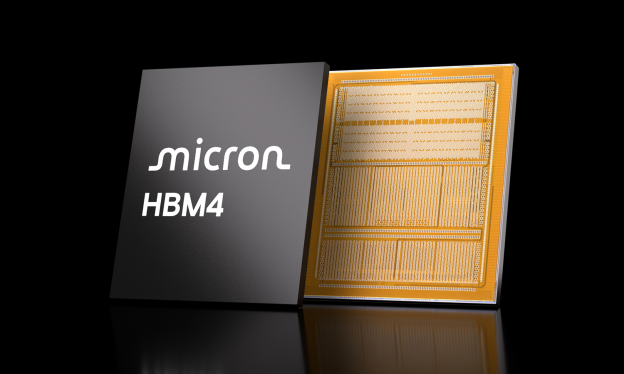
  Two months after its March earnings call, Micron is turning more upbeat on its outlook, while providing additional details on its custom HBM development progress. At the J.P. Morgan 54th Annual Global Technology, Media and Communications Conference, Micron’s Global Operations EVP Manish Bhatia, via STOCK Analysis transcript, said the company’s first HBM4E will be a JEDEC-standard product, with ramp-up scheduled for 2027.

  While Micron is still using 1-beta DRAM for HBM4, Bhatia said the company is expected to transition to 1-gamma DRAM in the HBM4E era. He also confirmed that the logic dies for both standard and custom HBM4E are expected to be manufactured by TSMC.

  When asked about the margin profile of customized products, Bhatia, according to STOCK Analysis, highlighted that value creation stems from multiple proprietary layers: design innovation, robust core DRAM development, and advanced packaging.

  He emphasized that customization represents the next evolution of this value expansion, and as the value increases, customers are expected to be willing to pay for the added customization.

  Improving Outlook vs. Previous Earnings Call

  According to Bhatia, Micron now expects tight conditions across HBM, DRAM, and NAND to persist well beyond 2026. Thus, he noted that the financial outlook has strengthened since the company’s last earnings call, and it is on track for another substantial record free cash flow in fiscal Q3.

  Notably, Bhatia pointed out that while pricing has largely played out as expected, demand remains very strong. He added that the AI ecosystem is shifting from human interactions to agentic and even machine-to-machine workflows, with these agentic workloads increasingly driving inference demand. As inference takes up a larger share of workloads, memory is increasingly seen as a strategic asset for customers, he said.

  Against this backdrop, Micron said in March that it had secured its first strategic customer agreement—a five-year deal with a large customer. Since then, the company has made meaningful progress on additional SCAs, with other customers also showing strong interest in establishing similar strategic relationships with Micron, including in NAND, Bhatia said.

  India Capacity Reported Booked up

  Amid tight demand, Bhatia also said Micron’s global expansion is accelerating. He noted that its Idaho 1 site is progressing well, with the company pulling forward its wafer output timeline from the second half of 2027 to mid-2027.

  Surging memory demand is also driving ramp-up at Micron’s new semiconductor assembly and test facility in Sanand, Gujarat, which began operations in late February. In a separate report by Business Standard, Micron’s entire memory production capacity in India has been fully booked amid strong demand.

  According to a previous Business Standard report, at full capacity, the facility could account for up to 10% of Micron’s global output, supplying both domestic and international markets.

  Sumit Sadana, executive vice-president and chief business officer at Micron, reportedly told Indian media outlet The Economic Times that the global semiconductor memory shortage triggered by the AI boom is proving far more severe than many companies currently anticipate, with the crunch potentially extending well beyond 2028 despite aggressive capacity expansion across the industry.

Micron More Upbeat on Outlook, Reportedly Sets 2027 HBM4E Ramp with TSMC for Standard, Custom Logic Dies


(备注:文章来源于网络,信息仅供参考,不代表本网站观点,如有侵权请联系删除!)

在线留言询价

相关阅读
Micron Expands Long-Term Memory Deals with 7 Auto Clients; Qualcomm, Harman Draw Attention
  Micron is expanding its Strategic Customer Agreements (SCAs) with a fresh batch of automotive partners as it moves to secure more long-term demand visibility. The company, in a press release, announced long-term supply deals with seven automotive customers, with Qualcomm and Samsung subsidiary Harman drawing particular attention, according to Reuters and South Korean media outlet Green Economy News.  Micron has signed SCAs with key Tier 1 partners, including Qualcomm, Visteon, HARMAN, JOYNEXT, DENSO, Astemo and Hyundai Mobis. The memory chips, as noted by Reuters, are deployed across data centers, consumer electronics and vehicles, powering AI-driven functions ranging from advanced driver assistance systems (ADAS) to digital cockpits.  Notably, Qualcomm, best known for its smartphone chips, is indeed making inroads into automotive: the sector was the standout performer in its 2Q26 earnings, delivering the strongest growth across all categories at +38% YoY, reaching 10% of total QCT revenue. According to The Elec, its Snapdragon Digital Chassis combines chips and software to support connected vehicles, digital cockpits and autonomous driving, including Snapdragon Cockpit, Snapdragon Auto Connectivity and Snapdragon Ride for ADAS.  Beyond Qualcomm, Samsung subsidiary Harman has also drawn attention. Green Economy News notes that Harman has operated independently since Samsung’s 2017 acquisition, with CEO Christian Sobottka saying partnerships with key technology providers such as Micron will support the development of increasingly intelligent vehicle platforms.  The latest automotive SCAs build on Micron’s existing relationships with major automakers, following previous long-term supply agreements with companies such as General Motors and Ford.  Micron’s SCA Expansion  Unlike traditional annual long-term agreements (LTAs), SCAs typically lock in both pricing and supply volumes for three to five years. According to Investing.com, Micron has signed 16 SCAs covering roughly 20% of its DRAM output and about one-third of its NAND volumes over the contract period. Meanwhile, CEO Sanjay Mehrotra, cited by CNBC, also noted that these strategic customer agreements are expected to account for roughly half — or potentially more — of Micron’s total revenue once fully implemented.  The growing adoption of long-term memory agreements is also beginning to reshape pricing dynamics. Citing analysts, Munhwa Ilbo reports that spot prices are expected to remain firm amid tight supply, while contract prices under LTAs may rise more gradually. However, analysts noted that this reflects suppliers’ strategy to sustain high profitability over the long term, rather than weakening pricing power.  The trend aligns with TrendForce’s latest memory pricing survey, which points out that several U.S.-based CSPs have entered into multi-year long-term agreements (LTAs), which restrict suppliers from raising prices for these clients. Consequently, TrendForce predicts that server DRAM contract prices will rise by 13–18% quarter-over-quarter in 3Q26.  According to TrendForce, the primary source of server DRAM price increases will shift toward customers without LTAs, as well as incremental supply sold outside LTAs to existing LTA customers.
2026-07-20 10:53 阅读量:161
Decoding Micron’s SCAs: Reportedly 20% of DRAM Output, Toward 50% of Long-Term Memory Revenue

  Shortly after announcing a strategic agreement with Anthropic covering AI memory and storage architecture design—part of its broader push into Strategic Customer Agreements (SCAs)—Micron expanded on its long-term deal pipeline during its latest earnings call.  According to Investing.com, the company has signed 16 SCAs, spanning roughly 20% of its DRAM output and about one-third of its NAND volumes over the contract period. CNBC, citing CEO Sanjay Mehrotra, notes that these strategic customer agreements are expected to account for roughly half — or even more — of Micron’s total revenue once fully in place.  SCA Deal Structure and Size  Micron’s SCAs provide a broad customer base and secure upfront payment commitments prior to delivery. According to Reuters, the US$22 billion in commitments stems from strategic customer agreements spanning data center, consumer, and automotive markets. The contracts include take-or-pay provisions, cash deposits, and pricing floors aimed at securing supply and supporting margin stability, the report adds.  In detail, ZDNet explains that Micron’s SCAs include binding volume commitments, while also setting an upper price cap tied to prevailing market levels from April to June, alongside a contractual price floor applied over the full term of the agreements. Meanwhile, next-generation products such as high-bandwidth memory (HBM), DDR6, and LPDDR6 are priced separately through negotiated terms, leaving room for additional upside, the report says.  Notably, the overall scale of the agreements could be significantly larger than the US$22 billion figure. Citing Micron, Reuters reports that remaining performance obligations (RPOs)—a key indicator of contracted future revenue—across its current agreements stand at approximately US$100 billion.  Implications for the LTA Model  Citing CFO Mark Murphy, CNBC points out that the move is good for Micron, as it gives the company visibility into demand and locked-in volumes, allowing it to invest with greater confidence.  As explained by Yonhap News, unlike traditional annual long-term supply agreements (LTAs), SCAs lock in both volume and pricing over a five-year term (or three years in the automotive segment), effectively pre-agreeing key commercial terms over the contract duration.  From a broader industry perspective, TrendForce observes that these LTAs, featuring both floor and ceiling pricing mechanisms, could incentivize suppliers to accelerate capacity expansion during 2027–2030 in order to fulfill committed demand, potentially creating additional upside for industry-wide supply growth.  Micron’s memory peers are also expected to follow suit. ZDNet notes that South Korean players such as Samsung Electronics and SK hynix stand to benefit from these agreements over the medium to long term.  This trend is already reflected in recent deals. An April report from Green Economy News suggests SK hynix is structuring its long-term DRAM agreements with Microsoft and Google to include advance payments of around 10%–30% of total contract value. At the core of the Microsoft deal is a three-year DDR5 supply agreement starting this year, while discussions with Google reportedly involve a long-term DRAM contract of up to five years, with a possible two-year extension tied to next-generation HBM supply.
2026-06-26 10:53 阅读量:462
Micron to buy-out Intel's IM Flash
Micron Sees Weak Market Ahead
Over the past few weeks, signs have increasingly signaled that the two-year boom in memory chip sales is grinding to a halt. Now, U.S. memory chipmaker Micron Technology has provided more indications that a bust cycle is at hand.Micron reported on Tuesday quarterly sales and earnings at the low end of Wall Street estimates but said that it expects revenue to decline significantly in the current quarter due to “weak near-term supply-demand dynamics.”However, Micron executives characterized these dynamics as a short-term bump in the road en route to continued expansion in the second half of next year. Some memory market watchers believe that a memory downturn is likely to last significantly longer.Sanjay Mehrotra, Micron’s president and CEO, told analysts on a conference call following the quarterly report that the downbeat forecast is primarily related to a glut of inventory in the supply chain.“We’re just going through an air pocket here related to primarily inventory adjustments as well as some seasonal, weak mobile demand — including mobile demand” he said.While Micron is implementing some cost control measures such as cutting back on capital spending, said Mehotra, he expects 2019 to be a profitable year for the company. “Micron is better-positioned than ever before to win in this environment with our strong balance sheet and the structural improvements we have made to our operating model in the past several years.”“He’s certainly still giving a very bullish outlook,” said Jim Handy, principal at Objective Analysis, of Mehotra’s view. “He’s looking to trim capital spending now to take care of things late in 2019. My understanding of how the market works is that anything you do now to capital spending isn’t going to have an impact for two years.”Handy used the familiar metaphor of trying to turn around an aircraft carrier to compare to a memory chip company steering through a downturn. “What Micron is doing is turning the steering wheel now with the hopes that the ship will turn by the end of 2019, but it’s really not going to have an impact until later,” he said.Micron’s sales for the quarter ended Nov. 30 totaled $7.91 billion, up 16% year over year but down 5% from the previous quarter. The company’s quarterly net income totaled $3.29 billion, up 23% from the year-ago quarter but down 24% compared to the previous quarter.For the current quarter, Micron expects sales to fall to between $5.7 billion to $6.3 billion, well below the $7.34 billion average of analysts’ estimates, according to Yahoo Finance.
2018-12-20 00:00 阅读量:2496
  • 一周热料
  • 紧缺物料秒杀
型号 品牌 询价
MC33074DR2G onsemi
BD71847AMWV-E2 ROHM Semiconductor
CDZVT2R20B ROHM Semiconductor
RB751G-40T2R ROHM Semiconductor
TL431ACLPR Texas Instruments
型号 品牌 抢购
ESR03EZPJ151 ROHM Semiconductor
BU33JA2MNVX-CTL ROHM Semiconductor
IPZ40N04S5L4R8ATMA1 Infineon Technologies
TPS63050YFFR Texas Instruments
BP3621 ROHM Semiconductor
STM32F429IGT6 STMicroelectronics
热门标签
ROHM
Aavid
Averlogic
开发板
SUSUMU
NXP
PCB
传感器
半导体
相关百科
关于我们
AMEYA360微信服务号 AMEYA360微信服务号
AMEYA360商城(www.ameya360.com)上线于2011年,现 有超过3500家优质供应商,收录600万种产品型号数据,100 多万种元器件库存可供选购,产品覆盖MCU+存储器+电源芯 片+IGBT+MOS管+运放+射频蓝牙+传感器+电阻电容电感+ 连接器等多个领域,平台主营业务涵盖电子元器件现货销售、 BOM配单及提供产品配套资料等,为广大客户提供一站式购 销服务。

请输入下方图片中的验证码:

验证码