Driving Innovation Together: NOVOSENSE, UAES and Innoscience Join Forces to Reshape Power Electronics for New Energy Vehicles
  September 29, 2025 – NOVOSENSE Microelectronics, United Automotive Electronic Systems (UAES) and Innoscience have signed a strategic cooperation agreement to jointly advance power electronics for new energy vehicles (NEVs). The three parties will collaborate on the development of next-generation intelligent integrated Gallium Nitride (GaN) products. Building on their combined expertise, the new devices will deliver more reliable GaN driving and protection features, enabling higher power density and paving the way for commercial adoption across the automotive industry.Signing Ceremony  GaN as a Key Driver for NEV Innovation  With its superior material properties, GaN is emerging as a transformative technology in automotive power electronics. Compared to traditional silicon devices, GaN significantly improves system efficiency and power density, allowing for more compact and lighter designs—addressing the core requirements of vehicle electrification and lightweighting.  Complementary Strengths, Shared Goals  Through joint R&D and application validation, NOVOSENSE, UAES and Innoscience aim to tackle critical challenges such as efficiency, reliability and cost. Together, the three parties will deliver solutions that combine high performance with competitive economics. NOVOSENSE brings extensive expertise in high-performance analog and mixed-signal IC design. UAES contributes deep knowledge in system integration and automotive applications. Innoscience adds world-leading competence in GaN device technology. This cross-disciplinary collaboration establishes a platform for innovation across the entire value chain, accelerating GaN adoption in next-generation automotive systems.  Dr. Xiaolu Guo, Deputy General Manager of UAES, said:“UAES has been at the forefront of automotive electronics for decades, consistently responding to industry needs through innovation. GaN technology is a vital enabler for vehicle electrification. Partnering with NOVOSENSE and Innoscience allows us to integrate capabilities from device to system level, driving GaN industrialization and delivering efficient, reliable and cost-effective solutions for our customers.”  Mr. Shengyang Wang, Founder, Chairman and CEO of NOVOSENSE, commented:“Upgrading the NEV industry requires deep collaboration across the value chain. By combining UAES’s system integration expertise with Innoscience’s GaN leadership and NOVOSENSE’s IC design capabilities, we are creating a powerful synergy. This strategic partnership sets a benchmark for industry collaboration, ensuring both technological breakthroughs and market value creation.”  Dr. Jingang Wu, CEO of Innoscience, added:“The potential of GaN in automotive power electronics is only beginning to be realized. True impact will come from aligning device innovation with system requirements. We look forward to working closely with NOVOSENSE and UAES to extend the boundaries of GaN applications in automotive electrification and to translate technological advantages into tangible industry benefits.”  A Step Forward for the Industry  This strategic cooperation marks a pivotal milestone for all three companies. NOVOSENSE, a leading Chinese automotive semiconductor supplier with nearly one billion automotive ICs shipped, complements UAES’s strong system know-how and Innoscience’s GaN device leadership. Together, the three parties will strengthen the value chain, overcome application bottlenecks, and accelerate the transition of the NEV industry toward higher efficiency and sustainability.
Key word:
Release time:2025-10-09 13:53 reading:747 Continue reading>>
ROHM has Developed New Smart Switches Optimized for Zonal Controllers
  ROHM has developed six new high-side Smart Switches (Intelligent Power Devices, short: IPDs) BV1HBxxxEFJ series (BV1HB008EFJ-C, BV1HB012EFJ-C, BV1HB020EFJ-C, BV1HB040EFJ-C, BV1HB090EFJ-C, BV1HB180EFJ-C) with highly accurate current sensing capability and ON resistances from 9 mΩ to 180 mΩ. They are ideal for protecting loads and subsystems from abnormalities such as overcurrent, overvoltage, and overtemperature, ensuring reliable operation and safeguarding sensitive components in automotive lighting, body control such as, door locks and power windows. Extensive diagnostic capabilities, e.g., open load and reverse battery detection, further enhances safety and reliability.  Vehicle electronic control systems are becoming increasingly sophisticated with the advancement of autonomous driving and electric vehicles (EVs). This evolution has heightened the importance of electronic protection from a functional safety standpoint, driving the shift toward Zonal Controllers architecture that manages vehicle functions in designated zones. As a result, the use of smart switches for electronic load protection and control is rapidly growing.  Zonal controllers must each manage a large number of loads, but conventional smart switches often lack the drive capability required for high-capacitance loads. ROHM’s new smart switches address this challenge, delivering key performance attributes such as low ON resistance and high inductive energy clamp while significantly improving capacitive load drive capability. By commercializing high-performance smart switches tailored to zonal controllers’ requirements, ROHM is contributing to automotive electrification and the elimination of mechanical fuses.  The new products feature exceptional high-capacitance load driving capability, maximizing performance at the critical interface between Zonal Controllers and output loads (including various ECUs). Leveraging proprietary cutting-edge process technology makes it possible to achieve both low ON resistance and high inductive energy clamp – two characteristics typically involve a trade-off. The result is a well-balanced integration of three key performance metrics: drive capability, ON resistance, and energy tolerance. This enhances system design safety, efficiency, and reliability. The devices also incorporate a best-in-class* high-precision current sensing function (±5%) that provides effective protection for harnesses connected to output loads. At the same time, the compact, high heat dissipation HTSOP-J8 package ensures excellent design versatility.  Going forward, ROHM remains committed to improving safety, security, and energy efficiency in the automotive field by continuing to develop high reliability, high performance devices.  *ROHM study on high-side Smart Switches - September 30th, 2025  Application Examples  Body applications, powertrain/inverter systems, other switch-related circuits  Terminology  Zonal Controllers  An emerging design concept in automotive electronic architecture, zonal controllers represent a shift away from the conventional approach of assigning dedicated ECUs for each function, such as lighting, door locks, and power windows. Instead, the vehicle is divided into zones, with a zonal controller manages multiple functions in its zone.  Intelligent Power Devices (IPD) / Smart Switches  Smart power switches are semiconductor devices that electronically control the delivery of power by turning it on and off, while also providing integrated protection and diagnostic features such as overcurrent, overvoltage, thermal shutdown, current sensing, and open load detection to enhance system reliability and safety.  Capacitive Load Driving Capability  A technical term referring to the ability of an electronic circuit or semiconductor device to operate reliably when driving capacitive loads. It is especially important in circuit configurations involving zone ECUs and their output stages (including individual ECUs) where large electrolytic capacitors are commonly used. If this capability is inefficient, inrush current cannot be adequately suppressed, leading to overheating that can result in malfunctions or reduced operational lifespan.
Key word:
Release time:2025-09-30 16:29 reading:546 Continue reading>>
ROHM and Infineon collaborate on silicon carbide power electronics packages to enhance flexibility for customers
  ROHM and Infineon Technologies AG have signed a Memorandum of Understanding to collaborate on packages for silicon carbide (SiC) power semiconductors used in applications such as on-board chargers, photovoltaics, energy storage systems, and AI data centers. Specifically, the partners aim to enable each other as second sources of selected packages for SiC power devices, a move which will increase design and procurement flexibility for their customers. In the future, customers will be able to source devices with compatible housings from both ROHM and Infineon. The collaboration will ensure seamless compatibility and interchangeability to match specific customer needs.  "We are excited about working with ROHM to further accelerate the establishment of SiC power devices," said Dr. Peter Wawer, Division President Green Industrial Power at Infineon. "Our collaboration will provide customers with a wider range of options and greater flexibility in their design and procurement processes, enabling them to develop more energy-efficient applications that will further drive decarbonization."  "ROHM is committed to providing customers with the best possible solutions. Our collaboration with Infineon constitutes a significant step towards the realization of this goal, since it broadens the portfolio of solutions," said Dr. Kazuhide Ino, Member of the Board, Managing Executive Officer, in charge of Power Devices Business at ROHM. "By working together, we can drive innovation, reduce complexity, and increase customer satisfaction, ultimately shaping the future of the power electronics industry."Dr. Peter Wawer, Division President Green Industrial Power at Infineon (left)and Dr. Kazuhide Ino, Member of the Board and Managing Executive Officer at ROHM  As part of the agreement, ROHM will adopt Infineon’s innovative top-side cooling platform for SiC, including TOLT, D-DPAK, Q-DPAK, Q-DPAK dual, and H-DPAK packages. Infineon's top-side cooling platform offers several benefits, including a standardized height of 2.3 mm for all packages. This facilitates designs and reduces system costs for cooling, while also enabling better board space utilization and up to two times more power density.  At the same time, Infineon will take on ROHM’s DOT-247 package with SiC half-bridge configuration to develop a compatible package. That will expand Infineon’s recently announced Double TO-247 IGBT portfolio to include SiC half-bridge solutions. ROHM's advanced DOT-247 delivers higher power density and reduces assembly effort compared to standard discrete packages. Featuring a unique structure that integrates two TO-247 packages, it enables to reduce thermal resistance by approximately 15 percent and inductance by 50 percent compared to the TO-247. The advantages bring 2.3 times higher power density than the TO-247.  ROHM and Infineon plan to expand their collaboration in the future to include other packages with both silicon and wide-bandgap power technologies such as SiC and gallium nitride (GaN). This will further strengthen the relationship between the two companies and provide customers with an even broader range of solutions and sourcing options.  Semiconductors based on SiC have improved the performance of high-power applications by switching electricity even more efficiently, enabling high reliability and robustness under extreme conditions, while allowing for even smaller designs. Using ROHM’s and Infineon’s SiC products, customers can develop energy-efficient solutions and increase power density for applications such as electric vehicle charging, renewable energy systems and AI data centers.  About ROHM  ROHM, a leading semiconductor and electronic component manufacturer, was established in 1958. From the automotive and industrial equipment markets to the consumer and communication sectors, ROHM supplies ICs, discretes, and electronic components featuring superior quality and reliability through a global sales and development network. Our strengths in the analog and power markets allow us to propose optimized solutions for entire systems that combine peripheral components (i.e., transistors, diodes, resistors) with the latest SiC power devices as well as drive ICs that maximize their performance.  Further information is available at https://www.rohm.com  About Infineon  Infineon Technologies AG is a global semiconductor leader in power systems and IoT. Infineon drives decarbonization and digitalization with its products and solutions. The company has around 58,060 employees worldwide and generated revenue of about €15 billion in the 2024 fiscal year (ending 30 September). Infineon is listed on the Frankfurt Stock Exchange (ticker symbol: IFX) and in the USA on the OTCQX International over-the-counter market (ticker symbol: IFNNY).
Key word:
Release time:2025-09-29 14:53 reading:645 Continue reading>>
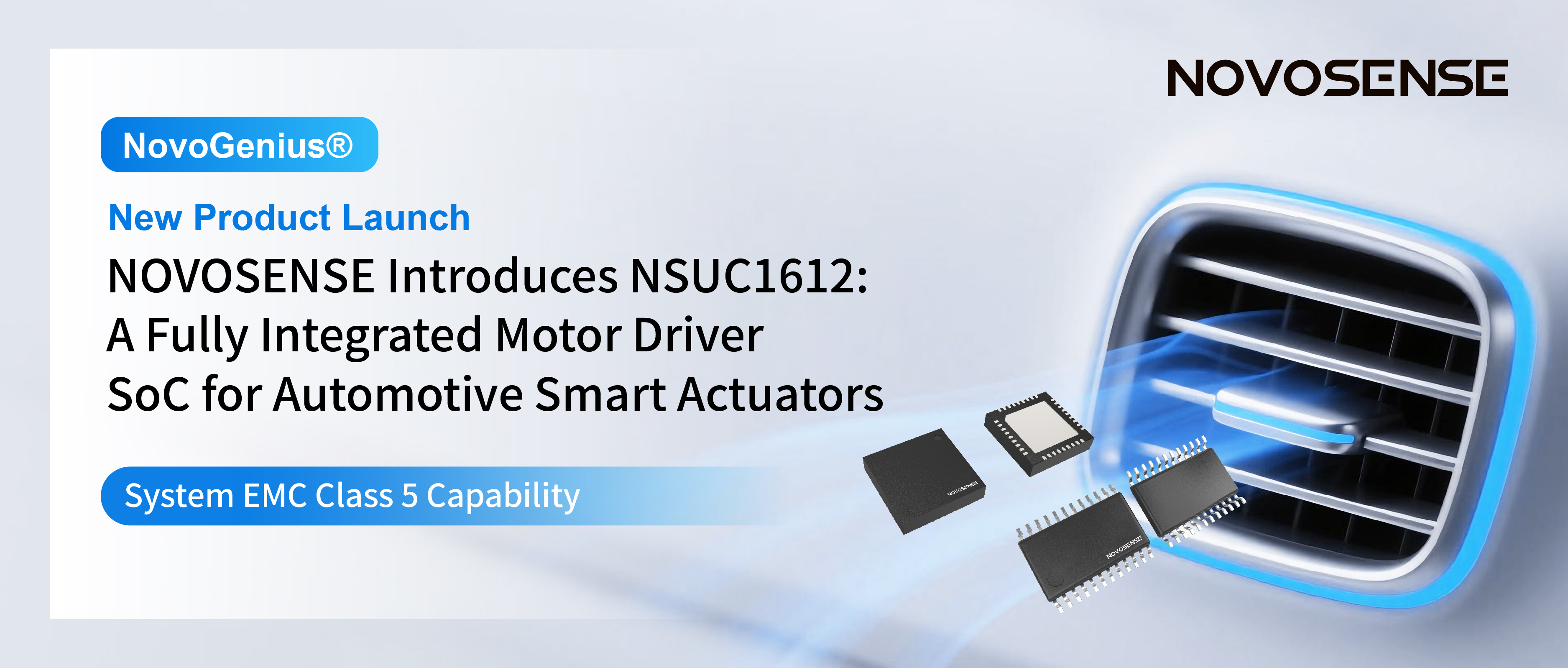
NOVOSENSE launches NSUC1612: Fully Integrated Embedded Motor Drive SoC for Smarter, Cost-Efficient Automotive Actuators
  NOVOSENSE has released the NSUC1612, a next-generation motor driver SoC designed to address the limitations of traditional discrete solutions in automotive smart actuators, such as system complexity, high cost, and limited reliability.  With its fully integrated single-chip architecture, the NSUC1612 can simplify design, reduce cost, and enhance stability. It supports a wide range of applications, including automotive water valves, automotive air-conditioning vent, active grille shutters, as well as stepper motors, DC brushed motors, and DC brushless motors—delivering an efficient and scalable solution for automotive electronics.  1.Fully Integrated Architecture: Simplified Design, Reduced Complexity  Conventional actuator control systems often require multiple components, including MCU, motor drivers, communication interfaces, and protection circuits, leading to complex PCB layout, increased solder joints, and compatibility issues.The NSUC1612 integrates a 32-bit ARM® Cortex®-M3 MCU with 4- or 3-channel half-bridge drivers, LIN/CAN controller communication interfaces, a 12-bit ADC, temperature sensors, and other essential modules, all in a single-chip. This eliminates the need for additional companion ICs while covering the full motor control, communication, and protection process.By reducing external components and simplifying hardware design, the NSUC1612 shortens development cycles and minimizes EMI risk through optimized internal signal routing.  2.Excellent EMC Performance: Reliable Operation in Harsh Environments  Automotive electronics operate in complex electromagnetic conditions where EMC performance directly impacts actuator precision and system stability. The NSUC1612 provides simplified reference circuits and optimized PCB layout. In compliance with CISPR 25:2021 Class 5, it passes stringent automotive EMC/EMI tests, compliant with the automotive standardsSelected Test Results Based on CISPR 25:2021  This ensures stable motor control signals and helps prevent malfunctions such as actuator stalls or misoperation caused by electromagnetic interference.  3.Strong Performance: Balanced Drive Capability and Processing Power  The NSUC1612 is designed to deliver both reliable motor driving capability and efficient computation: NSUC1612B: 4 half-bridge outputs, peak current up to 500 mA NSUC1612E: 3 half-bridge outputs, peak current up to 2.1 AThese options support brushed DC, BLDC, and stepper motors across diverse applications, from HVAC air vent adjustment to seat ventilation.  The ARM® Cortex®-M3 core with Harvard architecture integrates 32 KB Flash, 2 KB SRAM, and 15 KB ROM with Bootloader, supporting OTA upgrades. A 32 MHz high-precision oscillator with PLL ensures stable computation, while low-power sleep mode consumes less than 50 μA across the full operation temperature range, balancing performance with energy efficiency.  4.Automotive-Grade Reliability: Built for Demanding Conditions  The NSUC1612 is designed with comprehensive reliability features to withstand harsh operating environments. It is compliant with AEC-Q100 Grade 1, supporting junction temperatures up to 150°C and ensuring stable operation across a wide temperature range from -40°C to +125°C. The device’s LIN port can tolerate up to ±40 V, while the BVDD pin supports -0.3 V to 40 V, enabling direct connection to 12V automotive batteries. In addition, integrated protection mechanisms such as over-voltage and over-temperature safeguards provide robust defense against voltage fluctuations and transient surges, delivering system-level reliability under real-world automotive conditions.  The NSUC1612 extends its value through broad application compatibility, making it suitable for automotive actuator systems. It supports brushed DC, BLDC, and stepper motors, while integrated communication interfaces—including LIN PHY (compliant with LIN 2.x, ISO 17987, and SAE J2602), FlexCAN, and SPI—allow seamless integration into existing automotive network architectures.  The NSUC1612 is ideal for a wide range of applications, including thermal management components (e.g., automotive water valves and expansion valves), cabin comfort modules (automotive air-conditioning vent), and smart body systems (active grille shutters and charging port actuators). By integrating these functions into a single device, it helps reduce design costs and simplify development.
Key word:
Release time:2025-09-23 13:12 reading:855 Continue reading>>
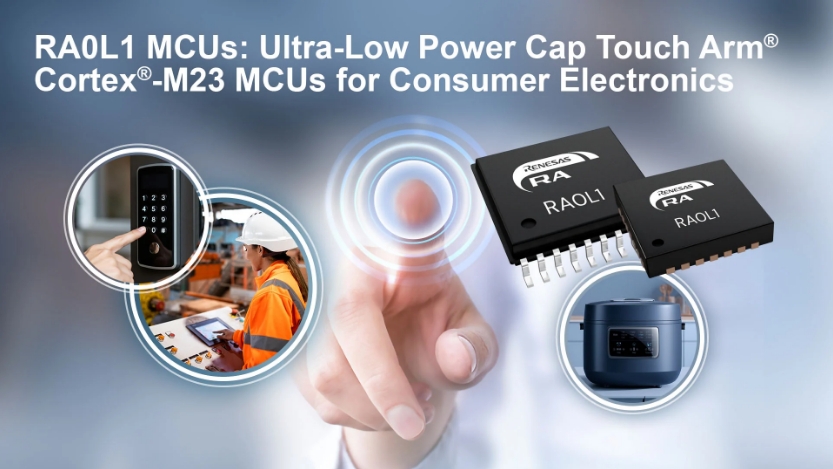
Renesas Adds Capacitive Touch to Ultra-Low-Power RA0 MCUs
  Renesas Electronics Corporation (TSE:6723), a premier supplier of advanced semiconductor solutions, today introduced the RA0L1 microcontroller (MCU) Group based on the Arm® Cortex®-M23 processor. The new devices offer extremely low power consumption and the industry’s best solution for quickly and economically implementing capacitive touch in battery-powered and other consumer electronics, appliances, white goods and industrial system controls.  Renesas introduced the RA0 MCU series in 2024 and it has quickly become very popular with a wide range of customers due to its affordability and low power consumption. With the addition of capacitive touch functionality, RA0L1 devices offer designers the ability to create responsive, attractive, low-power user interfaces at very low cost.  RA0L1 MCUs deliver industry-leading power consumption of only 2.9mA current in active mode, and 0.92mA in sleep mode. In addition, an integrated High-speed On-Chip Oscillator (HOCO) enables the fastest wake-up time for this class of microcontroller. The fast wake-up enables the RA0L1 MCUs to stay in Software Standby mode more of the time, where power consumption drops to a minuscule 0.25 µA. With this feature, current consumption can be reduced by up to 90 percent compared with other solutions.  Feature Set Optimized for Low Cost  The RA0L1 devices have a feature set optimized for cost-sensitive applications. They offer a wide operating voltage range of 1.6V to 5.5V so customers don’t need a level shifter/regulator in 5V systems. The RA0L1 MCUs also integrate multiple communications interfaces, analog functions, safety functions and security functionality to reduce customer BOM cost. A wide range of packaging options is also available, including a tiny 4mm x 4mm 24-pin QFN.  In addition, the new MCU’s high-precision (±1.0%) HOCO improves baud rate accuracy and enables designers to forego a standalone oscillator. Unlike other HOCOs in the industry, it maintains this precision in environments from -40°C to 125°C. This wide temperature range enables customers to simplify thermal design by avoiding costly and time-consuming “trimming,” even after the reflow process.  Renesas Capacitive Touch Leadership  Renesas provides industry-leading capacitive touch technology, ensuring customers can quickly and cost-effectively implement high-quality touch interfaces in a variety of systems. Its self-capacitance method simplifies waterproof design, offering simpler design and reduced complexity compared to mutual capacitance solutions. Renesas’ multi-frequency measurement meets IEC61000 4-3 Level 4 standards, making it ideal for medical applications that demand robust protection from electromagnetic interference. Renesas also offers specialized development resources for capacitive touch, including the QE for Capacitive Touch that streamlines sensitivity adjustments for capacitive touch buttons, speeding up development.  “The RA0L1 combines the industry-leading power consumption and cost-effectiveness of our RA0 Series MCUs with our unmatched capacitive touch technology and tools,” said Daryl Khoo, Vice President of the Embedded Processing Marketing Division at Renesas. “We look forward to the many innovative touch interface solutions that our customers will create using these devices.”  Key Features of the RA0L1 Group MCUs  Core: 32MHz Arm Cortex-M23  Memory: Up to 64KB integrated Code Flash memory and 16KB SRAM  Extended Temperature Range: Ta -40°C to 125°C  Timers: Timer array unit (16b x 8 channels), 32-bit interval timer (8b x 4 channels), RTC  Communications Peripherals: 3 UARTs, 2 Async UART, 6 Simplified SPIs, 2 I2C, 6 Simplified I2Cs  Analog Peripherals: 12-bit ADC, temperature sensor, internal reference voltage  HMI: Capacitive Touch (up to 24 channels), Controlled Current Drive Port (up to 8)  Safety: SRAM parity check, invalid memory access detection, frequency detection, A/D test, output level detection, CRC calculator, register write protection  Security: Unique ID, TRNG, Flash access window, Flash read protection  Packages: 24-, 32- and 48-pin QFNs, 32-, 48-pin LQFP, 20-pin LSSOP  The new RA0L1 Group MCUs are supported by Renesas’ Flexible Software Package (FSP). The FSP enables faster application development by providing all the infrastructure software needed, including multiple RTOS, BSP, peripheral drivers, middleware, connectivity, networking, and security stacks as well as reference software to build complex AI, motor control and cloud solutions. It allows customers to integrate their own legacy code and choice of RTOS with FSP, thus providing full flexibility in application development. Using the FSP will ease migration to and from other RA family devices.  Winning Combinations  Renesas has combined the new RA0L1 Group MCUs with numerous compatible devices from its portfolio to offer a wide array of Winning Combinations, including the Capacitive Touch Remote Controller. Winning Combinations are technically vetted system architectures from mutually compatible devices that work together seamlessly to bring an optimized, low-risk design for faster time to market. Renesas offers more than 400 Winning Combinations with a wide range of products from the Renesas portfolio to enable customers to speed up the design process and bring their products to market more quickly.  Availability  The RA0L1 Group MCUs are available now, along with the FSP software, the RA0L1 Fast Prototyping Board and the RA0L1 Renesas Solution Starter Kit for Cap Touch. Samples and kits can be ordered either on the Renesas website or through AMEYA360.
Key word:
Release time:2025-09-18 16:11 reading:871 Continue reading>>
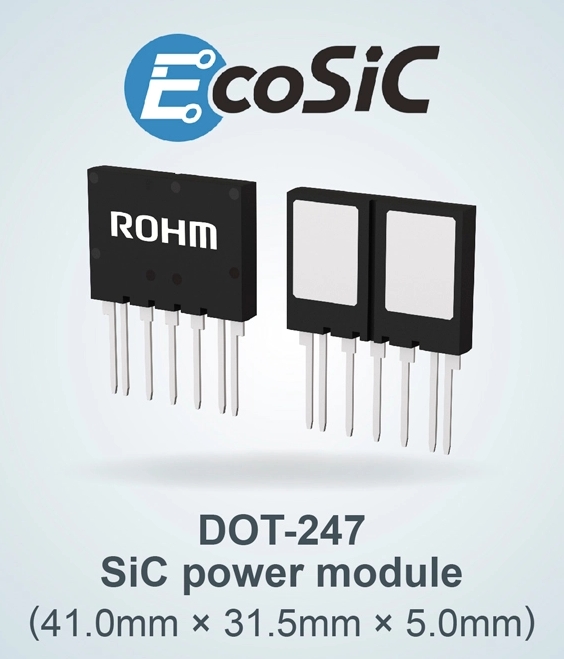
ROHM Launches 2-in-1 SiC Molded Module “DOT-247”
  ROHM has developed the "DOT-247," a 2-in-1 SiC molded module (SCZ40xxDTx, SCZ40xxKTx), ideal for industrial applications such as PV inverters, UPS systems, and semiconductor relays. The module retains the versatility of the widely adopted "TO-247" package while achieving high design flexibility and power density.  The DOT-247 features a combined structure consisting of two TO-247 packages. This design enables the use of large chips, which were structurally difficult to accommodate in the TO-247 package, and achieves low on-resistance through an unique internal structure. Additionally, through optimized package structure, thermal resistance has been reduced by approximately 15% and inductance by approximately 50% compared to the TO-247. This enables a power density 2.3 times higher than the TO-247 in a half-bridge configuration –achieving the same power conversion circuit in approximately half the volume.  The new products featuring the DOT-247 package are available in two topologies: half-bridge and common-source. Currently, two-level inverters are the mainstream in PV inverters, but there is growing demand for multi-level circuits such as three-level NPC, three-level T-NPC, and five-level ANPC to meet the need for higher voltages. In the switching sections of these circuits, topologies such as half-bridge and common-source are mixed –making custom products necessary in many cases when using conventional SiC modules.  To address this challenge, ROHM has developed each of these two topologies—the smallest building blocks of multi-level circuits—into a 2-in-1 module. This enables flexibility to support various configurations such as NPC circuits and DC-DC converters, while significantly reducing the number of components and mounting area, and achieving circuit miniaturization compared to discrete components.  Evaluation boards will also be made available progressively to facilitate evaluation during application design. For more information, please contact a sales representative or visit the contact page on ROHM’s website.  Product Lineup  ☆:Under Development  AEC-Q101 is an automotive electronics reliability standard established by the Automotive Electronics Council (AEC).  The Q101 standard is specifically focused on discrete semiconductor components.  Application Examples  PV inverters, semiconductor relays, UPS (uninterruptible power supply), ePTO, and boost converters for FCVs (fuel cell vehicles).  AI servers (eFuse), EV charging stations, etc.  Sales Information  Pricing: $140/unit (samples, excluding tax)  Availability: ROHM construct mass production (September 2025)  Products compliant with the automotive reliability standard AEC-Q101 are scheduled to begin sample shipments in October 2025.  Comprehensive Support  ROHM is committed to providing application-level support, including the use of in-house motor testing equipment. A variety of supporting materials are also offered, such as simulations and thermal designs that enable quick evaluation and adoption of DOT-247 products. An evaluation kit for double-pulse testing is already available, allowing immediate testing, while an evaluation kit for 3-phase inverters is currently under preparation, with reference designs scheduled to be released from November 2025.  • About the DOT-247 design models  SPICE models: Available on the product web pages for each part number  LTspice® models: Scheduled to be available for three-level NPC from October 2025 on the web pagesLTspice® is a registered trademark of Analog Devices, Inc.When using third-party trademarks, please adhere to the usage guidelines specified by the rights holder.  For details, please contact a sales representative or visit the contact page on ROHM’s website.  EcoSiC™ Brand  EcoSiC™ is a brand of devices that utilize silicon carbide (SiC), which is attracting attention in the power device field for performance that surpasses silicon (Si). ROHM independently develops technologies essential for the evolution of SiC, from wafer fabrication and production processes to packaging, and quality control methods. At the same time, we have established an integrated production system throughout the manufacturing process, solidifying our position as a leading SiC supplier.• EcoSiC™ is a trademark or registered trademark of ROHM Co., Ltd.  Terminology  Half-bridge/ Common-source  A basic configuration of a power conversion circuit consisting of two MOSFETs. In a half-bridge configuration, the MOSFETs are connected in series, one above the other, and the output is taken from the connection point. By switching the upper and lower MOSFETs alternately, the output voltage can be switched between positive and negative, making this configuration widely used as the basic structure for high-efficiency power conversion in inverters and motor drive circuits.  Common Source is a configuration where the source terminals of the two MOSFETs are connected, and the output is taken from each drain. By grouping the source terminals, the gate drive circuit can be simplified, making it suitable for applications such as multilevel inverters.  Types of NPC-type multi-level circuits  NPC (Neutral Point Clamped) is a multi-level circuit configuration that divides the output voltage into three levels (+, 0, and -) to reduce voltage stress on the switching devices. The "0V" state is created by the neutral point, which is the contact point located between the positive and negative voltages.  T-NPC (T-type NPC) replaces the diode used to stabilize the neutral point with switching devices such as MOSFETs, enabling more efficient operation. ANPC (Active NPC) actively controls the potential of the neutral point itself using a switch, achieving smoother output waveforms and high-precision power conversion. T-NPC and ANPC are suitable for applications requiring higher output and efficiency.  ePTO (electric Power Take-Off)  A system that uses the power from an electric vehicle's motor or battery to drive external work machinery or equipment (such as hydraulic pumps or compressors). This is an electrified version of the PTO (Power Take-Off) used in conventional engine vehicles, and its adoption is advancing in environmentally friendly commercial vehicles and work vehicles.
Key word:
Release time:2025-09-17 13:11 reading:679 Continue reading>>
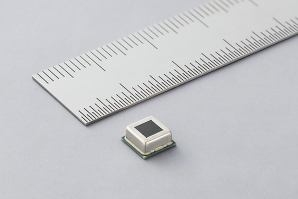
Murata Launches Digital Output SMD Pyroelectric Infrared Sensor for Low Power Applications
  Murata Manufacturing Co., Ltd has launched a digital output SMD pyroelectric infrared sensor, IRS-D200ST00R1, with low power consumption and is already in mass production.  In recent years, the use of IoT technology in smart homes and smart buildings has increased convenience, safety, and power saving within living spaces and facilities. Because of this, the demand for wireless communication units equipped with human detection functions capable of sensing movement in real time is also increasing to realize more efficient and comfortable environments. One of the key technologies to enable the motion detection function is a pyroelectric infrared sensor. Products which communicate wirelessly require long-term stable operation with reduced battery replacement or charging, thus creating a strong need for pyroelectric infrared sensors that can detect human movement while extending battery life. Additionally, to increase design flexibility inside these products, space-saving measures are essential, driving demand for compact infrared sensors., space-saving measures are essential, driving demand for compact infrared sensors.  In response, we developed this product using proprietary pyroelectric ceramic technology to achieve low power consumption and a compact size. Even when continuously operating the human detection function, power consumption is kept low, and the sensor includes an interrupt function that activates the microcontroller only when a change is detected, contributing to extended battery life. Furthermore, the compact size enables space-saving, and the adoption of the digital I2C interface simplifies design during development.  The main features of this product include contributing to overall system power reduction through low power consumption and interrupt functionality, space-saving due to its small and low-profile SMD package, ease of design enabled by built-in amplifier and ADC with digital output (I2C), reduction of false detections and stable operation thanks to high signal-to-noise ratio and EMI noise resistance, Also enabling process cost reduction through reflow compatibility.  Key specifications are a dual element electrode size of 0.08 × 0.02 inch (2.0 × 0.5 mm), an overall size of 0.24 × 0.24 × 0.10 inch (6.0 × 6.0 × 2.6 mm), typical sensitivity of 19.5 mV, element height of 0.065 inch (1.65 mm), field of view of ±55° horizontal and ±42° vertical, supply voltage from 1.8 to 3.3 V, typical current consumption of 8 µA, and an I2C interface.*
Key word:
Release time:2025-09-15 14:09 reading:582 Continue reading>>
ROHM has Developed Ultra-Compact CMOS Op Amp: Delivering Industry-Leading* Ultra-Low Circuit Current
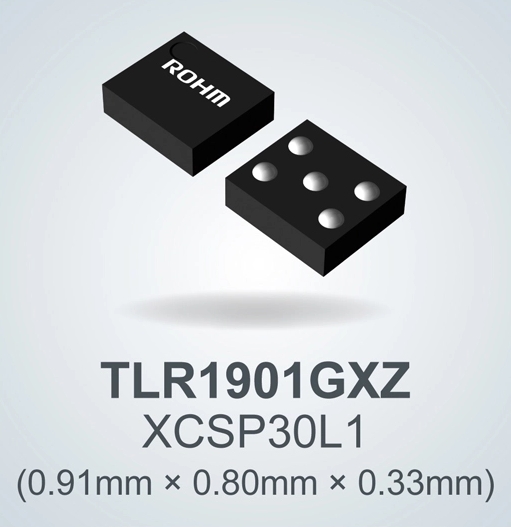
  ROHM’s ultra-compact CMOS Operational Amplifier (op amp) TLR1901GXZ achieves the industry’s lowest operating circuit current. This IC is optimized to be applied as a measurement sensing amplifier in size-constrained applications such as handheld measurement instruments, wearable devices, and indoor motion detectors.  As the demand continues to grow for more sophisticated control in battery-driven devices, the importance of sensors that detect parameters such as temperature, humidity, vibration, pressure, and flow rate – along with the op amps used to amplify these sensor signals – continues to rise. At the same time, greater miniaturization and energy savings in applications is a necessary step to realizing a sustainable society –placing similar demands on individual devices as well.  In response to these evolving market needs, ROHM has advanced its process, packaging, and proprietary Nano Energy™ circuit technologies to develop an op amp that addresses three key requirements: lower power consumption, higher accuracy, and compact size. The newly developed TLR1901GXZ achieves an ultra-compact footprint of less than 1mm2 by adopting a WLCSP (Wafer Level Chip Scale Package) with a fine ball pitch of 0.35mm while delivering an industry-leading low operating current of 160nA (typ.). This not only contributes to high-density mounting in space-constrained applications, but also to a significantly extended battery life.  Moreover, the TLR1901GXZ features an exceptionally low input offset voltage of just 0.55mV (max.), one of the best among ultra-low current op amps. This represents an approximate 45% reduction compared to typical products on the market. A maximum input offset voltage temperature drift of 7uV/°C ensures high accuracy operation over the operating temperature range.  Design flexibility can be further enhanced by pairing the op amp with ROHM’s ultra-compact general-purpose resistors, such as the MCR004 (0402 metric / 01005 inch) and MCR006 (0603 metric / 0201 inch), for applications like gain adjustment. The MCR004 series lineup includes the MCR004E –an environmentally friendly, fully lead-free option designed to support sustainable designs. Adapter boards featuring SSOP5 package ICs are offered as well to support initial evaluation and replacement assessments.  Going forward, ROHM will continue to pursue further power savings in op amps by advancing both miniaturization and original ultra-low power technologies. At the same time, we are committed to improving device performance by reducing noise and offset, expanding power supply voltage ranges, and contributing to solving social issues through more precise application control.  Key Product Characteristics  Application Examples  • Consumer devices: wearables, smart devices, motion sensors, etc.  • Industrial equipment: gas detectors, fire alarms, handheld measurement instruments, environmental sensors for IoT, etc.  Online Sales Information  Sales Launch Date: Now  Pricing: $2.1/unit (samples, excluding tax)  Online Distributors: AMEYA360  • Applicable Part No: TLR1901GXZ-E2  • IC-Mounted Adapter Board: TLR1901GXZ-EVK-001  What is Nano Energy™ Technology?  Nano Energy™ refers to proprietary ultra-low current consumption technology that achieves a current consumption on the order of nano ampere (nA) by combining advanced analog technologies covering circuit design, layout, and processes utilizing ROHM’s vertically integrated production system.  This contributes not only to extending operating time of battery operated IoT and mobile devices, but also improving efficiency in industrial and automotive equipment where increased power consumption is problematic.  https://www.rohm.com/support/nano   Nano Energy™ is a trademark or registered trademark of ROHM Co., Ltd.  Terminology  WLCSP (Wafer Level Chip Scale Package)  An ultra-compact package in which terminals and wiring are formed directly on the wafer before separated into individual chips. Unlike general packages where the chips are cut from wafers and then molded with resin to form terminals, WLCSP allows the package size to match the chip itself, making it possible to further reduce size.  Input Offset Voltage  The small voltage difference that must be applied between the inverting and non-inverting inputs of the operational amplifier to make the output voltage exactly zero.  Input Offset Voltage Temperature Drift  Refers to how much an op amp's input offset voltage changes as the temperature changes.
Key word:
Release time:2025-09-12 17:23 reading:623 Continue reading>>
Murata Manufacturing Co., Ltd. expands lineup of isolated DC-DC converters for PoE IEEE802.3af
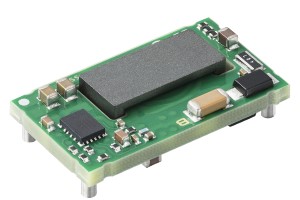
  Murata Manufacturing Co., Ltd. has expanded its lineup of isolated DC-DC converters for PoE*1 with the launch of an IEEE802.3af-compliant isolated DC-DC converter for PD*2 (hereinafter, ‘the product’). Murata has already started mass production of the product, and samples are available upon request.  *1PoE: Power over Ethernet. A technology that enables power supply over LAN cables used to build networks.  *2PD: Powered Device. A device that receives power in a PoE system.  PoE technology enables power supply over LAN cables used to build networks, improving installation flexibility, and reducing costs. In recent years, network-enabled devices such as security cameras and biometric authentication equipment have increasingly adopted PoE technology. Against this backdrop, demand for compact power modules for PoE-compatible devices is growing. In particular, biometric authentication devices typically require around 10 W of power, making the IEEE802.3af standard, which supports up to 15 W, an ideal match.  Accordingly, Murata has developed this product compliant with IEEE802.3af. The product’s compact, low-profile design (1.02×0.58×0.27 inches (26×14.8×6.8mm)) enhances layout flexibility on circuit boards. It is mainly suited for camera modules and biometric authentication devices that require space-saving and low-noise characteristics, and contributes to the miniaturization of other communication devices.  Key features  Isolated DC-DC converter module compliant with IEEE802.3af Class specifications  Compact and low-profile (1.02×0.58×0.27 inches (26×14.8×6.8mm)) for high layout flexibility  Wide operating temperature range (-40°C to +85°C) for versatile applications  Applications  IEEE802.3af-compliant devices including wireless access points, biometric authentication devices, security cameras, camera modules, IP phones, and audio speakers  Specifications
Key word:
Release time:2025-09-08 15:11 reading:596 Continue reading>>
ROHM’s SiC MOSFETs Adopted in Schaeffler’s Inverter Brick, Now in Mass Production
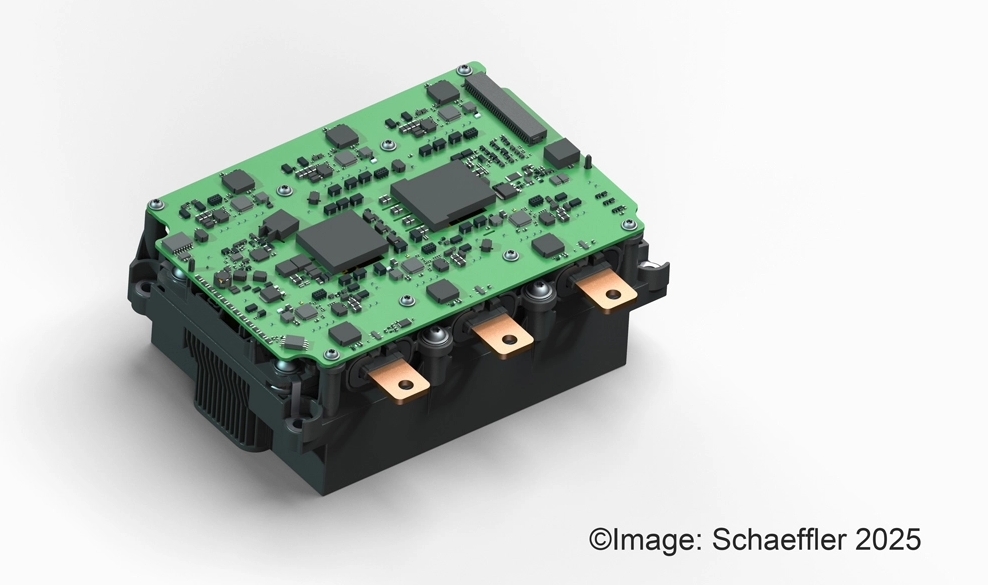
  ROHM and Schaeffler, a leading German automotive supplier, have started mass production of a new high-voltage inverter brick equipped with ROHM’s SiC (silicon carbide) MOSFET bare chips as part of their strategic partnership. The inverter brick is intended for a major Chinese car manufacturer.High voltage inverter brickSiC MOS Wafer  The Schaeffler inverter subassembly is the essential power device building block (brick) to control the electric drive via logic signals. This is where the high-frequency current pulses are produced that set the vehicle’s electric motor in motion. The performance characteristics of the inverter brick now being produced are impressive: Schaeffler increased the output of the brick by increasing the maximum possible battery voltage to much more than the usual 800 V – and with RMS currents of up to 650 A, which turn the sub-module into a compact power pack.  “Through our strategic approach of incorporating scalability and modularity into our e-mobility solutions – from individual components to a highly integrated electric axle – we developed the readily integrated inverter brick. Based on our generic platform development, it took us just one year to bring this optimal product for the popular X-in-1 architectures to volume production readiness,” says Thomas Stierle, CEO of the E-Mobility Division at Schaeffler.  Modularity and scalability as the key to easy integration  As a core component of an inverter, a brick has to meet strict requirements. The characteristics of the sub-module are indicative of the factors behind the current sales success and start of volume production: ROHM’s silicon carbide (SiC) power semiconductors enable the frame-mounted sub-module with high power density to be compact, efficient, and readily integrated into various inverters through its modular and scalable design. The sub-module incorporates the power module for pulse width modulation (PWM) of the current pulses, the DC link capacitor, a DC link and a cooler. Moreover, the brick has a DC boost function, thanks to which a vehicle with 800 V architecture can also be charged at a 400 V charging station at a charging speed of 800 V.  “We are glad about the launch of volume production for Schaeffler’s inverter brick with our 4th generation SiC MOSFET,” says Dr. Kazuhide Ino, Member of the Board and Managing Executive Officer at ROHM. “With our SiC technology we are making a substantial contribution to increasing the efficiency and performance of electric cars. Working with Schaeffler as our partner, we are thus fostering innovation and sustainability in the automotive industry,” Dr. Ino adds.  The strategic partnership of Schaeffler (originally initiated under Vitesco Technologies) with ROHM has existed since 2020 and serves to secure capacity for energy-efficient SiC power semiconductors.Thomas Stierle, CEO E-Mobility Division at Schaeffler (left) and Dr. Kazuhide Ino, Member of the Board and Managing Executive Officer at ROHM  About Schaeffler Group  The Schaeffler Group has been driving forward groundbreaking inventions and developments in the field of motion technology for more than 75 years. With innovative technologies, products and services for electric mobility, CO₂-efficient drives, chassis solutions and renewable energies, the company is a reliable partner for making motion more efficient, intelligent and sustainable – over the entire life cycle. Schaeffler describes its comprehensive range of products and services in the mobility ecosystem by means of eight product families, from bearing solutions and linear guidance systems of all kinds to repair and monitoring services. With around 120,000 employees at more than 250 locations in 55 countries, Schaeffler is one of the world’s largest family-owned companies and ranks among Germany’s most innovative companies.
Key word:
Release time:2025-09-05 16:57 reading:656 Continue reading>>

Turn to

/ 240

  • Week of hot material
  • Material in short supply seckilling
model brand Quote
TL431ACLPR Texas Instruments
CDZVT2R20B ROHM Semiconductor
BD71847AMWV-E2 ROHM Semiconductor
MC33074DR2G onsemi
RB751G-40T2R ROHM Semiconductor
model brand To snap up
BU33JA2MNVX-CTL ROHM Semiconductor
ESR03EZPJ151 ROHM Semiconductor
BP3621 ROHM Semiconductor
TPS63050YFFR Texas Instruments
STM32F429IGT6 STMicroelectronics
IPZ40N04S5L4R8ATMA1 Infineon Technologies
Hot labels
ROHM
IC
Averlogic
Intel
Samsung
IoT
AI
Sensor
Chip

About us

Qr code of ameya360 official account

Identify TWO-DIMENSIONAL code, you can pay attention to

AMEYA360 mall (www.ameya360.com) was launched in 2011. Now there are more than 3,500 high-quality suppliers, including 6 million product model data, and more than 1 million component stocks for purchase. Products cover MCU+ memory + power chip +IGBT+MOS tube + op amp + RF Bluetooth + sensor + resistor capacitance inductor + connector and other fields. main business of platform covers spot sales of electronic components, BOM distribution and product supporting materials, providing one-stop purchasing and sales services for our customers.

Please enter the verification code in the image below:

verification code