Renesas’ Industry-First Gen6 DDR5 Registered Clock Driver Sets Performance Benchmark by Delivering 9600 MT/s
  Renesas Electronics Corporation (TSE: 6723), a premier supplier of advanced semiconductor solutions, today announced that it has delivered the industry’s first sixth-generation Registered Clock Driver (RCD) for DDR5 Registered Dual In-line Memory Modules (RDIMMs). The new RCD is the first to achieve a data rate of 9600 Mega Transfers Per Second (MT/s), surpassing the industry standard. This breakthrough marks a significant leap from the 8800 MT/s performance of Renesas’ Gen5 RCD, setting a new standard for memory interface performance in data center servers.  Key Features of Renesas’ Gen6 DDR5 RCD  10% Bandwidth Increase over Renesas’ Gen5 RCD (9600 MT/s versus 8800 MT/s)  Backward Compatibility with Gen5 Platforms: Provides seamless upgrade path  Enhanced Signal Integrity and Power Efficiency: Enables AI, HPC, and LLM workloads  Expanded Decision Feedback Equalization Architecture: Offers eight taps and 1.5mV granularity for superior margin tuning  Decision Engine Signal Telemetry and Margining (DESTM): Improved system-level diagnostics provides real-time signal quality indication, margin visibility, and diagnostic feedback for higher speeds  The new DDR5 RDIMMs are needed to keep pace with the ever-increasing memory bandwidth demands of Artificial Intelligence (AI), High-Performance Compute (HPC) and other data center applications. Renesas has been instrumental in the design, development and deployment of the new RDIMMs, collaborating with industry leaders including CPU and memory providers, along with end customers. Renesas is the leader in DDR5 RCDs, building on its legacy of signal integrity and power optimization expertise.  “Explosive growth of generative AI is fueling higher SoC core count. This is driving unprecedented demand for memory bandwidth and capacity as a critical enabler of data center performance,” said Sameer Kuppahalli, Vice President of Memory Interface Division at Renesas. “Our sixth generation DDR5 Registered Clock Driver demonstrates Renesas’ continued commitment to memory interface innovation, path-finding and delivering solutions to stay ahead of market demand.”  "Samsung has collaborated with Renesas across multiple generations of memory interface components, including the successful qualification of Gen5 DDR5 RCD and PMIC5030,” said Indong Kim, VP of DRAM Product Planning, Samsung Electronics. “We are now excited to integrate Gen6 RCD into our DDR5 DIMMs, across multiple SoC platforms to support the growing demands of AI, HPC, and other memory-intensive workloads."  Availability  The RRG5006x Gen6 RCD is designed to meet the stringent requirements of next-generation server platforms, offering robust performance, reliability, and scalability. Renesas is sampling the new RRG5006x RCD to select customers today, including all major DRAM suppliers. Production availability is expected in the first half of 2027.
Key word:
Release time:2025-11-13 16:33 reading:630 Continue reading>>
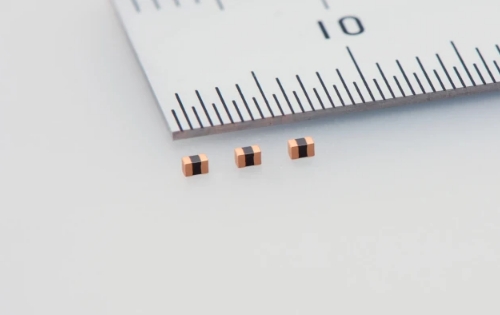
Murata expands lineup of high cutoff frequency chip common mode choke coils in 0504-inch size for automotive high-speed differential interfaces
Key word:
Release time:2025-11-10 17:12 reading:469 Continue reading>>
Panasonic Industry Commercializes Conductive Polymer Tantalum Solid Capacitors (POSCAP) with The Industry's Lowest Profile*1 to Support High-Output Power Delivery Required for USB Type-C Connections
  Panasonic Industry Co., Ltd., a Panasonic Group company, announced  that it will begin commercial production of its two models of Conductive Polymer Tantalum Solid Capacitors (POSCAP), 50TQT33M and 63TQT22M. These capacitors are incorporated into power circuits used for information and communication equipment, including laptops and tablets. They offer an ultra-high withstand voltage and high capacitance in a body with the industry’s lowest profile of 3 mm, supporting high-output power delivery through USB Type-C connectors. Mass production for these models is planned to start in December 2025.  These capacitors are ideal for voltage stabilization and noise reduction in power supplies compliant with USB Power Delivery (USB-PD)[1] 3.1. While previous USB-C connectors supplied up to 100 W (20 V/5 A), USB-PD 3.1 expands this to 240 W (48 V/5 A). This enables widespread use of USB-C connectors for high-speed data transfer and rapid charging, and is expected to further expand applications to larger equipment requiring high power output, such as displays.  On the other hand, information and communication equipment such as laptops are increasingly required to be thinner and more compact. Capacitors therefore must combine an ultra-high withstand voltage, high capacitance, and a low profile in order to fit into limited space. Panasonic Industry began mass production of Conductive Polymer Tantalum Solid Capacitors (POSCAP) in 1997 and, as an industry leader, has continuously delivered first-of-their-kind products. Leveraging proprietary powder molding technology and film formation technologies, the company has newly developed two models that achieve both an ultra-high withstand voltage and high capacitance in a package with the industry's lowest profile of 3 mm.  Through these unique device technologies, Panasonic Industry will continue to contribute to enhancing the functionality of electronic equipment, including laptops, while also reducing the environmental impact through smaller, lighter devices and lower material usage.  Key features:  1. Achieves both an ultra-high withstand voltage and high capacitance*2 to support high-output USB Type-C power delivery, in a 3 mm profile—the lowest in the industry*1—enabled by proprietary powder molding and film formation technologies  2. Lineup of USB-PD 3.1-compliant models rated at 50 V and 63 V  3. Contributes to reduced material usage lower environmental impact through low-profile design  *1 As of September 18, 2025, Conductive polymer tantalum solid capacitors with rated voltages of 50 V and 63 V and capacitance of 22 μF or higher (Panasonic Industry data)  *2 USB-Power Delivery 3.1 (180 W/240 W output) compliant high-capacitance conductive polymer tantalum solid capacitors with rated voltages of 50 V and 63 V, and a capacitance of 22 μF or higherDetailed features:  1. Achieves both an ultra-high withstand voltage and high capacitance to support high-output USB Type-C power delivery, in a 3 mm profile—the lowest in the industry—enabled by proprietary powder molding and film formation technologies  To achieve capacitor performance required for USB-PD 3.1 power supplies in a low-profile body, both high capacitance and a high withstand voltage must be ensured, despite their trade-off relationship. High-capacitance tantalum powder is necessary for electrode materials, but its fine particle size makes molding difficult, creating challenges for stable production. Forming a uniform dielectric film on the surface of the electrodes is important for enhancing the withstand voltage. However, since electrodes made with high-capacitance tantalum powder contain extremely small internal pores, dielectric oxide films tend to develop imperfections.  Panasonic Industry overcame these challenges by establishing proprietary technology to mold high-capacitance tantalum powder with uniform density, and by optimizing the film deposition process to create flawless dielectric films. This enabled the development of two new models that combine an ultra-high withstand voltage and high capacitance, meeting the USB-C high-output power delivery requirements in a 3 mm low-profile package.Cross-sectional view of POSCAP and enlarged view of the inside of the electrode body  2. Lineup of USB-PD 3.1-compliant models rated at 50 V and 63 V  Until now, Panasonic Industry’s POSCAP lineup extended only up to 35 V, with no models compatible with USB-PD 3.1, which extends the rated voltage specification to 36 V (180 W) and 48 V (240 W). The two new models, rated at 50 V and 63 V, each achieve a high capacitance of 22 μF or higher in a package with the industry's lowest profile of 3 mm. The full lineup provides flexibility to meet diverse applications and equipment specifications.  3. Contributes to reduced material usage lower environmental impact through low-profile design  Compared to the industry standard size*3, the new models reduce volume by 25%, contributing to a lower environmental impact through reduced material usage.  *3 Comparison with the industry standard size (7.3 mm × 4.3 mm × 4 mm) of conductive polymer tantalum solid capacitors used in USB-PD 3.1 compliant power suppliesApplications:  Voltage stabilization and noise reduction of USB-PD 3.1-compliant power supplies for laptops, displays, and peripheral equipment  Arc discharge[2] countermeasures for USB-PD 3.1-compliant connectors  Specifications:  Life: 2,000 hours at 105°C; guaranteed operating temperature range: -55°C to 105°C  Ripple current[3]: 100 kHz, 105°C  ESR[4]: 100 kHz, 20°C  *4 Product dimensional tolerance:  Length (L): ±0.3 mm; Width (W): ±0.2 mm; Height (H): ±0.2 mmTerm descriptions:  [1] USB-PD  The power delivery standards established by the standard-setting organization USB Implementers Forum, Inc. (USB-IF). With the launch of USB-PD 3.1 in 2021, USB Type-C cables and connectors can now deliver up to 240 W of power, supporting a wide range of applications—from smartphones and laptops to larger equipment such as monitors.  [2] Arc discharge  An electric spark or discharge phenomenon that occurs when a high current flows at low voltage in electrical circuits.  [3] Ripple current  When a voltage fluctuation is applied to a capacitor, a corresponding charging or discharging current flows through the capacitor. The current applied to this capacitor is referred to as a ripple current. The higher the ripple current, the higher the allowable current.  [4] ESR (Equivalent Series Resistance)  Represents the value of an internal resistance component that can cause heat generation. Capacitors with lower ESR allow higher ripple currents and provide excellent noise absorption.
Key word:
Release time:2025-11-06 15:35 reading:612 Continue reading>>
GigaDevice GD32F5xx and GD32G5xx Software Test Libraries (STL) Receive TÜV Rheinland IEC 61508 Functional Safety Certification
  GigaDevice, a leading semiconductor company specializing in Flash memory, 32-bit microcontrollers (MCUs), sensors, and analog products, announced that its GD32F5xx and GD32G5xx Software Test Libraries have received IEC 61508 SC3 (SIL 2/SIL 3) functional safety certification from TÜV Rheinland.  This milestone expands GigaDevice’s functional safety portfolio, which already includes the GD32H7 and GD32F30x STLs, and now covers a broad range of MCUs with Arm® Cortex®-M7, Cortex®-M4, and Cortex®-M33 cores. Building on this foundation, GigaDevice will continue to deliver high-performance and safety-focused hardware and software solutions for key applications such as industrial control, energy and power, and humanoid robotics.  With the growing emphasis on safety across industries like industrial automation, functional safety has become a critical consideration in embedded system design. The GD32F5xx and GD32G5xx MCUs, based on the Arm® Cortex®-M33 core, have become key solutions for high-performance applications requiring robust safety measures.  The GD32F5xx series is optimized for applications in energy and power management, photovoltaic energy storage, and industrial automation, where high precision and reliable control are essential.  The GD32G5xx series combines excellent processing performance with a wide range of digital and analog interfaces. It is available in compact packages such as 81-pin WLCSP81 (4x4mm), making it ideal for applications in humanoid robotics, digital power systems, charging stations, energy storage inverters, servo motors, and optical communications.  The GigaDevice STLs monitor GD32F5xx and GD32G5xx MCU modules in real-time to detect hardware faults. If a fault is detected, predefined safety mechanisms will be triggered to ensure the MCU always remains in a safe state, reducing potential risks and enhancing system reliability.  This certification highlights GigaDevice's deep expertise in functional safety system design and its commitment to meeting the highest international safety standards, reinforcing its position as a trusted provider of secure, high-performance solutions for mission-critical industries.  About GigaDevice  GigaDevice Semiconductor Inc. is a global leading fabless supplier. Founded in April 2005, the company has continuously expanded its international footprint and established its global headquarters in Singapore in 2025. Today, GigaDevice operates branch offices across numerous countries and regions, providing localized support at customers' fingertips. Committed to building a complete ecosystem with major product lines – Flash memory, MCU, sensor and analog – as the core driving force, GigaDevice can provide a wide range of solutions and services in the fields of industrial, automotive, computing, consumer electronics, IoT, mobile, networking and communications. GigaDevice has received the ISO26262:2018 automotive functional safety ASIL D certification, IEC 61508 functional safety product certification, as well as ISO9001, ISO14001, ISO45001, and Duns certifications. In a constant quest to expand our technology offering to customers, GigaDevice has also formed strategic alliances with leading foundries, assembly, and test plants to streamline supply chain management.
Key word:
Release time:2025-11-04 17:01 reading:704 Continue reading>>
Renesas Adds Two New MCU Groups to Blazing Fast RA8 Series with 1GHz Performance and Embedded MRAM
  Renesas Electronics Corporation (TSE:6723), a premier supplier of advanced semiconductor solutions, today introduced the RA8M2 and RA8D2 microcontroller (MCU) groups. Based on a 1 GHz Arm® Cortex®-M85 processor with an optional 250 MHz Arm® Cortex®-M33 processor, the new MCUs are the latest Renesas offerings to deliver an unmatched 7300 Coremarks of raw compute performance, the industry benchmark for MCUs. The optional Cortex-M33 processor enables efficient system partitioning and task segregation.  Both RA8D2 and RA8M2 devices are ultra-high performance MCUs as part of the second generation of the RA8 Series – the RA8M2 are general-purpose devices, and the RA8D2 MCUs are packed with a variety of high-end graphics peripherals. They are built on the same high-speed, low-power 22-nm ULL process used for the RA8P1 and RA8T2 devices introduced earlier this year. The devices include single and dual core options, and a specialized feature set to address the needs of a broad base of compute intensive applications. They take advantage of the high performance of the Arm Cortex-M85 processor and Arm’s Helium™ technology to offer a significant performance boost for digital signal processor (DSP) and machine learning (ML) implementations.  The RA8M2 and RA8D2 devices offer embedded MRAM that has several advantages over Flash technology - high endurance & data retention, faster writes, no erase needed, and byte addressable with lower leakage and manufacturing costs. SIP options with 4 or 8 MB of external flash in a single package are also available for more demanding applications. Both the RA8M2 and RA8D2 MCUs include Gigabit Ethernet interfaces and a 2-port TSN switch to address industrial networking use cases.  Both of the MCU Groups provide a combination of the high performance of the Cortex-M85 core, together with large memory and a rich peripheral set, making them particularly suitable for a wide range of IoT and industrial use cases. The lower power CM33 core can act as a housekeeping MCU, executing system tasks while the high performance CM85 core stays in sleep mode, to be woken up only as needed for high compute tasks, thus lowering the system power consumption.  “The RA8M2 and RA8D2 complete Renesas’ new generation of RA8 MCUs, purpose-built for the high-performance microcontroller market,” said Daryl Khoo, Vice President of the Embedded Processing Marketing Division at Renesas. “This portfolio empowers Renesas to deliver scalable, secure and AI-enabled embedded processing solutions that accelerate customer innovation and time-to-market across a broad spectrum of industrial, IoT and select automotive applications. Renesas’ commitment to innovation is reflected in the RA8 Series’ ability to address complex processing requirements while maintaining lower power consumption and minimizing total cost of ownership to future-proof customers’ designs.”  RA8D2 Feature Set Optimized for Graphics and HMI Applications  The RA8D2 MCUs provide a plethora of features and functions for graphics and HMI applications:  High resolution Graphics LCD Controller supports up to 1280x800 displays with both parallel RGB and 2-lane MIPI DSI interfaces  Two-Dimensional Drawing Engine offloads the graphics rendering tasks from the CPU and supports graphics primitives  Multiple camera interface options enable camera and vision AI applications,  16-bit camera interface (CEU) with support for image data fetch, processing and format conversion  MIPI CSI-2 interface offers a low pin-count interface with 2 lanes, each up to 720Mbps  A VIN module performs vertical and horizontal scaling and format and color space conversions of YUV and RGB data inputs received from the MIPI CSI-2 interface  Audio interfaces such as I2S and PDM support digital microphone inputs for audio and voice AI applications  Comprehensive graphics solution with industry-leading embedded graphics GUI packages from SEGGER emWin and Microsoft GUIX, integrated into Renesas’ FSP  Software JPEG decoder optimized for Helium, available with both emWin and GUIX solutions, allows decode of JPEG images with up to 27fps end-to-end graphics performance with Helium acceleration  Multiple graphics ecosystem partners such as Embedded Wizard, Envox, LVGL and SquareLine Studio are offering solutions that employ RA8D2 using Helium to accelerate graphics functions and JPEG decoding  Key Features of the RA8M2 and RA8D2 Group MCUs  Core: 1 GHz Arm Cortex-M85 with Helium; Optional 250 MHz Arm Cortex-M33  Memory: Integrated 1MB high-speed MRAM and 2MB SRAM (including 256KB TCM for the Cortex-M85 and 128KB TCM for the M33). 4MB and 8MB SIP devices coming soon.  Analog Peripherals: Two 16-bit ADC with 23 analog channels, two 3-channel S/H, 2-channel 12-bit DAC, 4-channel high-speed comparators  Communications Peripherals: Dual Gigabit Ethernet MAC with DMA, USB2.0 FS Host/Device/OTG, CAN2.0 (1Mbps)/CAN FD (8Mbps), I3C (12.5Mbps), I2C (1Mbps), SPI, SCI, Octal serial peripheral I/F  Advanced Security: RSIP-E50D Cryptographic engine, robust secure boot with FSBL in immutable storage on-chip, secure debug, secure factory programming, DLM support, tamper protection, DPA/SPA protection,  The new RA8M2 and RA8D2 Group MCUs are supported by Renesas’ Flexible Software Package (FSP). The FSP enables faster application development by providing all the infrastructure software needed, including multiple RTOS, BSP, peripheral drivers, middleware, connectivity, networking, and security stacks as well as reference software to build complex AI, motor control and cloud solutions. It allows customers to integrate their own legacy code and choice of RTOS (FreeRTOS and Azure RTOS) with FSP, thus providing full flexibility in application development. In addition, Zephyr support is now included. Using the FSP will ease migration of existing designs to the new RA8 Series devices.  Winning Combinations  Renesas has combined the new RA8 Group MCUs with numerous compatible devices from its portfolio to offer a wide array of Winning Combinations, including the Smart Glasses and Pet Camera Robot for the RA8M2, and both Ki Wireless Power Transceiver System (Tx) and Ki Wireless Power Receiver System (Rx) for the RA8D2. Winning Combinations are technically vetted system architectures from mutually compatible devices that work together seamlessly to bring an optimized, low-risk design for faster time to market. Renesas offers more than 400 Winning Combinations with a wide range of products from the Renesas portfolio to enable customers to speed up the design process and bring their products to market more quickly.   Availability  The RA8M2 and RA8D2 Group MCUs are available now, along with the FSP software. The RA8M2 devices are available in 176-pin LQFP, 224-pin and 289-pin BGA packages. The RTK7EKA8M2S00001BE Evaluation Kit is also available. The RA8D2 MCUs are offered in 224-pin and 289-pin BGA packages. The RTK7EKA8D2S01001BE Evaluation Kit supports the RA8D2 devices.
Key word:
Release time:2025-10-30 15:45 reading:701 Continue reading>>
ROHM Develops Breakthrough Schottky Barrier Diode Combining Low VF and IR for Advanced Image Sensor Protection
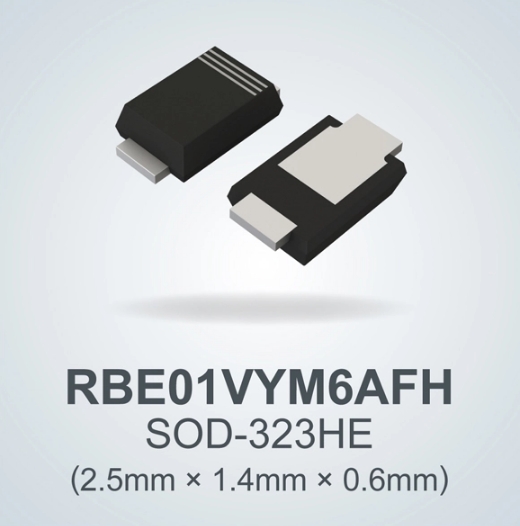
  ROHM has developed an innovative Schottky barrier diode that overcomes the traditional VF / IR trade-off. This way, it delivers high reliability protection for a wide range of high-resolution image sensor applications, including ADAS cameras.  Modern ADAS cameras and similar systems require higher pixel counts to meet the demand for greater precision. This has created a growing concern – the risk of damage caused by photovoltaic voltage generated under light exposure during power OFF. While low-VF SBDs are effective countermeasures, low IR is also essential during operation to prevent thermal runaway. However, simultaneously achieving both low VF and IR has been a longstanding technical challenge. ROHM has overcome this hurdle by fundamentally redesigning the device structure – successfully developing an SBD that combines low VF with low IR which is ideal for protection applications.  The RBE01VYM6AFH represents a novel concept: leveraging the low-VF characteristics of rectification SBDs for protection purposes. By adopting a proprietary architecture, ROHM has achieved low IR that is typically difficult to realize with low VF designs. As a result, even under harsh environmental conditions, the device meets market requirements by delivering VF of less than 300mV (at IF=7.5mA even at Ta=-40°C), and an IR of less than 20mA (at VR=3V even at Ta=125°C.) These exceptional characteristics not only prevent circuit damage caused by high photovoltaic voltage generated when powered OFF, but also significantly reduce the risk of thermal runaway and malfunction during operation.  The diode is housed in a compact flat-lead SOD-323HE package (2.5mm × 1.4mm / 0.098inch × 0.055inch) that offers both space efficiency and excellent mountability. This enables support for space-constrained applications such as automotive cameras, industrial equipment, and security systems. The RBE01VYM6AFH is also AEC-Q101 qualified, ensuring suitability as a protection device for next-generation automotive electronics requiring high reliability and long-term stability.  Going forward, ROHM will focus on expanding its lineup with even smaller packages to address continuing miniaturization demands.  Key Specifications  Application Examples  Image sensor-equipped sets such as ADAS cameras, smart intercoms, security cameras, and home IoT devices.  Terminology  Photovoltaic Voltage  A term commonly used with optical sensors, referring to the voltage produced when exposed to light. In general, the stronger the light intensity or higher the pixel count the greater voltage generated.
Key word:
Release time:2025-10-27 16:49 reading:522 Continue reading>>
GigaDevice Deepens Commitment to Japan, Advancing Local Services and Global Collaboration
  GigaDevice, a leading semiconductor company specializing in Flash memory, 32-bit microcontrollers (MCUs), sensors, and analog products, has officially opened its new office in Minato City, Tokyo. This milestone reflects the company's deepening commitment to the Japanese market and marks a significant step in enhancing local customer support, strengthening regional collaboration, and advancing its global development efforts.  Japan has long served as a vital pillar of GigaDevice's global strategy. Over the years, the company has expanded its local team, refined operation to meet evolving customer needs, and established a responsive professional service system. This new office will further enhance GigaDevice's technical responsiveness and agility, foster closer collaboration with customers, and help accelerate product validation and commercialization in today's fast-changing market landscape.  Working closely with customers in Japan, GigaDevice has broadened the adoption of its solutions across key application sectors such as industrial, automotive, consumer electronics, and the Internet of Things. At the same time, the company continues to deepen cooperation with local partners in supply chain integration and ecosystem development, offering a comprehensive portfolio of Flash memory, MCU, sensor, and analog solutions that have earned broad market recognition.  "Japan has always been a vital component of our global strategy," said Jennifer Zhao, GigaDevice Global Business CEO. "We will continue to leverage our global synergy and strengthen local service capabilities to drive product innovation and industry advancement alongside our customers and partners."  "We greatly value the trust and long-term partnerships we have built with our customers in Japan," added Sam Li, GigaDevice Japan Regional GM, "In a market that's becoming increasingly complex, our goal is to consistently deliver exceptional service and competitive products that meet diverse business needs and create lasting value."  As one of GigaDevice's key customers, Nidec Corporation has been working closely with the company. Ryuji Omura, Head of Nidec Semiconductor Solutions Center, commented: "GigaDevice's rapid growth and technological innovation, along with its genuine commitment to customers, have built a solid foundation of trust between our companies and made it one of our most valued supplier partners. We look forward to seeing GigaDevice continue to lead the semiconductor industry and contribute to the advancement of society."  As a global leading fabless supplier, GigaDevice continues to combine global synergy with localized execution. Following the establishment of its global headquarters in Singapore, the company has strengthened its presence across Asia, Europe, and the Americas, building a responsive, demand-driven sales and service network. Looking ahead, GigaDevice will continue to invest in Japan, refining its product offerings, enhancing its service delivery, and expanding its collaborative mechanisms to drive a smarter, more efficient, and sustainable future together with its customers and partners.
Key word:
Release time:2025-10-21 16:49 reading:727 Continue reading>>
TAIYO YUDEN Commercializes 1005M-Size Embeddable Multilayer Ceramic Capacitor with 22-μF Capacitance for AI Servers
  TAIYO YUDEN CO., LTD. has commercialized and begun mass production of embeddable multilayer ceramic capacitor (MLCC) that achieves a capacitance of 22-μF in a 1005M size (1.0 x 0.5 mm).  This ceramic capacitor is an MLCC designed for decoupling applications on IC power lines used in AI servers and other types of information devices.  Components embedded in a board require high precision in terms of flatness of the external electrodes for connection to the circuit. With respect to this requirement, TAIYO YUDEN has commercialized an embeddable MLCC that achieves a 22-μF capacitance in a 1005M size by enhancing external electrode formation technology and other elemental technologies.  Mass production of the capacitor began at our Tamamura Plant (Sawa District, Gunma Prefecture) in August 2025. Samples are available for 20 yen per unit.  Technology Background  AI servers and other types of devices with advanced information processing capabilities are equipped with ICs that consume extremely large amounts of power. For decoupling purposes in such power supply circuits, small, high-capacity MLCCs are required to handle large currents.  Additionally, to minimize circuit loss and noise, it is important to route the power supply circuit close to the ICs. Traditional power supply circuits are routed around ICs. But, technological developments are progressing, allowing them to be placed closer, such as on the back of the board or directly under the ICs. Thus, embeddable MLCCs need to be equipped with high-precision external electrodes to connect to the lines.  To satisfy this need, TAIYO YUDEN has improved its external electrode formation technology and commercialized 1005M-size embeddable MLCC with a capacitance of 22 μF.  TAIYO YUDEN is continuing to develop new MLCCs with higher capacitance and other distinguishing features.  ■ Application  Decoupling applications on IC power lines used in AI servers and other types of information devices
Key word:
Release time:2025-10-20 16:40 reading:483 Continue reading>>
ROHM Publishes White Paper on Power Solutions for Next-Generation 800 VDC Architecture Aligned with the Industry's 800 VDC Roadmap to Enable Gigawatt-Scale AI Infrastructure
  ROHM has released a new white paper detailing advanced power solutions for AI data centers based on the novel 800 VDC architecture, reinforcing its role as a key semiconductor industry player in driving system innovation.  As part of the collaboration announced in June 2025, the white paper outlines optimal power strategies that support large-scale 800 VDC power distribution across AI infrastructure.  The 800 VDC architecture represents a highly efficient, scalable power delivery system poised to transform data center design by enabling gigawatt-scale AI factories. ROHM offers a broad portfolio of power devices, including silicon (Si), silicon carbide (SiC), and gallium nitride (GaN), and is among the few companies globally with the technological expertise to develop analog ICs (control and power ICs) capable of maximizing device performance.  Included in the white paper are ROHM’s comprehensive power solutions spanning a wide range of power devices and analog IC technologies, supported by thermal design simulations, board-level design strategies, and real-world implementation examples.  [Access the white paper here]  Key Highlights of the White Paper• Rising Rack Power Consumption: Power demand per rack in AI data centers is rapidly increasing, pushing conventional 48V/12V DC power supply systems to their limits.  • Shift to 800 VDC: Transitioning to an 800 VDC architecture significantly enhances data center efficiency, power density, and sustainability.  • Redefined Power Conversion: In the 800 VDC system, AC-DC conversion (PSU), traditionally performed within server racks, is relocated to a dedicated power rack.  • Essential Role of SiC and GaN: Wide bandgap devices are critical for achieving efficient performance. With AC-DC conversion moved outside the IT rack, higher-density configurations inside the IT rack can better support GPU integration.  • Optimized Conversion Topologies: Each conversion stage—from AC to 800 VDC in the power rack and from 800 VDC to lower voltages in the IT rack—requires specialized solutions. ROHM’s SiC and GaN devices contribute to higher efficiency and reduced noise while decreasing the size of peripheral components, significantly increasing power density.  • Breakthrough Device Technologies: ROHM’s EcoSiC™ series offers industry-leading low on-resistance and top-side cooling modules ideal for AI servers, while the EcoGaN™ series combines GaN performance with proprietary analog IC technologies, including Nano Pulse Control™. This allows for stable gate drive, ultra-fast control, and high-frequency operation–features that have earned strong market recognition.  The shift to 800 VDC infrastructure is a collective industry effort. ROHM is working closely with NVIDIA, data center operators, and power system designers to deliver essential wide bandgap semiconductor technologies for next-generation AI infrastructure. Through strategic collaborations, including a 2022 partnership with Delta Electronics, ROHM continues to drive innovation in SiC and GaN power devices, enabling powerful, sustainable, and energy-efficient data center solutions.  ROHM’s EcoSiC™  EcoSiC™ is ROHM’s brand of devices that utilize silicon carbide, which is attracting attention in the power device field for performance that surpasses silicon. ROHM independently develops technologies essential for the advancement of SiC, from wafer fabrication and production processes to packaging, and quality control methods. At the same time, we have established an integrated production system throughout the manufacturing process, solidifying our position as a leading SiC supplier.  ・EcoSiC™ is a trademark or registered trademark of ROHM Co., Ltd.
Key word:
Release time:2025-10-15 11:50 reading:722 Continue reading>>
Renesas Powers 800 Volt Direct Current AI Data Center Architecture with Next-Generation Power Semiconductors
  Renesas Electronics Corporation (TSE:6723), a premier supplier of advanced semiconductor solutions, announced that it is supporting efficient power conversion and distribution for the 800 Volt Direct Current power architecture announced by NVIDIA, helping fuel the next wave of smarter, faster AI infrastructure.  As GPU-driven AI workloads intensify and data center power consumption scales into multi-hundred megawatt territory, modern data centers must adopt power architectures that are both energy optimized and scalable. Wide bandgap semiconductors such as GaN FET switches are quickly emerging as a key solution thanks to their faster switching, lower energy losses, and superior thermal management. Moreover, GaN power devices will enable the development of 800V direct current buses within racks to significantly reduce distribution losses and the need for large bus bars, while still supporting reuse of 48V components via DC/DC step-down converters.  Renesas’ GaN based power solutions are especially suited for the task, supporting efficient and dense DC/DC power conversion with operating voltages of 48V to as high as 400V, with the option to stack up to 800V. Based on the LLC Direct Current Transformer (LLC DCX) topology, these converters achieve up to 98 percent efficiency. For the AC/DC front-end, Renesas uses bi-directional GaN switches to simplify rectifier designs and increase power density. Renesas REXFET MOSFETs, drivers and controllers complement the BOM of the new DC/DC converters.   “AI is transforming industries at an unprecedented pace, and the power infrastructure must evolve just as quickly to meet the explosive power demands,” said Zaher Baidas, Senior Vice President and General Manager of Power at Renesas. “Renesas is helping power the future of AI with high-density energy solutions built for scale, supported by our full portfolio of GaN FETs, MOSFETs, controllers and drivers. These innovations will deliver performance and efficiency, with the scalability required for future growth.”  Renesas Power Management Leadership  A world leader in power management ICs, Renesas ships more than 1.5 billion units per year, with increased shipments serving the computing industry, and the remainder supporting industrial and Internet of Things applications as well as data center and communications infrastructure. Renesas has the broadest portfolio of power management devices, delivering unmatched quality and efficiency with exceptional battery life. As a trusted supplier, Renesas has decades of experience designing power management ICs, backed by a dual-source production model, the industry’s most advanced process technology, and a vast network of more than 250 ecosystem partners.  About Renesas Electronics Corporation  Renesas Electronics Corporation (TSE: 6723) empowers a safer, smarter and more sustainable future where technology helps make our lives easier. A leading global provider of microcontrollers, Renesas combines our expertise in embedded processing, analog, power and connectivity to deliver complete semiconductor solutions. These Winning Combinations accelerate time to market for automotive, industrial, infrastructure and IoT applications, enabling billions of connected, intelligent devices that enhance the way people work and live. 
Key word:
Release time:2025-10-13 13:29 reading:756 Continue reading>>

Turn to

/ 240

  • Week of hot material
  • Material in short supply seckilling
model brand Quote
TL431ACLPR Texas Instruments
RB751G-40T2R ROHM Semiconductor
BD71847AMWV-E2 ROHM Semiconductor
CDZVT2R20B ROHM Semiconductor
MC33074DR2G onsemi
model brand To snap up
ESR03EZPJ151 ROHM Semiconductor
STM32F429IGT6 STMicroelectronics
BP3621 ROHM Semiconductor
IPZ40N04S5L4R8ATMA1 Infineon Technologies
BU33JA2MNVX-CTL ROHM Semiconductor
TPS63050YFFR Texas Instruments
Hot labels
ROHM
IC
Averlogic
Intel
Samsung
IoT
AI
Sensor
Chip

About us

Qr code of ameya360 official account

Identify TWO-DIMENSIONAL code, you can pay attention to

AMEYA360 mall (www.ameya360.com) was launched in 2011. Now there are more than 3,500 high-quality suppliers, including 6 million product model data, and more than 1 million component stocks for purchase. Products cover MCU+ memory + power chip +IGBT+MOS tube + op amp + RF Bluetooth + sensor + resistor capacitance inductor + connector and other fields. main business of platform covers spot sales of electronic components, BOM distribution and product supporting materials, providing one-stop purchasing and sales services for our customers.

Please enter the verification code in the image below:

verification code