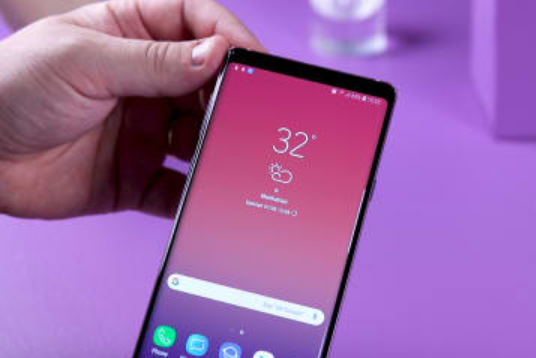

Apple to Announce New <span style='color:red'>iPhone</span>s This Fall with a Budget Version Due to Cost Reduction of Components
According to TrendForce, the sales of Apple’s iPhone 8, 8 Plus, and X that were released in 2017 were lower than expected for models that celebrate 10th anniversary of the iPhone line. Sales of the iPhone 8/X series were affected by the delayed launch. Moreover, the demand for iPhone X has not been as strong as anticipated because consumers still need time to adjust to the high prices. While the market performance of the iPhone 8/X series has fallen short of the high expectations, iPhone sales as a whole are sustained by the popularity of models from the earlier generations. TrendForce finds that total iPhone sales for the whole year of 2017 reached around 216 million units, roughly the same as the annual figure for 2016.Similarly, the company plans to introduce three new iPhone models later this year, says TrendForce. All three models would continue to feature Face ID, and two of them would be premium versions with an AMOLED screen. Apple Pencil would be offered as an option as well. With the production volume estimated by TrendForce at around 83~88 million units, the new iPhones to be released may take a larger share of the company’s annual sales volume compared with the three models last year. For 2018, TrendForce expects the sales volume of iPhones to remain flat or grow marginally by 2~3%, influenced by the saturated smartphone market and the longer replacement cycle of phones across the world. In the global revenue ranking, Apple would retain its second position, following Samsung.Specs and pricing strategies of new iPhonesIn terms of tech specs, the new iPhones may include two AMOLED versions, with a size of 5.8-inch and 6.5-inch respectively, as well as a less expensive 6.1-inch version with an LCD screen. The two premium models with AMOLED screen have already been assembled in the OEMs since late July, while the assembly of the LCD models is scheduled at mid-September. All three models are expected to be shipped in September and October as previously scheduled.Regarding the prices, TrendForce believes that Apple is bound to adjust its pricing strategies, influenced by Chinese brands that have successfully expanded their market shares with products that offer high performances at affordable prices. Moreover, Apple will need to improve its cost structure to cope with the threats brought by Android brands. In order to maintain its profitability, Apple is said to bargain with its supply chain partners for cost reduction of components, especially the components that have been used in earlier generations of iPhone.For the budget 6.1-inch LCD version, it will come with Face ID, Dual-SIM function, and a larger screen than its predecessor iPhone 8. The specs upgrades would make new iPhones more favorable in the competition with Android phones. On the other hand, the cost of this model has been approaching that of iPhone 8 Plus due to the upgrades. However, the 6.1-inch LCD model would be positioned by Apple’s main product this year, with a production share of around 50% in the new iPhone series. Apple is bound to adjust the prices of this model to meet the market expectation and to further expand its market share. Considering the cost reduction of components, TrendForce estimates the starting price of this LCD version at around $699~749.As for the two premium AMOLED versions, they would both feature a memory content of 4GB. The 5.8-inch one would come as the successor of iPhone X, but with a lower starting price of $899~949, notes TrendForce. With the anticipated launch of this model, iPhone X will start its “end of life” process earlier due to the high similarity in the specs of these two models.The 6.5-inch AMOLED version would target at the premium business segment, with an extra-large screen and Dual-SIM service, but the Dual-SIM function is expected to be available only in certain regions. Limited within US$1,000 threshold as to encourage purchasing from consumers, the starting price of the premium AMOLED iPhone for 2018 will likely to be the same as that of iPhone X, at US$999, according to the prediction of TrendForce.
Key word:
Release time:2018-08-15 00:00 reading:1226 Continue reading>>
Samsung hopes its new $1,000 Galaxy Note 9 will grab <span style='color:red'>iPhone</span> users and reverse disappointing sales
The Galaxy Note 9 features one of the biggest screens and internal storage sizes on the market, along with one of the highest price tags to match its high-end specs.The South Korean electronics giant is looking to target high-end users, in addition to luring consumers away from Apple's iPhone X.There will be two versions of the device — one with 128GB internal storage and one with 512GB storage, or twice the iPhone X's storage. The smaller storage option starts at $999.99 while the larger one has a $1,249.99 price tag, which puts it above the most expensive version of the iPhone X.The Note 9 comes with a 6.4-inch screen, one of the biggest on the market, and Samsung's S Pen, a stylus for doodling or taking notes.Samsung's launch comes at a time when the company's mobile division has been struggling. Operating profit in its mobile unit in the second quarter fell, and it's facing more competition, particularly from Chinese Android rival Huawei, which has recently become the world's second-largest smartphone maker by market share, moving ahead of Apple.The Note series of devices has never been a huge seller by volume but is an important category for Samsung because of the higher margin. Analysis firm Counterpoint Research estimates that there are over 100 million users with one of the company's flagship devices such as the Galaxy S9 or S8. Those are the users Samsung would want to persuade to upgrade to the new Note 9.CNBC | Magdalena Petrova Samsung Galaxy Note 9"But it could also attract some competing Android users or dissatisfied iOS users [who are unhappy] with battery life, limited storage, smaller screen size or less exciting software experiences," Neil Shah, a research director at Counterpoint Research, told CNBC by email.'Fortnite' on AndroidSamsung will be hoping its key features, like the S Pen, will make its device to stand out against the competition.Other key features include:Samsung's claim of all-day battery life.S Pen stylus with Bluetooth so you can use the button on it to take selfies, change music tracks and use certain apps.A dual camera that can automatically detect the scene and subject of the picture and adjust features like brightness or contrast.Wireless charging.The Note 9 will be available for preorder at 12:01 a.m. ET Friday.Perhaps Samsung's biggest marketing ploy is to draw users in with its announcement about hit game "Fortnite," which has attracted over 125 million players and over $1 billion in revenue. Epic Games, the developer behind "Fornite," announced Thursday that Samsung Galaxy users will get advanced access to the beta version of the game for Google's Android operating system. In addition to the Note 9, some of Samsung's older flagship phones and tablets will also get access to the game.Samsung said that those who preorder the Note 9 by Aug. 23 can get special in-game currency for a discounted price. The Android release of the game has been highly anticipated and could draw even bigger numbers to "Fortnite," a trend Samsung will be hoping to capture to help sell the Note 9.AI, 5G focusSmartphone shipments fell 1.8 percent in the second quarter from a year earlier, according to research firm IDC. Amid the slowing market, Samsung has begun to invest in new areas of growth. While semiconductors have been a huge profit driver for Samsung, the technology giant is now looking at artificial intelligence and 5G, the next generation of mobile internet.Samsung said Wednesday it is planning to invest about 25 trillion Korean won ($22 billion) over the next three years into these new growth drivers. Samsung's share price has fallen over 8 percent this year.
Key word:
Release time:2018-08-10 00:00 reading:1473 Continue reading>>
Apple, Samsung end 7-yr-old <span style='color:red'>iPhone</span> patent battle with undisclosed truce
Apple and Samsung have ended a years-long patent battle over copied iPhone design with an undisclosed settlement, according to a US court filing on Wednesday.The world's two biggest smartphone makers reached a truce in their seven-year-old court battle a month after a federal court jury ordered Samsung to pay Apple some $539 million for copying patented iPhone features.That award was seen as a victory for Apple, which had argued in court that design was essential to the iPhone.Financial terms of the settlement were not revealed and neither company elaborated on the brief court order which dismissed the litigation dating back to 2011."Whereas the court has been advised by the parties that the above-entitled action has been settled, all remaining claims and counterclaims, in this case, are hereby dismissed with prejudice," US District Court Judge Lucy Koh wrote.When contacted by AFP for comment, Apple referred to a statement released last month after the jury announced the damages award."This case has always been about more than money," the statement read."It is important that we continue to protect the hard work and innovation of so many people at Apple.South Korea-based Samsung declined to comment.Apple's lawsuit claimed Samsung, now the world's biggest handset maker, copied the design and other features of the iPhone as the smartphone market was exploding.The case was keenly watched as a precedent for whether design is so important that it could actually be considered the "article of design" even in a product as complex as a smartphone.The case had been sent back to the district court following a Supreme Court decision to revisit an earlier $400 million damage award.The jury had been asked to determine whether design features at issue in the case are worth all profit made from Samsung smartphones that copied them -- or whether those features are worth just a fraction because they are components.The three design patents in the case apply to the shape of the iPhone's black screen with rounded edges and a bezel, and the rows of colourful icons displayed.Two utility patents also involved apply to "bounce-back" and "tap-to-zoom" functions.An original trial finding that Samsung violated Apple patents preceded a lengthy appellate dueling over whether design features such as rounded edges are worth all the money made from a phone.The retrial regarding damages was one element of a $548 million penalty -- knocked down from an original $1 billion jury award -- Samsung was ordered to pay for copying iPhone patents.
Key word:
Release time:2018-06-28 00:00 reading:1445 Continue reading>>
Top Apple analyst is back covering the company, forecasts lower <span style='color:red'>iPhone</span> price tags for this year
At the end of April, Ming-Chi Kuo, one of the most accurate and influential analysts covering Apple for the securities industry, abruptly left the investment firm he had been with for years. And a tweet sent out at that time by Bloomberg's Mark Gurman said that Kuo would be following "innovative non-Apple companies." While some felt that the analyst's quick decision to change his focus had to do with Apple tightening down on leaks (which was discovered, ironically, in an internal memo that leaked), it appears that Kuo might have decided to keep an eye on Apple after all.Now working as an analyst for Hong Kong's TF International Securities, Kuo is telling clients that Apple will be lowering prices on its next batch of smartphones to be unveiled later this year. Last year, the company released the pricey Apple iPhone X ($999 for 64GB, $1049 for 256GB), and there has been speculation that Apple desires to lower the retail prices of its 2018 iPhone lineup. For example, Kuo sees the iPhone X sequel, carrying a 5.8-inch OLED screen, to be priced in the range of $800 to $900. The "Plus" version of the phone, carrying a 6.5-inch OLED panel, will cost $900 to $1,000 according to the analyst. And he sees the "low-end" model, with a 6.1-inch LCD display, priced at $600 to $700. Speaking of the 6.1-inch model currently dubbed "iPhone 9," Kuo has said that the device will feature a special layer on its LCD screen. As a result, he sees Apple not including 3D Touch with the unit. Ming-Chi Kuo says that Apple's decision to lower prices is a result of what he sees as a consumer backlash to higher smartphone prices. In addition, higher yields achieved by suppliers on component production also allow Apple to take a knife to iPhone pricing.In February 2017, nearly seven months before Apple unveiled its iPhone lineup for that year, Kuo told clients the exact screen-size of each model, including the 5.8-inch iPhone X. He also knew about the "revolutionary" front-facing camera for the tenth anniversary model, correctly calling for it to feature 3D scanning capabilities. At the same time, he stated that Touch ID would not appear on the model, and would be replaced by a face-recognition system. All of those pronouncements proved to be true.
Key word:
Release time:2018-06-05 00:00 reading:1343 Continue reading>>
Apple starts production of its 7nm A12 chips for 2018 <span style='color:red'>iPhone</span>s
Like last year, there are going to be three new iPhone models introduced later in 2018 and all of them are going to have a bezel-less design. One other similarity is that all three models are going to be using the Apple A12 chipset made using the 7nm technology from TSMC.There will be lots of benefits to using newer technology in the 2018 iPhone lineup and with mass production started by Apple, it does not appear like a delay in the launch of the newer models is going to show up in the middle of this progress.A12 promises at least 20% better performanceWith Apple having started working on the mass production phase, TSMC earlier promised that its 7nm technology will be able to show at least 20% better performance as compared to the 10nm process and up to 40% energy efficiency. The A12 might also be smaller, faster and will consume less power thanks to the latest advancements undertaken by TSMC.As a result, if the new iPhones possess the same batteries as the models that were released last year, they will still be able to show better battery endurance for the buyer. Apps will also open up much faster thanks to the improved performance of the chip and overall performance will be noticeable.iPhone 2018 lineup: Specifications, FeaturesMost of us already know that there are going to be three brand new models that Apple will be announced during the month of September. One of them will be the iPhone X Plus, the second one will be an iPhone X successor, and the third model is going to be that iPhone to feature a bezel-less display, but instead of an OLED, it will come shipped with an LCD screen for a cheaper price.The iPhone X Plus will be the biggest phone that Apple has ever produced and it is going to be the same size as the iPhone 8 Plus according to rumors. Though it might have a massive screen, it should still be easier for people to carry who have slightly larger palms.The iPhone X successor is expected to feature the same 5.8-inch display as the iPhone X model that was released in 2017. Several reports have repeatedly said that component orders are going to be in check this time, so there should be no delay when it comes to a proper release of all three models. Apple has also been reported to price these phones in the same manner as the iPhone X so you will need to spend more money again if you will be upgrading.iPhone 2018: PriceThe 6.4-inch OLED iPhone X Plus, with some rumors claiming that the screen size could go up to 6.5 inches will retail for $1,099 (unofficial price of Rs. 75,204.57). The smaller 5.8-inch OLED version will retail for $999 (unofficial price of Rs. 68,361.57), and the 6.1-inch model with LCD technology will be sold for $750 (unofficial price of Rs. 51,322.50).iPhone 2018 lineup: Release date in IndiaThe announcement of all three models will take place during the month of September, with Apple putting them officially on sale in the following week because component shortages might not happen this time as it did during the iPhone X launch. In India, the launch of the three new iPhone models is going to take place after September 2018.The advantage for buyers is that after the iPhone X Plus, iPhone X successor and the iPhone 9 are officially put on sale in India, the models released in 2017 will become cheaper. Apple promises software updates for iPhones longer than any Android competitor, so even if you get a model released in 2017, you will get to experience the best features from upcoming software releases.
Key word:
Release time:2018-05-29 00:00 reading:1379 Continue reading>>
Apple Shrugs Off <span style='color:red'>iPhone</span> Sales Fears
After weeks of trepidation in the electronics supply chain over fears of a precipitous decline in sales of the high-end iPhone X, Apple reported its best ever fiscal second quarter sales and announced plans to invest another $100 billion in share buybacks.Apple shrugged off recent warnings of softness in smartphone market demand to report selling 51.75 million iPhone sales in the fiscal second quarter, which closed March 31. Sales of iPhone units came in slightly below analysts' expectations of about 53 million, but were up 3 percent on a units basis compared with the same period of 2017.More importantly, Apple's iPhone sales generated $38 billion in revenue for the quarter, an increase of 14 percent compared to the year-ago quarter. The higher iPhone average selling price was generated by the iPhone X — released last November at a retail price of $999 — which remains Apple's top-selling iPhone has been in the most popular iPhone in every week it's been available.        Apple CEO Tim Cook seized on the status of the  iPhone X as a "beloved product," telling analysts on a conference call following the quarterly report that this marks the first time since Apple split the iPhone product line with the launch of the iPhone 6 and iPhone 6 Plus in 2014 that the top-of-the-line iPhone model has also been the most popular.Analysts have questioned the sustainability of the $1,000 price point in the smartphone market. Over the last few weeks, several analysts have cut their forecast for iPhone sales in the first two quarters of calendar 2018. Last month, Morgan Stanley and Canaccord Genuity both lowered forecasts for iPhone shipments in the quarter ending in June to less than 40 million units."I think that it's one of those things like when a team wins the Super Bowl," Cook said Tuesday. "Maybe you want them to win by a few more points. But it's the Super Bowl winner and that's how we feel about it. I could not be more proud of the product."Overall, Apple reported sales of $61.1 billion for its fiscal second quarter, an increase of 16 percent compared with the year-ago quarter and a decrease of 31 percent compared with the previous quarter. The company reported a profit of $13.8 billion for the quarter, up 25 percent year-over-year.Apple said it expects sales for the current quarter to decline to between $51.5 billion and $53.5 billion, higher than most Wall Street estimates.Apple sold 9.1 million iPads for about $4.1 billion during the fiscal second quarter, year-over-year increases of 2 percent and 6 percent, respectively. Mac unit sales declined to about 4 million, down 3 percent year-over-year, while Mac sales revenue was flat, Apple said.Apple reported $9.1 billion in services revenue for the quarter, up 8 percent sequentially and up 31 percent year-over-year.Apple said its board approved a new $100 billion share repurchase place and a 16 percent increase in the company's quarterly dividend. Apple has spent more than $200 billion on share buybacks since 2012, the company said.
Key word:
Release time:2018-05-03 00:00 reading:1391 Continue reading>>
Shares of suppliers to Apple drop after an <span style='color:red'>iPhone</span> chip partner predicts ‘weak demand’ for smartphones
Key word:
Release time:2018-04-25 00:00 reading:1379 Continue reading>>
The Stealth Winners in <span style='color:red'>iPhone</span> X
  MADISON, Wis. — You might think the world has already seen enough Apple iPhone X teardowns. But there are grunts in the trenches who just can’t seem to get enough.  Certainly, iPhone X teardowns focused on logic ICs have been there, done that. But the untrodden ground Apple has really broken is in areas such as optical modules, components, MEMS, packaging and PCB technologies, according to Romain Fraux, chief technology officer at System Plus Consulting, Yole Développement’s reverse-engineering partner.  Last week, EE Times sat down with analysts at both Yole (Lyon, France) and System Plus Consulting (Nante, France).  Asked about Apple’s most significant advancement in its iPhone X, Jean-Christophe Eloy, Yole’s CEO and president, nominated “the optical system Apple has brought to mobile devices.” He said Apple’s big milestone is that 3D sensing — an ability to recognize faces much more accurately than any existing Android phone — is now “poised to spread to everything from tablets to cars and door bells.”  EE Times asked both Eloy and Fraux to lay out highlights of their discoveries from in-depth teardowns. We also asked them to identify lesser known players who got iPhone X design wins.  AT&S, Austria-based PCB manufacturer, wins big  The analysts named, among others, AT&S (Leoben, Austria), a European PCB manufacturer, as a significant contributor to the highly integrated iPhone X.  While teardown experts such as TechInsights and iFixit alsomarveled at the PCB sandwich they saw in iPhone X, Fraux noted that AT&S, so far, “has been the only one capable of offering such an unprecedented level of high-density interconnect” on PCB boards.  By stacking two PCB boards together, Fraux estimates that Apple saved 15 percent of the iPhone X’s floor space. That gave Apple room for extra batteries, he added.  There’s no question that modified semi-additive processes (mSAP) and advanced manufacturing techniques are enabling high-density interconnects in smartphones at lower cost and faster production speeds.  Yole’s Eloy pointed out the substantial contribution that AT&S’ mSAP technology made to the company’s recent financial results. AT&S last week reported a revenue jump of 24.5 percent to 765.9 million euros in the first three quarters (April 1 to Dec. 31, 2017) compared to the same three quarters in 2016.  As Fraux explained, mSAP is “used for manufacturing of laminate or build-up substrates, with a premade dielectric sheet and a thin Cu (copper) layer serving as the seed layer prior to further patterning and Cu plating.” The advantage of mSAP is that a much thinner copper layer coats the laminate and plates areas where the resist isn’t applied. mSAP allows trace geometries to be defined via photolithography. The traces are therefore formed more precisely, maximizing circuit density and enabling accurate impedance control with lower signal loss.  Bosch develops custom IMU for Apple  Apple’s decision to add an LTE modem in its newest Apple Watch presented a big challenge: the thickness of the watch.  Fraux identified Bosch Sensortec (Reutlingen / Kusterdingen, Germany) as the company that stepped up and customized an inertial measurement unit (IMU) for the new watch. Bosch reduced IMU thickness from “0.9mm to 0.6mm,” he noted. “This is the market’s thinnest 6-axis IMU.”  This led to Bosch replacing InvenSense inside the newest iPhone 8 and iPhone X, and supplanting STMicroelectronics (Geneva, Switzerland) for the Apple Watch Series 3.  These three design wins will give Bosch “hundreds of millions of units in sales per year,” estimated Fraux. This makes Bosch practically “the undisputed leader in MEMS IMU for consumer applications.”  In a recent report from System Plus Consulting, Fraux observed, “Bosch Sensortec made significant changes — particularly for the accelerometer, where the old single-mass structure was abandoned for a new structure achieving better sensing properties. The micromachining manufacturing process, unchanged by Bosch Sensortec for many years, was also revised, with a new process for both accelerometer and gyroscope.” He added that “a new ASIC die was designed to fuse the data from the accelerometer and gyroscope, and probably to deliver even lower current consumption and other functionalities.”  Broadcom’s advanced SiP for LTE  The industry has been obsessed with the battle between Intel and Qualcomm over which will win the modem socket for Apple’s newest iPhones. But we all now know that they move won in iPhone X. In different iPhone X models in different regions, some modem chips will be Intel, some Qualcomm. Ho hum.  A less-discussed issue, however, is the RF SiP designed for front-end modules in smartphones. Why does this matter?  Noting that 5G communication technology portends “a new order to the market,” System Plus Consulting explained in its own report that packaging could be “a major domain where performance, integration and cost efficiency will be optimized… as all high-quality competitors are looking for a better way to make high-density front-end communication devices.”  Fraux highlighted Broadcom/Avago’s advanced RF SiP for the iPhone X. Broadcom developed an unprecedented level of integration — 18 filters close to 30 dies — in its SiP, he explained. Broadcom designed it to accommodate mid and high band in Japan (Band 42, 3.6GHz).  This Broadcom module is essential for SIM-free phones. Fraux noted that in iPhone X A1865 & A1902, Broadcom & Skyworks supply the front-end modules (FEM). In iPhone X A1901, Broadcom, Skyworks & Epcos are the FEM suppliers.  Breakthrough optical system in mobile  When all is said and done, Yole’s Eloy sees iPhone X’s optical system as its genuine advancement. The iPhone X’s TrueDepth camera is enabled by a “complex assembly of five sub-modules” embedded in Apple’s optical hub, as EE Times previously reported.  The sub-modules are a near-infrared camera supplied by ST, a proximity detector (time-of-flight) + IR flood illuminator by ST, an RGB camera, a dot-pattern illuminator provided by Ams (Unterpremst?tten, Austria), and a color/ambient light sensor developed by Ams. The RGB camera sensor is a product of a “complex supply chain,” observed Fraux, as “Sony provides the CIS, while LG Innotek probably supplies the module.”  The key to the system is that the IR camera, RGB camera, and dot projector are aligned and designed to work together.  As Pierre Cambou, activity leader for imaging and sensors at Yole Développement, previously explained to EE Times, to have a 3D camera on the front of the iPhone X to identify its owner’s face and unlock the phone, Apple combined a ToF proximity detector with an infrared “structured light” camera that uses either uniform “flood” or “dot-pattern” illumination.  The way the 3D system works is very different from a regular CMOS imager taking a photo, he noted. First, the iPhone X combines an infrared camera with a flood illuminator that projects uniform infrared light. It then takes images, which, in turn, trigger a face-detection algorithm.  This face-recognition function, however, isn’t meant to run all the time. The infrared camera linked to the ToF proximity sensor tells the camera to take a picture when it detects a face. The iPhone X then activates its dot-pattern projector to take an image. Both regular and dot-pattern images then go to the application processing unit (APU), which puts them through a neural network trained to recognize the owner and unlock the phone.  Fraux noted that in ST's proximity sensor and flood illuminator module, ST is using its own VCSEL (vertical-cavity surface-emitting laser).  Pointing out the five sub-modules lined up at the top of iPhone X, Fraux noted that when Apple considers reducing the size of the iPhone, innovation must come from potential miniaturization or integration of those sub-modules.  Mystery of one less microphones  In both iPhone 7 and iPhone 8, Apple used four microphones per handset. They include three front-facing microphones, one on top and two on the bottom, and a rear-facing top microphone.  Fraux explained the front-facing mic cancels noise, the one in the rear records, and the two bottom mics are for speech.  Instead of those four microphones, System Plus Consulting found only three in iPhone X. Apple has only one mic at the bottom of the handset, Fraux revealed. Asked why, he told us that he hasn’t solved that mystery yet.  The three mics inside iPhone X are dual sourced to Goertek (China) and Knowles (Itasca, Ill.) , according to Fraux.
Key word:
Release time:2018-02-08 00:00 reading:1553 Continue reading>>
Uncovering the <span style='color:red'>iPhone</span> Battery Slowdown
  A battery problem with Apple iPhones has spawned eight lawsuits seeking class-action status against the handset maker, according to a Reuters report. The founder of a popular benchmark program shared his experience being among the first to identify the issue.  The lawsuits generally claim Apple failed to inform users about known performance issues that could be solved with a battery replacement, rather than buying a next-generation handset. For the past year, upgrades of iOS have intentionally slowed processors to avoid unintended shutdowns when chips demanded power spikes an aging battery could no longer deliver.  The problem came to light earlier this year for John Poole, founder of Primate Labs, the developer of Geekbench. He saw a spike in complaints about slowing performance from iPhone users coupled with 40 percent declines in Geekbench numbers.  “Whenever a new version of the iPhone comes out, we get complaints about older iPhones that feel slow. Apple does more with new OSes, and older phone can’t necessarily keep up…it’s not nefarious, and we are used to a certain level of these complaints…[but] this year we saw more of those complaints coupled with decreases in Geekbench,” Poole said in an interview.  When a user posted on Reddit that his iPhone’s performance returned to normal after he replaced its battery, “I started digging into the results and that’s when I realized there was something going on,” Poole said.  He tapped into his database of 6 million Geekbench scores, plotting performance of different versions of the iPhone using different versions of iOS. Handsets using iOS version 10.2.1 and later revealed an anomaly. Rather than a single distribution around an average peak performance, they also showed the highest peak followed by multiple lower peaks.  “The conclusion we drew was 10.2.1 introduced some change that effected performance in a systematic way in a significant number of phones,” Poole said.  After he published his results, Apple publicly responded to growing questions with a statement posted by National Public Radio and other a Web sites:  “Lithium-ion batteries become less capable of supplying peak current demands when in cold conditions, have a low battery charge or as they age over time, which can result in the device unexpectedly shutting down to protect its electronic components.  "Last year we released a feature for iPhone 6, iPhone 6s and iPhone SE to smooth out the instantaneous peaks only when needed to prevent the device from unexpectedly shutting down during these conditions. We've now extended that feature to iPhone 7 with iOS 11.2, and plan to add support for other products in the future," Apple said  The battery problem was a flip side of the iPhone’s lead in overall smartphone performance, Poole explained.  “Apple chased single-core performance to an insane degree. They were far ahead of Android, but it came at a cost of power consumption — they require more voltage, and as a battery ages it cannot supply the needed voltage level,” he said.  “I don’t think this is nefarious on Apple’s part. They made the right call, but they should have communicated it to users more clearly,” Poole said. Over the course of “about three months a lot of users thought their iPhones were broken and we could only say the phone was slow but we did not know why. It caused a lot of frustration for users,” he added.  Indeed, even Poole’s wife experienced the slow down on her handset, “and she is not the most demanding of iPhone users,” he quipped.  Now that Apple has confirmed the cause of the problem, users have a better understanding of their options. One teardown expert, iFixit, was quick to offer a set of 11 battery upgrade kits ranging from a $16.99 kit for the iPhone 4 to a $49.99 version for the iPhone 7 Plus.  The crew at iFixit performed their own tests on four iPhone 6 and 6S models used by staff. The phones had inconsistent performance levels that varied from ten to 60 percent less than a new phone.  “We swapped the batteries, re-ran the benchmarks and it was a night-and-day difference,” said Jeff Suovanen, a teardown analyst at iFixit who helped perform the tests and posted a blog on the results.  “We’re used to seeing old phones with a new battery benefit from extended battery life, but having it increase performance is not something we traditionally see--but it’s a factor now,” he said.  “I think Apple is doing all they can to manage the situation the best they can, but they flubbed the communications so bad it got people wondering what was wrong with their phones…A lot of people thought they needed to replace their phones prior to uncovering this issue,” Suovanen added.  Meanwhile, Poole is investigating other Apple and Android products. So far he hasn’t seen other examples of the battery problem.  Android phones such as the Samsung Galaxy 6 he tested generally have “less aggressive single-core performance so they draw less power and tolerate an older battery,” he said.  The issue came to light after the iPhone 8 and X designs were largely complete, “so will be interesting to see if this affects future phones. We will watch the performance distributions and may start publishing these charts routinely,” he added.  Meanwhile, some users may aim for a windfall legal settlement from Apple. “Rather than curing the battery defect by providing a free battery replacement for all affected iPhones, Apple sought to mask the battery defect,” according to one complaint that Reuters quoted.
Key word:
Release time:2017-12-28 00:00 reading:1484 Continue reading>>
Depth Sensors’ Impact Goes Deeper than <span style='color:red'>iPhone</span> X
  The FaceID system in the iPhone X has demonstrated how depth sensing can enable facial detection, recognition, and authentication, but potential applications for depth sensors extend beyond those use cases as well as the iOS platform. Qualcomm, for one, has taken its Spectra image signal processor (ISP) technology to the next level with a 3-D depth-sensing camera module for Android developed in collaboration with Apple supplier Himax Technologies.  Next year could see the emergence of a depth-sensor ecosystem, including firmware and apps, as more smartphone and wearable-device vendors incorporate third-party modules in their designs.  Qualcomm combined the Spectra imaging technology with Himax’s expertise in wafer optics, sensing, drivers, and module integration to create the SLiM depth sensor for mobile, augmented-reality (AR), virtual-reality (VR), automotive, and surveillance applications. Himax CEO Jordan Wu said his company had been working with Qualcomm for more than four years to develop the 3-D sensing solution.  Qualcomm’s active depth-sensing module (right) features a depth map with more than 10,000 points of depth and can detect changes in depth as small as 0.1 mm apart. Source: Qualcomm  The turnkey camera module delivers real-time depth sensing and 3-D point-cloud generation for both indoor and outdoor environments. The computer vision camera module is expected to appear in a number of products in the first quarter of 2018.  Qualcomm’s integration of low-power Spectra ISPs into its popular mobile processors bolsters the capability of mobile devices to embrace the emerging use cases.  A depth sensor uses a time-of-flight (TOF) technique to resolve the distance from an object based on the known speed of light. Infrared dots are projected onto an object as a point cloud, and the sensor then reads distortions in the field and gathers depth information.  Depth-sensor-based approaches have gradually moved toward mobile power requirements for handsets and head-mounted displays. “The technical problem for room-scale 3-D sensing and beyond is power and performance,” said Simon Solotko, senior analyst at Tirias Research. That means managing the power for the sensor and the image signal processor, along with the complex software required to translate point clouds into useful, interactive input.  The target power for mobile is always as low as possible. As Solotko pointed out, however, active laser illumination in time-of-flight and structured-light solutions requires high power if you want to move beyond facial- and gesture-recognition applications with up to a 2-meter range to serve room-scale and longer-distance applications with a sensing range from 2 to 10 meters.  Today’s sensor packages are providing high-quality point clouds in the sub-half-watt range for short distances and in the 5-W range for longer distances. Short-range depth sensors have thus fulfilled the requirements for mainstream smartphones, and as the iPhone X demonstrates, targeted and optimized applications serve everyday use cases.  “But long-range power requirements are too high and have forced designers to adopt purely camera-based approaches” for longer-distance applications, Solotko said.  Over the past several months, monoscopic multiview technology for consumer AR — in the form of the ARKit and ARCore developer platforms for iOS and Android, respectively — has created excitement among indie developers as well as major players like Amazon. “AR experiences are appealing and useful, and are already expanding the vocabulary of experiences that can be delivered by mobile developers,” said Solotko.  Microsoft has been active in acquiring and developing intellectual property for AR/VR, and it was early to market with a mobile depth-sensor solution in the HoloLens mixed-reality smart glasses and a camera-based solution in Microsoft Windows Mixed Reality.  Intel provides the RealSense development platform for gesture-based interfaces and has amassed rich software stacks and design IP for depth-sensing technology. However, according to Solotko, it remains unclear where this technology will ultimately reside — in notebooks, integrated head-mounted displays, or Intel-powered mobile devices.
Release time:2017-12-11 00:00 reading:1364 Continue reading>>

Turn to

/ 4

  • Week of hot material
  • Material in short supply seckilling
model brand Quote
TL431ACLPR Texas Instruments
BD71847AMWV-E2 ROHM Semiconductor
CDZVT2R20B ROHM Semiconductor
MC33074DR2G onsemi
RB751G-40T2R ROHM Semiconductor
model brand To snap up
TPS63050YFFR Texas Instruments
ESR03EZPJ151 ROHM Semiconductor
BU33JA2MNVX-CTL ROHM Semiconductor
IPZ40N04S5L4R8ATMA1 Infineon Technologies
BP3621 ROHM Semiconductor
STM32F429IGT6 STMicroelectronics
Hot labels
ROHM
IC
Averlogic
Intel
Samsung
IoT
AI
Sensor
Chip

About us

Qr code of ameya360 official account

Identify TWO-DIMENSIONAL code, you can pay attention to

AMEYA360 mall (www.ameya360.com) was launched in 2011. Now there are more than 3,500 high-quality suppliers, including 6 million product model data, and more than 1 million component stocks for purchase. Products cover MCU+ memory + power chip +IGBT+MOS tube + op amp + RF Bluetooth + sensor + resistor capacitance inductor + connector and other fields. main business of platform covers spot sales of electronic components, BOM distribution and product supporting materials, providing one-stop purchasing and sales services for our customers.

Please enter the verification code in the image below:

verification code