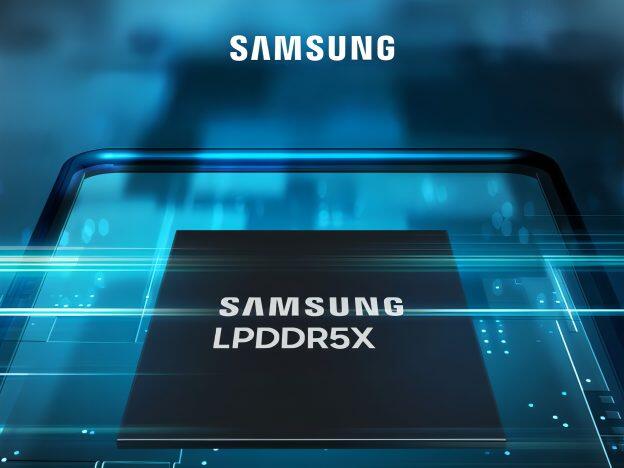
Samsung, Apple Pad Lead in Chip Buying

Release time:2018-02-01
author:Ameya360
source:Dylan McGrath
reading:1783

  Samsung Electronics and Apple were the top two buyers of semiconductors for the seventh consecutive year in 2017, distancing themselves further from the pack.

  The two electronics powerhouse spent a combined $81.8 billion on chips last year, representing 19.5 percent of the global total, according to Gartner Inc. The pair has topped the list each year since 2011.

  The combined total of $81.8 billion spent on chips by Apple and Samsung represented an increase of more than $20 billion compared with 2016, Gartner noted.

  "Samsung Electronics and Apple not only retained their respective No. 1 and No. 2 positions, they also radically increased their share of semiconductor spending through 2017," said Masatsune Yamaji, principal research analyst at Gartner, in a press statement.

  Eight of the top 10 chip buyers from 2016 remained in 2017, Gartner said. The top five chip buyers — Samsung, Apple, Dell, Lenovo and Huawei — remained the same. Western Digital, which increased chip spending by $1.7 billion in 2017, joined the top 10 semiconductor buyers list for the first time, while LG Electronics returned to the top 10 after a one-year absence.

  The top 10 global OEMs accounted for 40 percent of chip spending in 2017, up from 31 percent in 10 years ago, Gartner said. The firm predicted that the number would rise to 45 percent by 2021.

  Gartner also noted that the significant increases in price for DRAM and NAND flash memory chips last year had an impact on the rankings. The firm also warned that an increase in spending on captive chips by OEMs poses a great risk to commercial chip vendors' future growth prospects.

("Note: The information presented in this article is gathered from the internet and is provided as a reference for educational purposes. It does not signify the endorsement or standpoint of our website. If you find any content that violates copyright or intellectual property rights, please inform us for prompt removal.")

Online messageinquiry

reading
Samsung Unveils UFS 5.0 Storage, Claims Industry’s Fastest with 10.8GB/s Speeds
  While advancing its next-generation HBM development, Samsung is also pushing forward on the NAND front, unveiling what it claims is the industry’s first and fastest Universal Flash Storage (UFS) 5.0 solution. According to Samsung, the device delivers sequential read speeds of up to 10.8 GB/s and write speeds of up to 9.5 GB/s, more than doubling the performance of the previous UFS 4.1 standard.  Building on this performance leap, Samsung said mass production is scheduled to begin in the fourth quarter of this year, with capacities of up to 1TB. As noted by Chosun Biz, the solution is based on JEDEC’s latest embedded storage standard, UFS 5.0, and is built on the company’s ninth-generation V-NAND technology.  According to its press release, Samsung’s UFS 5.0 is designed to enable more seamless and efficient AI experiences on next-generation mobile devices, ranging from flagship smartphones to XR headsets and AI wearables. The improved performance is expected to reduce latency and accelerate response times when running large language models (LLMs) in on-device AI applications.  UFS 5.0 Key Specs in Focus  Generative AI is rapidly migrating from cloud environments to on-device deployment, driving a sharp increase in the volume of data required for local processing. As a result, storage is shifting from a passive data repository into a core infrastructure layer that directly supports AI computation.  Against this backdrop, Samsung’s new storage solution delivers sequential read speeds of up to 10.8 GB/s and sequential write speeds of up to 9.5 GB/s, more than doubling the performance of the previous UFS 4.1 standard. On the other hand, the product’s power efficiency, according to the press release, has also been improved by over 40% compared with Samsung’s UFS 4.1 solution, driven by a range of architectural enhancements including clock gating and multi-voltage design technologies.  The device also features a more compact design. According to Samsung, the UFS 5.0 solution comes in an ultra-compact package measuring just 7.5mm × 13mm × 0.9mm, making it 16.7% smaller than its predecessor. The reduced form factor enhances design flexibility and improves internal space efficiency across a wide range of applications, including smartphones, wearables, and extended reality (XR) devices.
2026-06-25 10:40 reading:155
Samsung, NVIDIA Deepen Ties as Talks Reportedly Expand to HBM5 Next Year and Next-Gen Groq Chips
  Following Jensen Huang’s high-profile meetings with SK hynix during his South Korea visit, Samsung Electronics Vice Chairman Jun Young-hyun met with the NVIDIA CEO on June 8 to discuss potential cooperation in HBM and foundry services. According to The Chosun Daily, Jun said the discussions focused on collaboration in HBM and foundry. He added that the near-term priority is to ensure stable supplies of HBM4 and SOCAMM this year, while the two companies also discussed longer-term collaboration beginning next year, including HBM4E, foundry services, and HBM5.  Samsung, NVIDIA Expand Foundry Cooperation  On the foundry front, Samsung Electronics is in discussions with NVIDIA on next-generation chip production using its advanced process technologies, including the Drive AGX Thor autonomous driving chip and the Groq language processing unit (LPU), according to Seoul Economic Daily.  Jun said Samsung is manufacturing NVIDIA’s autonomous driving and Groq chips using 4nm and 8nm nodes, according to ZDNet. He added that the partnership also extends to next-generation Groq chips.  As highlighted by Seoul Economic Daily, Samsung currently manufactures the third-generation Groq LPU (LP30) on its 4nm process. Jun’s remarks suggest the company is also in position to produce the next-generation LP40, despite industry expectations that TSMC could secure the order through its advanced packaging strengths.  Samsung Details Memory Portfolio for NVIDIA  On the memory front, Samsung Electronics is supplying HBM4 (6th-generation) memory with data transfer speeds exceeding 11.7 Gbps per pin for NVIDIA’s Vera Rubin platform, according to Yonhap News. The company is also providing LPDDR5X-based SOCAMM2 modules for the Vera CPU, as well as its PCIe Gen6-based PM1763 storage solution.  Yonhap News adds that Samsung’s HBM4E combines DRAM core dies with a proprietary 4nm foundry base die, enabling operating speeds of 14 Gbps per pin and achieving up to 16 Gbps in testing.  Meanwhile, Vice Chairman Jeon stopped short of confirming whether Samsung Electronics and NVIDIA would sign a long-term memory supply agreement, saying Samsung would do its utmost as a key partner to support NVIDIA’s success, according to Newspim.  NVIDIA CEO Jensen Huang also discussed the company’s partnership with Samsung during a Q&A session following the NVIDIA Korea AI Ecosystem Reception. According to Dealsite, Huang said NVIDIA and Samsung have long collaborated in the Application-Specific Integrated Circuit (ASIC) sector and are jointly developing new ASIC products. He added that the two companies also share a long history of cooperation in memory technologies.
2026-06-10 10:37 reading:525
Samsung Starts Shipping Industry-First HBM4E Samples 3 Months After HBM4 Ramp; Performance Up 20%+
  Just months after rolling out HBM4 shipments in early 2026, Samsung has begun providing samples of the industry’s first 12-layer HBM4E to major global partners, according to the company’s latest press release.  Given that HBM4 shares the same 1c DRAM process and 4nm base die architecture as HBM4E, and is already in mass production, industry observers suggest the newly shipped HBM4E samples are also well positioned to transition into mass production. Samsung adds that it plans to proceed with HBM4E mass production in line with client-specific timelines.  Meanwhile, Samsung is also expanding mass production and supply of HBM4, which became the world’s first HBM4 to enter mass production and shipment in February. In December last year, Samsung’s HBM4 received top-tier evaluation after demonstrating an industry-leading 11.7Gbps speed in System-in-Package (SiP) testing, the final certification stage, the company adds.  According to News1, the latest development makes Samsung the first to supply HBM4E. Industry observers cited by the report also noted that starting from HBM4, customer-specific design flexibility and stable large-scale supply capabilities will become even more critical. Against this backdrop, Samsung’s integrated strengths across memory, foundry, and advanced packaging are expected to stand out even more clearly, the report adds.  HBM4E Upgrade with 20% Performance Boost, 30% Higher Capacity  In terms of performance, Samsung notes that HBM4E marks a notable upgrade over the previous generation, offering a stable 14Gbps pin speed that can scale up to 16Gbps for more demanding AI workloads. Compared with HBM4, the new memory delivers over 20% higher performance and reaches bandwidth of up to 3.6TB/s per stack, significantly improving compute efficiency for large language models (LLMs) and next-generation AI systems.  Additionally, Samsung’s 12-layer HBM4E is currently offered in a 48GB capacity, which is more than 30% higher than the previous generation. The company plans to expand the lineup to include 32GB (8-layer) and 64GB (16-layer) variants to better align with diverse customer requirements as well.  From an efficiency standpoint, Samsung highlights that advanced low-power design techniques and an optimized packaging architecture have improved energy efficiency by 16% while reducing thermal resistance by more than 14% compared with the previous generation.  HBM4E Progress Among Rivals  Meanwhile, progress from SK hynix and Micron in HBM4E has come under closer market scrutiny following Samsung’s advances. According to Yonhap News Agency, SK hynix had initially planned to begin HBM4E sample shipments in the second half of this year, but recent reports indicate smoother-than-expected development progress, bringing forward its timeline.  On the other hand, Micron said its first HBM4E product will follow JEDEC standards, with mass production ramp-up targeted for 2027, according to STOCK Analysis.
2026-05-29 10:18 reading:712
Samsung Reportedly Develops Mobile HBM Packaging With Copper Pillars, Bandwidth Up 15%–30%
  Samsung Electronics is reportedly developing a next-generation HBM packaging technology aimed at bringing high-performance on-device AI to mobile devices. According to ETNews, sources say the company is working on a “Multi Stacked FOWLP” technology that combines ultra-high-aspect-ratio copper pillars with FOWLP (Fan-Out Wafer Level Packaging) by advancing its existing VCS (Vertical Cu-post Stack) technology.  The report notes that traditional mobile memory (LPDDR) packaging still relies on copper wire bonding. However, the technology is limited to roughly 128 to 256 I/O terminals, while also suffering from higher signal loss and lower thermal and power efficiency. To address these constraints, Samsung previously introduced its VCS (Vertical Cu-post Stack) technology, which arranges DRAM dies in a staircase-style stacked structure connected by copper pillars. The newly reported technology is viewed as a further evolution of this approach through the adoption of ultra-high-aspect-ratio copper pillars.  More specifically, Samsung has increased the aspect ratio of copper pillars used in VCS packaging from 3–5:1 to 15–20:1, significantly boosting bandwidth, the report notes. However, copper pillars thinner than 10 micrometers become more vulnerable to bending and breakage. To address this issue, Samsung reportedly combined the design with an FOWLP process, which molds the chip and extends wiring outward to help support the copper pillars.  The approach could enable more I/O terminals within the same area, potentially boosting bandwidth by 15% to 30% while increasing memory stack capacity by more than 1.5 times, the report adds.  Commercialization Timeline Remains Unclear  Meanwhile, the technology is still under development, making the timeline for mass production and commercialization unclear. However, the report says industry observers believe it could be adopted as early as a later version of the Exynos 2800 or the Exynos 2900.  Notably, some industry observers said mobile HBM development and commercialization could progress more slowly than initially expected, as demand for HBM in servers, data centers, and AI accelerators is expected to remain strong for the foreseeable future. The report adds that booming demand for server and data center HBM may make it difficult for Samsung to fully concentrate its resources on mobile HBM development.  SK hynix Advances Mobile AI Packaging  SK hynix is also accelerating development of semiconductor packaging technologies for smartphones and Extended Reality (XR) devices. According to a Hankyung report published earlier this year, sources say the company is developing “High Bandwidth Storage (HBS),” a packaging solution that vertically stacks low-power (LPDDR) DRAM and NAND flash memory beside the Application Processor (AP), which handles core computing tasks in IT devices.  Hankyung notes that HBS adopts a packaging technology called “Vertical Fan-Out” (VFO). Unlike conventional wire bonding, which connects stacked memory and substrates with thin copper wires, VFO uses pillar-shaped interconnects to enable denser wiring and faster data transfer speeds, helping APs process rapidly growing AI-driven workloads.
2026-05-15 10:49 reading:971
  • Week of hot material
  • Material in short supply seckilling
model brand Quote
TL431ACLPR Texas Instruments
RB751G-40T2R ROHM Semiconductor
MC33074DR2G onsemi
CDZVT2R20B ROHM Semiconductor
BD71847AMWV-E2 ROHM Semiconductor
model brand To snap up
BP3621 ROHM Semiconductor
IPZ40N04S5L4R8ATMA1 Infineon Technologies
TPS63050YFFR Texas Instruments
BU33JA2MNVX-CTL ROHM Semiconductor
STM32F429IGT6 STMicroelectronics
ESR03EZPJ151 ROHM Semiconductor
Hot labels
ROHM
IC
Averlogic
Intel
Samsung
IoT
AI
Sensor
Chip
About us

Qr code of ameya360 official account

Identify TWO-DIMENSIONAL code, you can pay attention to

AMEYA360 weixin Service Account AMEYA360 weixin Service Account
AMEYA360 mall (www.ameya360.com) was launched in 2011. Now there are more than 3,500 high-quality suppliers, including 6 million product model data, and more than 1 million component stocks for purchase. Products cover MCU+ memory + power chip +IGBT+MOS tube + op amp + RF Bluetooth + sensor + resistor capacitance inductor + connector and other fields. main business of platform covers spot sales of electronic components, BOM distribution and product supporting materials, providing one-stop purchasing and sales services for our customers.

Please enter the verification code in the image below:

verification code